THE ROMAN EMPIRE'S GREATEST MONUMENT
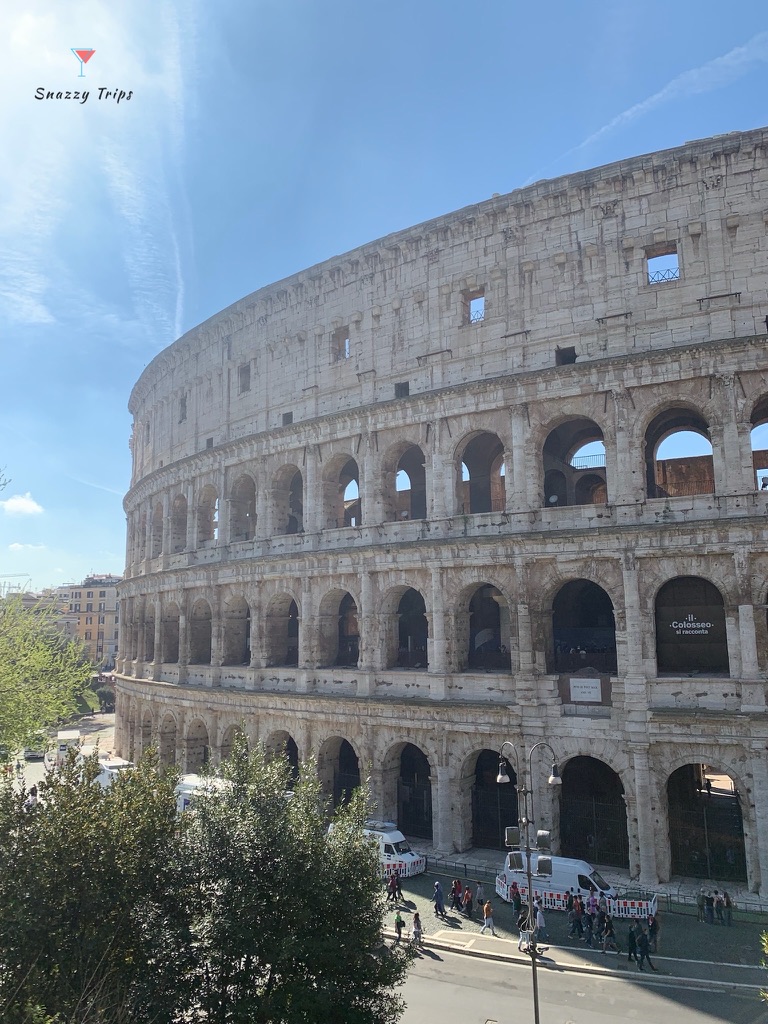
Are you planning on visiting the Colosseum in Rome? You’ll get all the important info right here to help make it a memorable experience. If you’ve never been before, prepare to be enthralled by this magnificent monument, arguably the greatest architectural achievement of the Roman Empire, still standing at nearly 2,000 years old!
As the symbol of Rome, it’s one of the most famous tourist attractions in the world, attracting more than 7 million visitors per year. Everyone coming to Rome for the first time usually enjoys visiting the Colosseum, making it a highlight of their trip.
Also known as Il Colosseo by Italians or the Flavian Amphitheatre, it was built in the first century of the Common Era by the Flavian Emperors who were in power at the time. It took only 8 years to build, an astonishingly short amount of time for a large and complex man-made structure of those days.
It is now one of the New Seven Wonders of the World and a UNESCO World Heritage Site.
Why was it built?
Built as a gladiatorial arena to showcase Rome’s power. But also to entertain the public with its bloodthirsty spectacles that catered to the people’s love for violence at the time.
Gladiators fought and became famous here, criminals were executed, and animals were hunted and fought against each other or people.
Navy battles were even re-enacted on water that was flooded over the arena floor from a nearby aqueduct, then drained out.
It was also built as an enormous gathering place in the heart of the city, used for ceremonies, theatre performances and political purposes, all to impress and gain the support of the people and impress the world with its grandeur.
Entry to the Colosseum to watch all the spectacles was completely free.
Events were well organised, with tickets and numbered seating, corresponding to the numbered arched doorway. Seats were also ranked in order of people’s importance. VIPs sat up close to the action on the first level. Plebeians, which were the poor, slaves, foreigners and women, sat up top, furthest away.
Food and wine was also provided for free. It was an opportunity for people to escape their mundane lives and indulge in watching ‘sport’ and ‘theatre’ for hours, and for the rulers to thus gain political support.
Construction
The Colosseum was the first free-standing amphitheatre built in the world. Interestingly, the architect of the Colosseum is unknown. The team of engineers and skilled tradesmen was extensive, with thousands of slaves doing the heavy work and transporting materials from far and wide, pulled by oxen.
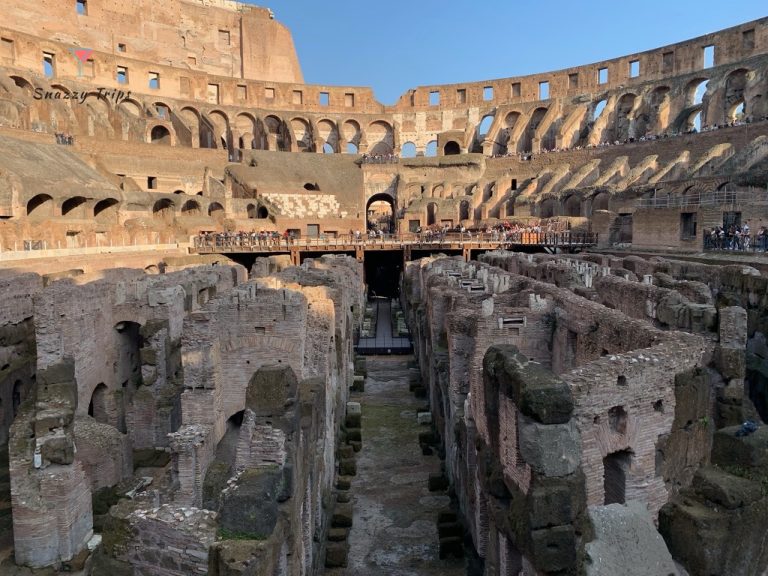
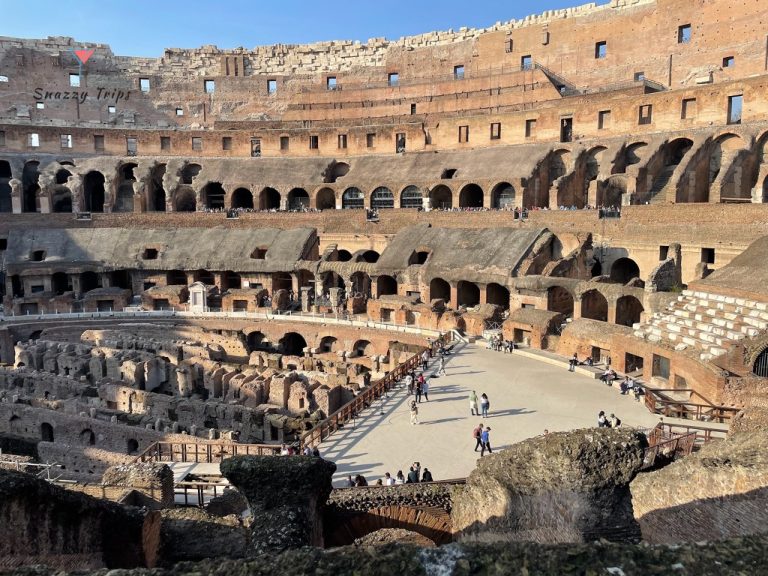
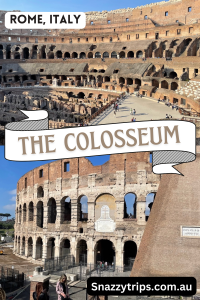
Constructed of travertine limestone, volcanic rock, wood and bronze, it was an elliptical shape, with shade awnings at the top, and even public toilets and an advanced drainage system. Underground tunnels and chambers were created to house and move around the gladiators, actors, animals and stage equipment.
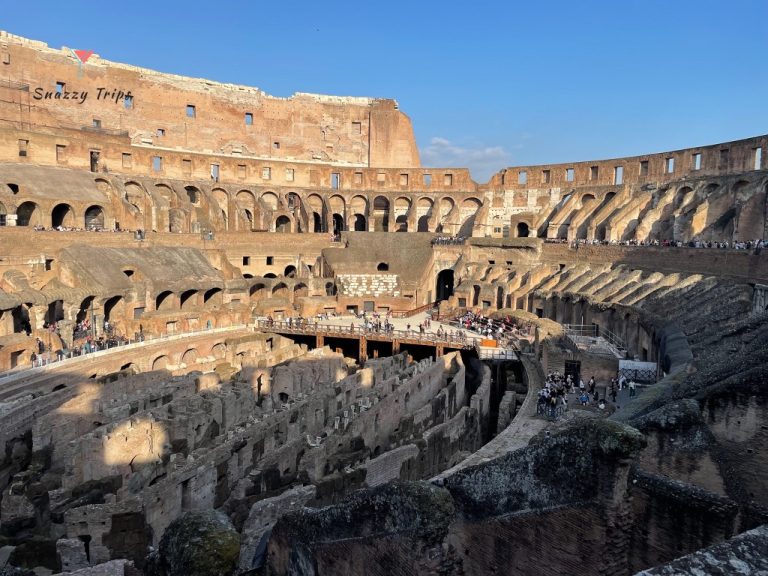
The building had two walls, an inner and an outer. Built approximately 50 metres high and 180 meters long, with various levels of which could hold over 50,000 spectators. For the times, it was a humungous building, as most were no more than 1 or 2 storeys, a testament to Rome’s advanced engineering .
The bottom three levels consist of 80 arches around the perimeter, which are not only visually attractive, but are in fact triumphal arches, symbolising the spoils of war. Three types of columns were used for the different levels. The top level had no arches, but instead had flat walls which were decorated. It is believed statues adorned arches of the upper levels.
History
The arena was used for its intended purpose as a colossal amphitheatre for the people of Rome for five centuries, until the cost of maintaining the venue and providing the games and spectacles grew too much for the declining Western Roman Empire. People had by then become sick of the brutal contests, as Christianity became more popular, and it was basically abandoned, fell into disrepair, and neglected for about 15 centuries.
Afterwards, the Colosseum was used for many different purposes at various times in history – a church, housing, workshops, a cemetery, and as a quarry. Now, predominantly a tourist attraction raking in huge amounts for the Italian government.
Damage
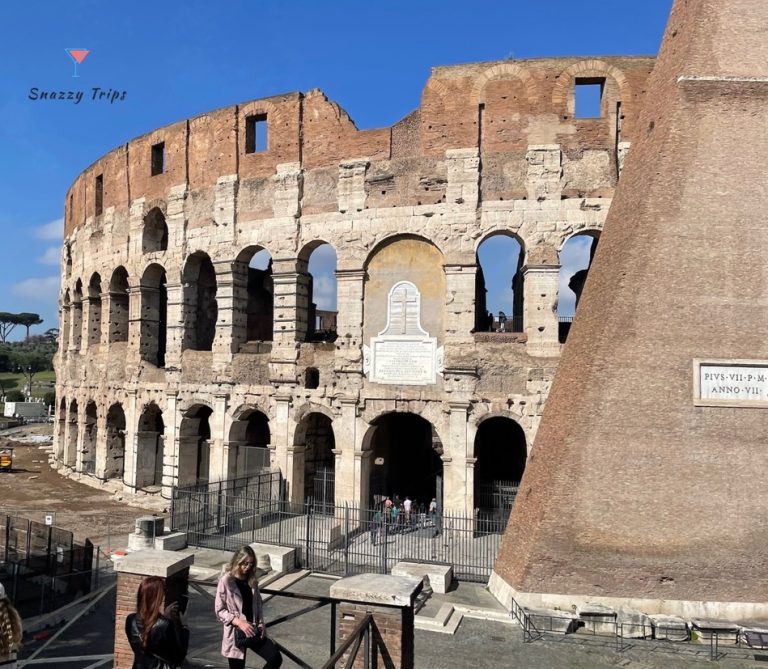
Many earthquakes, fires and other natural disasters over the years have destroyed the Colosseum. One side of the Colosseum collapsed during the huge earthquake of 1349.Â
The rubble from the earthquakes was stolen, such as the travertine stone seats, bolts and bronze clamps that used to hold the pieces together, many of which have been used to build churches, hospitals, palaces and other structures in Rome. For many centuries it continued to be looted and torn apart, the valuable materials repurposed, melted down or sold.
Today, two thirds of the monument no longer exists, in part due to deterioration and pollution over the years.
But conservation and restoration efforts of the last centuries have managed to give it some of the respect it deserves as an icon of the ancient Roman Empire, a sacred place to be treasured and a testament to the outstanding architectural and engineering achievements of ancient times.
A visit to the Colosseum
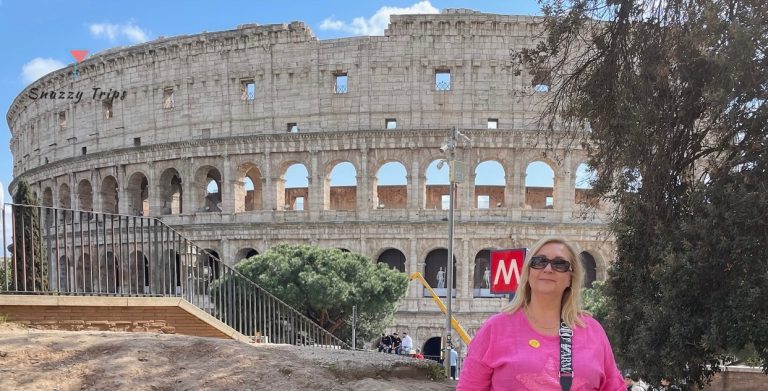
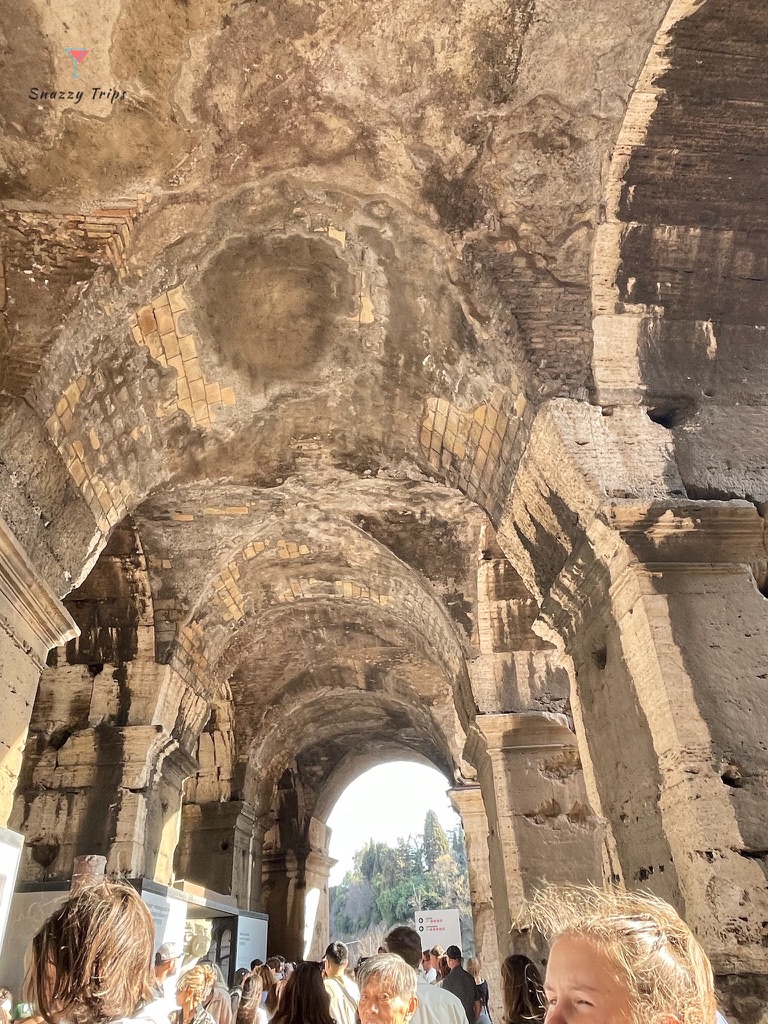
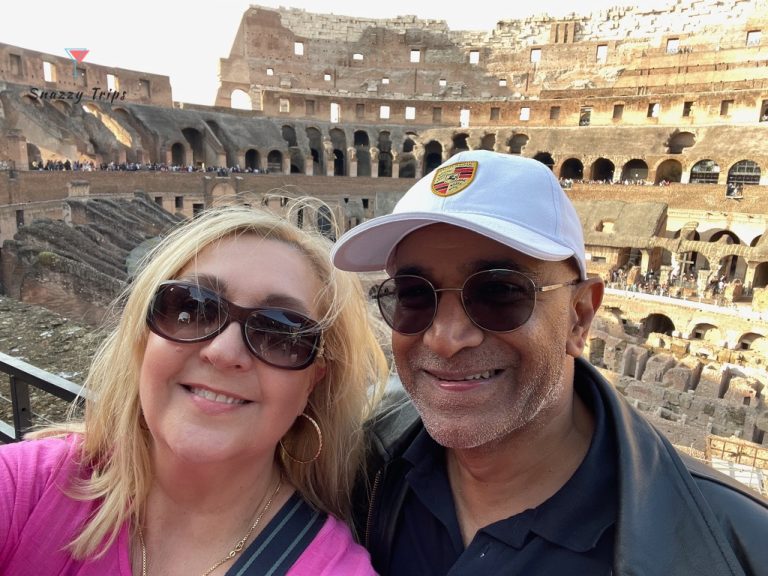
I was beyond excited to visit the Colosseum, as my previous visit some years ago did not allow me time to actually go inside. Now I was able to immerse myself in the history and enjoy the feeling of actually being where the action took place. An incredible experience that will blow you away.
Tours
I definitely recommend taking a guided audio tour with an expert, which you can book in advance, online. There are many to choose from, of varying prices.
I chose a tour with Get Your Guide for entry to the Colosseum and the surrounding Forum and Palatine Hill, lasting 3 hours. A very knowledgable local guide shepherded us through the busy entrance gates and around the arena, whilst giving an in depth audio history lesson of ancient Rome and all its secrets. Going with a guide is a great way to learn about the fascinating location and ask questions as you explore the epic site.
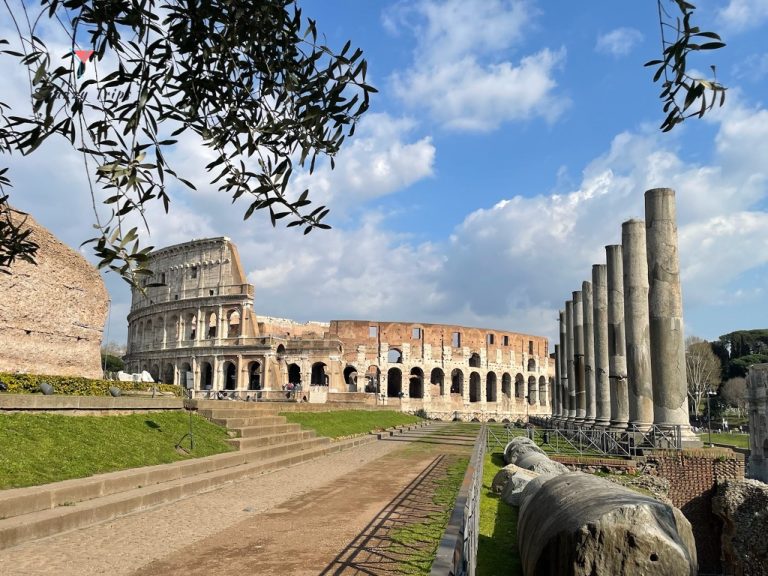
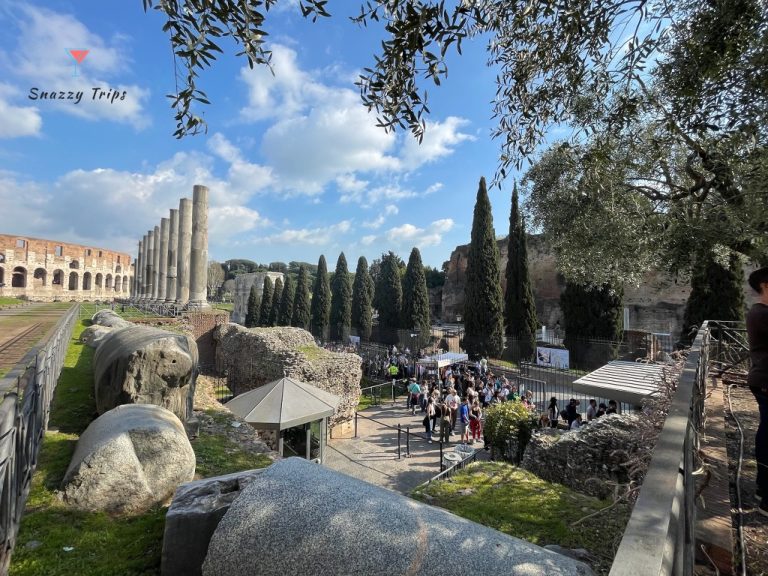
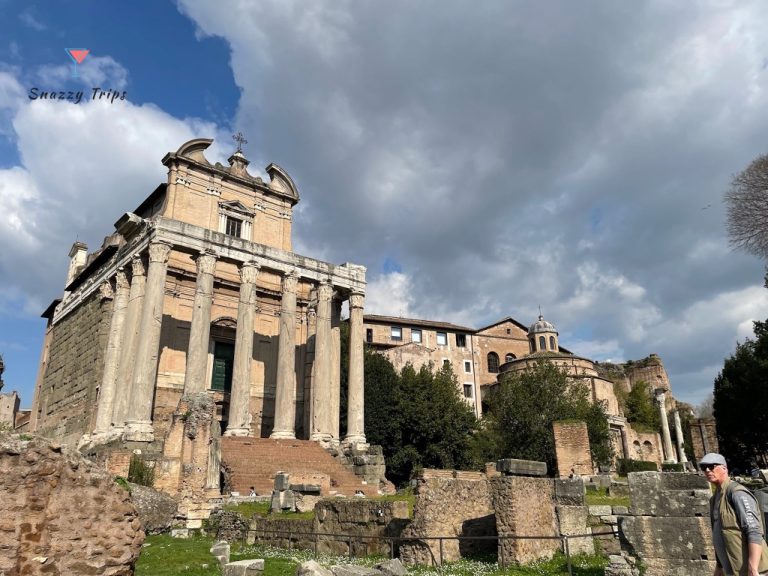
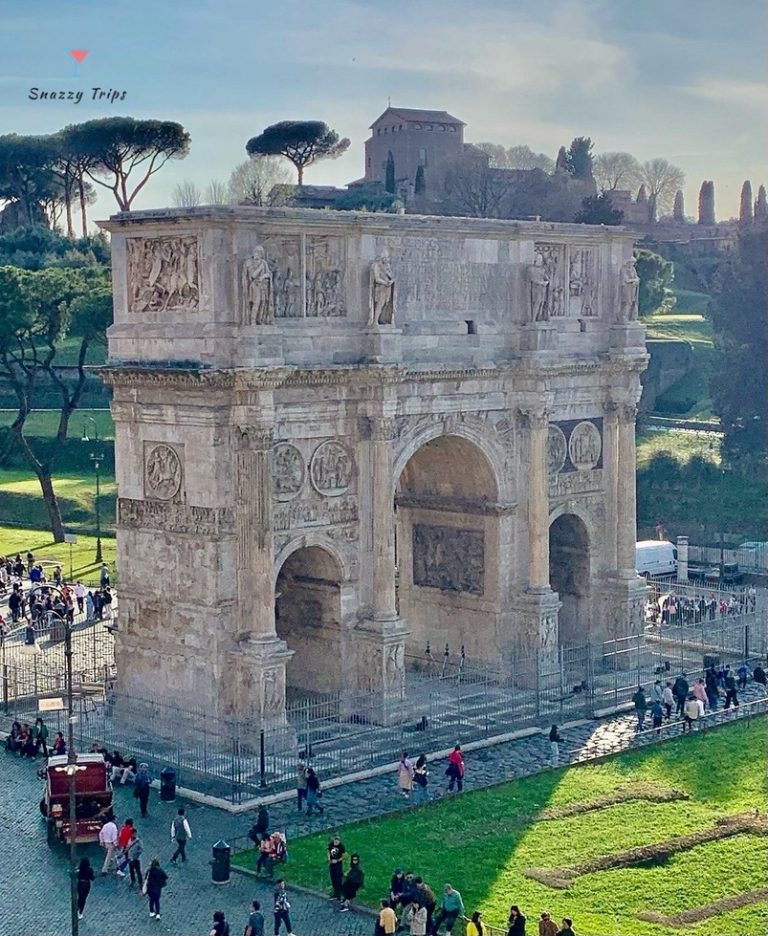
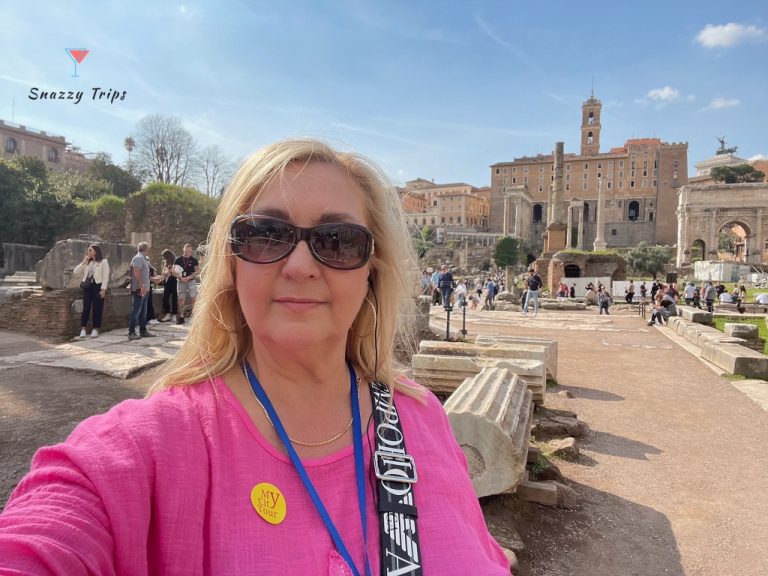
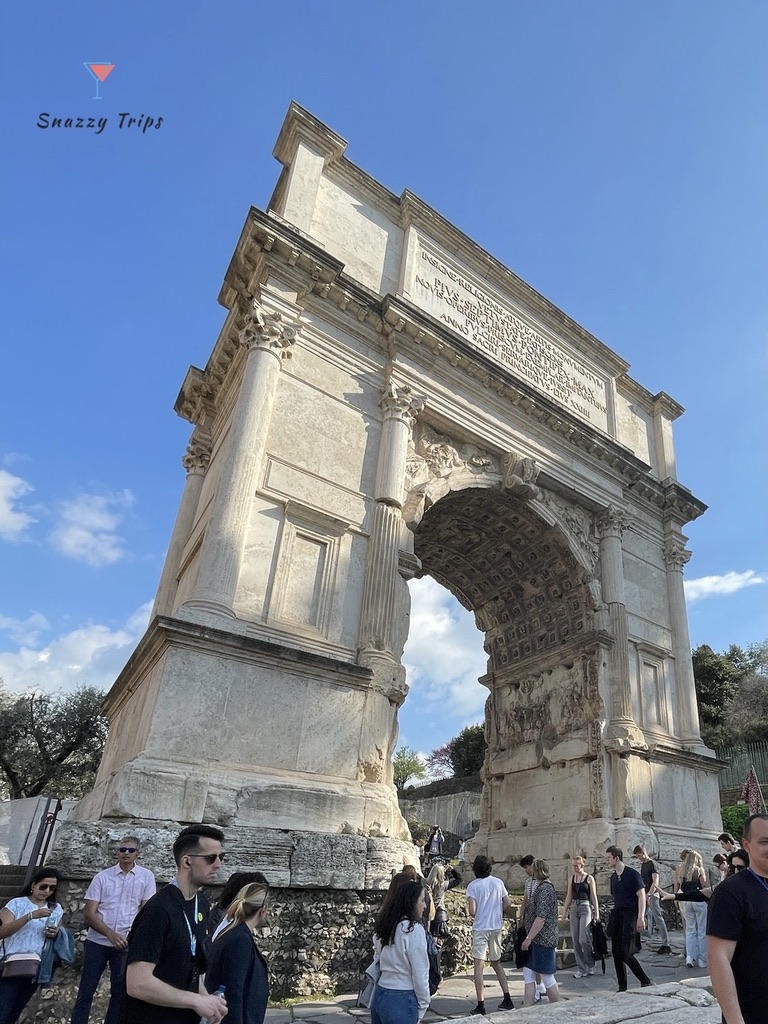
Most tours will also include visiting the outside Forum ruins and the Palatine Hill, where you will see a vast array of archeological ruins from the once busy life of the Romans. These include the famous Arch of Titus and the Arch of Constantine, Temples and statues.
Tips
- I suggest choosing a tour that starts early in the morning so there will be less people.
- Bring I.D. of some sort (passport, drivers licence).
- You will need to go through a security check and metal detector pass, but this line is relatively quick.
- No large bags allowed.Â
- Water bottles permitted.
- Toilets are available inside the venue.
- Tours below deck cost extra, as do tours to the top of the structure, via the lift.
- To check up to date information about opening times, security, accessibility and the like, refer to the Colosseum website.
- There is also a free Colosseum App you can download.
When to go
The best time to go is a weekday, not on weekends, or public holidays.
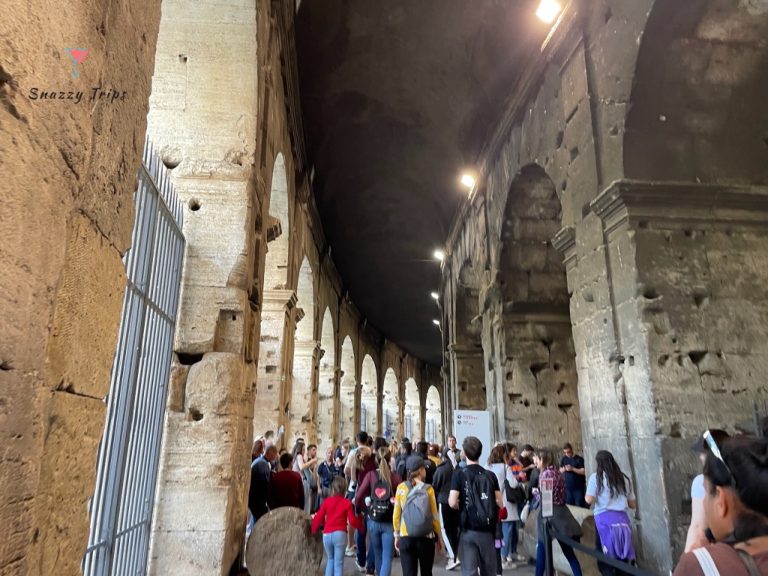
The Colosseum gets crowded with tourists almost every day of the year, especially during the Summer season.
It is closed on Christmas Day, New Years Day and May 1st.
Opening time is usually 8.30am.
Closing time varies, depending on the season.
FREE entry every first Sunday of the month.
You may also enjoy visiting the Colosseum at night. After dark the structure is bathed in lights, a truly awesome site to behold. Also, there are much less people. However, you can only do this with a tour, not by yourself, and it does not include seeing the Forum outside.
Self-guided visit
If you prefer visiting on your own, individual tickets can be purchased in person at the Ticket Office at Piazza del Colosseo. Be prepared to wait in line for about an hour for a ticket.
Entry cost to the Colosseum alone is at least 16 Euros per adult.
Getting there
You can find it quite easily, as its impossible to miss, in the centre of Rome, Piazza del Colosseo.
Hop On/Hop Off Buses take you there.
A number of public buses take you to the Colosseum.
You can take the train Metro Line B.
Tram lines 3 and 8 take you there also.
Pretty much all roads lead to the Colosseum!
Recommended tour
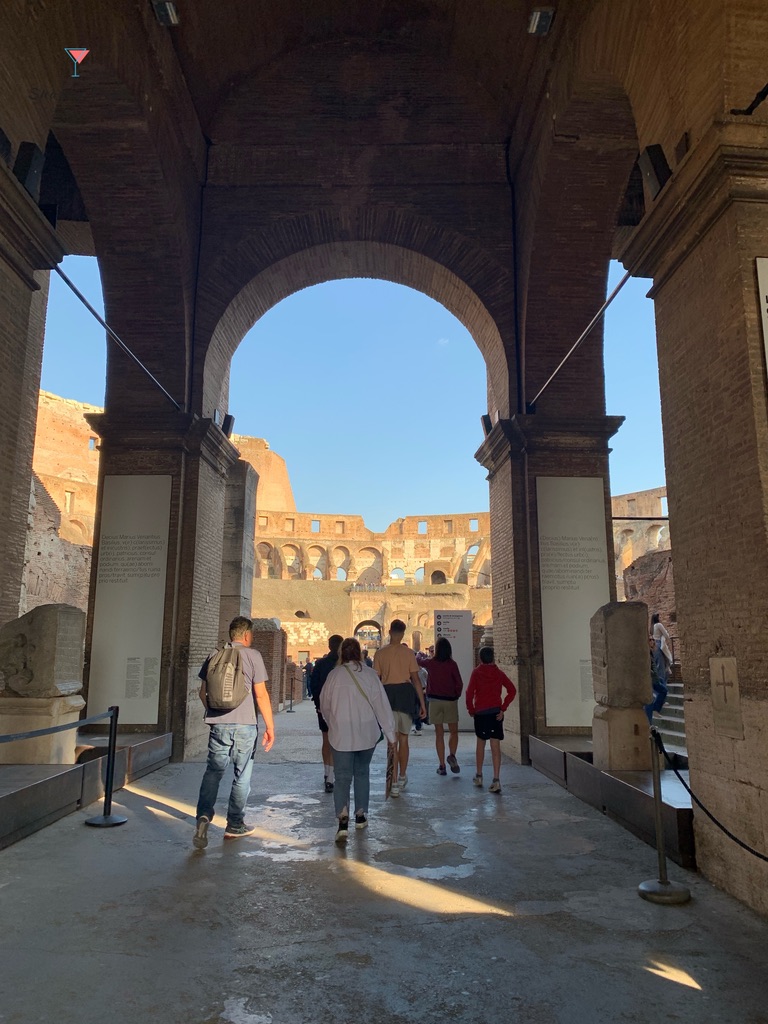
Inside The Colosseum
Other Interesting Facts
- Cost of building the Colosseum is unknown.
- The colour of the walls used to be red.
- There is Gate of Life on the eastern side and a Gate of Death on the western side.
- Gladiators had to go to gladiatorial school.
- Women also fought as gladiators.
- One of the Roman Emperors was a gladiator – Commodus.
- About 400,000 people died in the Colosseum.
- Blood sports were then banned in 438 Common Era.
- Animals from all over the world were brought to the Colosseum for hunts.
- One important family in Rome, the Frangipani family, lived in the Colosseum during the 1100s and turned it into a fortress, but were then thrown out by another powerful clan, the Annibaldi family in the 1200s.
- In 1749 Pope Benedict XIV declared the Colosseum a Church.
- Conservation of the site only began in in the early 1800s.
- In recent times major artists, such as Paul McCartney and Elton John, have performed in the arena.
- Smaller versions of the Colosseum were built in other territories of the empire, such as in France, Croatia and Africa.
- About 200 cats live in the Colosseum.
- The film Gladiator wasn’t filmed here at all.
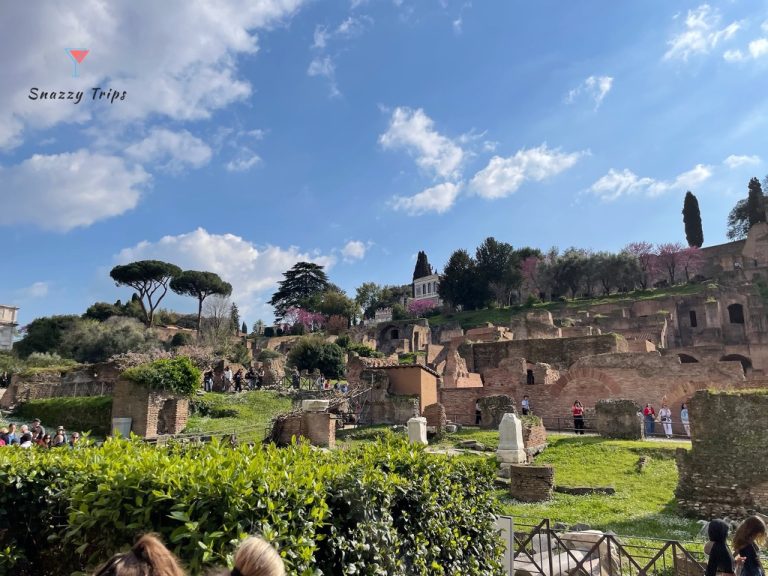
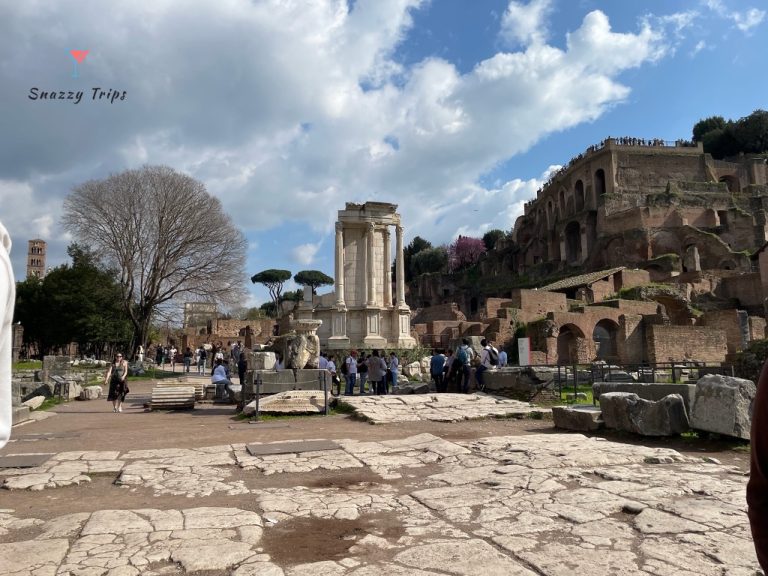
The Roman Forum and Palatine Hill
Dating from the 7th century Before Common Era, the Forum was the nucleus of ancient Rome, which continued for centuries, and was expanded to accommodate the growing population and public needs.Â
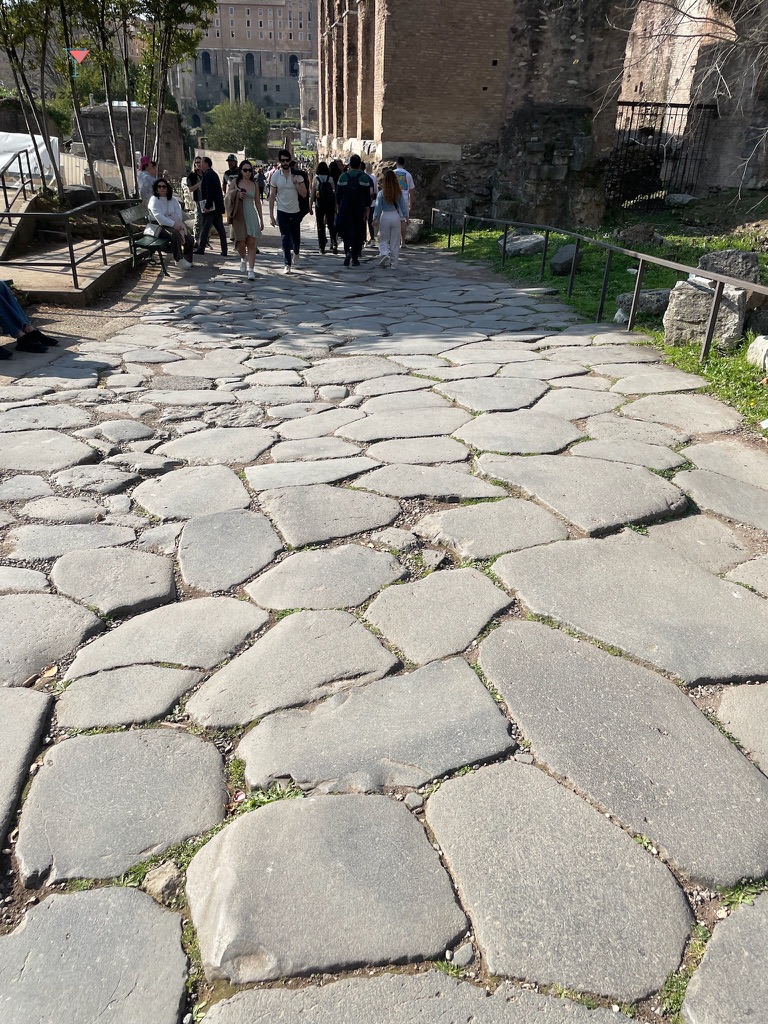
What remains is an impressive site of archeological ruins from the past life, where government offices once stood, with temples and statues. And where processions, speeches, elections, trials, and markets were held. It was a grand meeting place for the people, and covered an area of 5 acres.
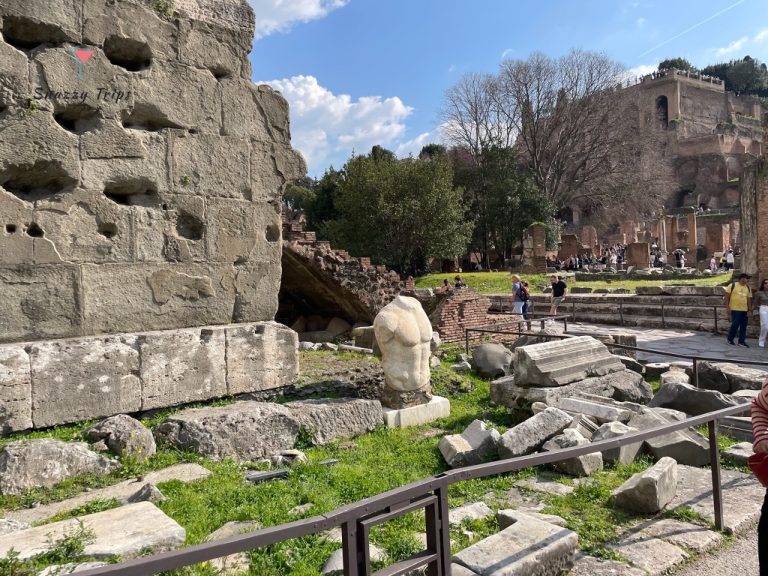
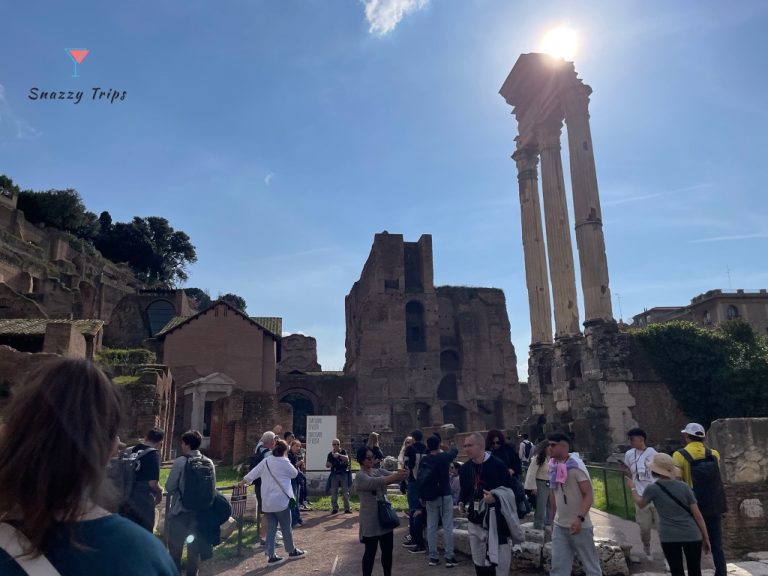
Many structures have survived against all odds, and can be admired here in this open air museum. Various arches, pillars, walls and monuments exist, some which are reasonably intact.
But many were destroyed and torn down, and materials such as stone and marble were reused. For example, Pope Paul III built the Saint Peter’s Basilica in the 1500s using much of the Forum as a quarry for supplies.Â
One of the most famous and oldest ruins here is the 8 pillars that remain of the Temple of Saturn, which was used as a treasury and symbolised Rome’s prosperity.
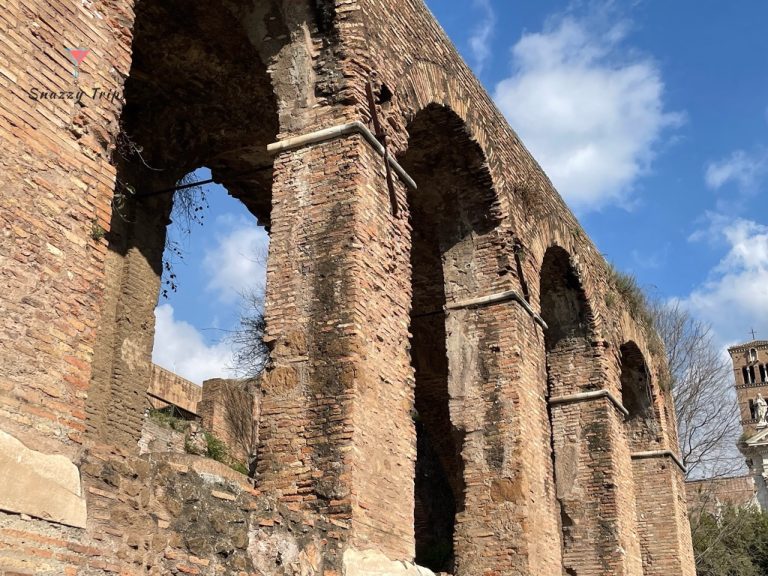
The largest monument was the Basilica of Maxentius, pictured below.
Also of interest to many people, the Forum contains the burial site of Julius Caesar, but all that remains is a pile of rocks.


9 Comments
I had no idea you could visit the Colosseum for free on the first sunday of the month! Great tips here.
This is a bucket list trip for sure! Great photos and tips. What a trip!
I really love how you highlighted both its architectural beauty and the fascinating stories behind it.
We went there and had such a good time. The forum behind it was just as fascinating. What surprised me was that there were so many stray cats running around!
I got to visit the Colosseum on a tour led by my Roman history professor in undergrad and it was incredible!! But the underneath part wasn’t open back then, so I’d love to go back and see that.
AGENCANTIK
AGENCANTIK says This content is great very helpful
The last time we visited the Colosseum was in November a few years ago, and everything was uncrowded. Great to know it is free certain Sundays for our next visit.
I love visiting museums on the first Sunday of the month when they are free. We often plan destinations around this perk.
Ah I visited the Colosseum when I was younger but I’d love to go back. I think I’d appreciate the whole experience now! My husband is desperate to visit Rome as he hasn’t been before so hopefully we’ll manage to get there soon. Thanks for the great guide!