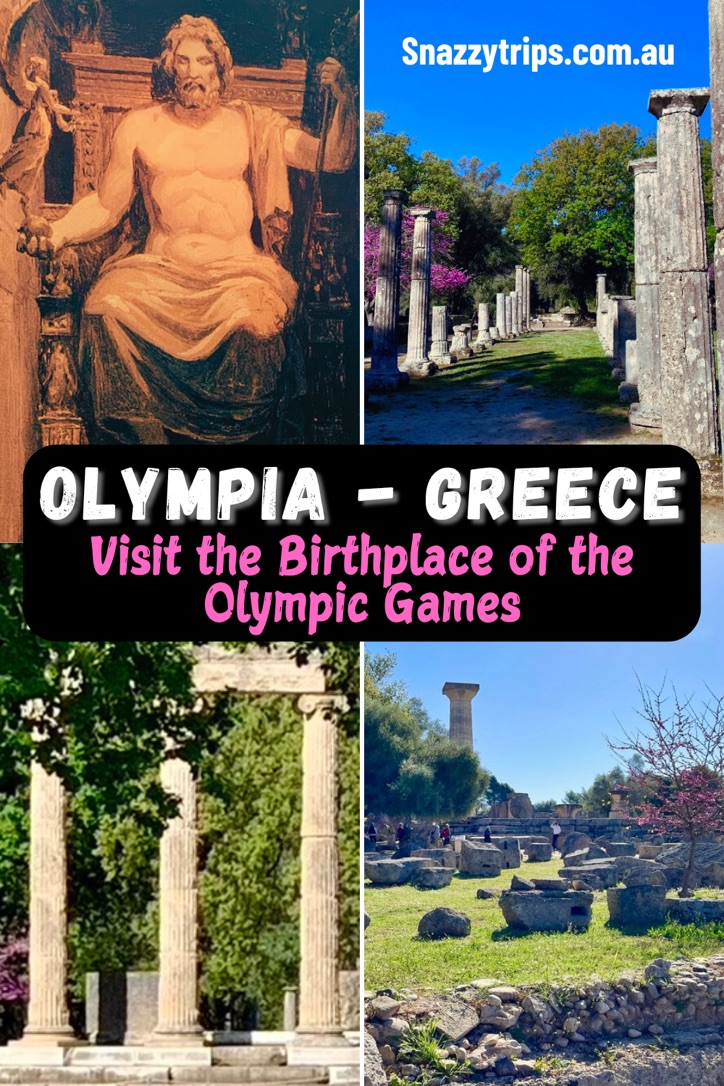
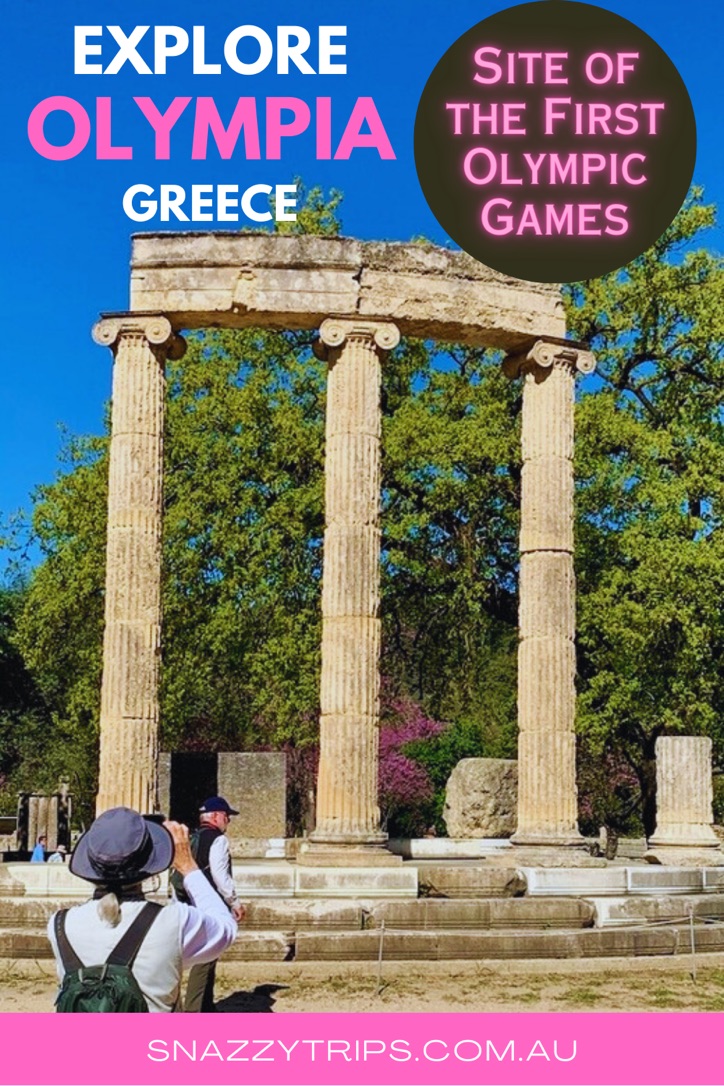
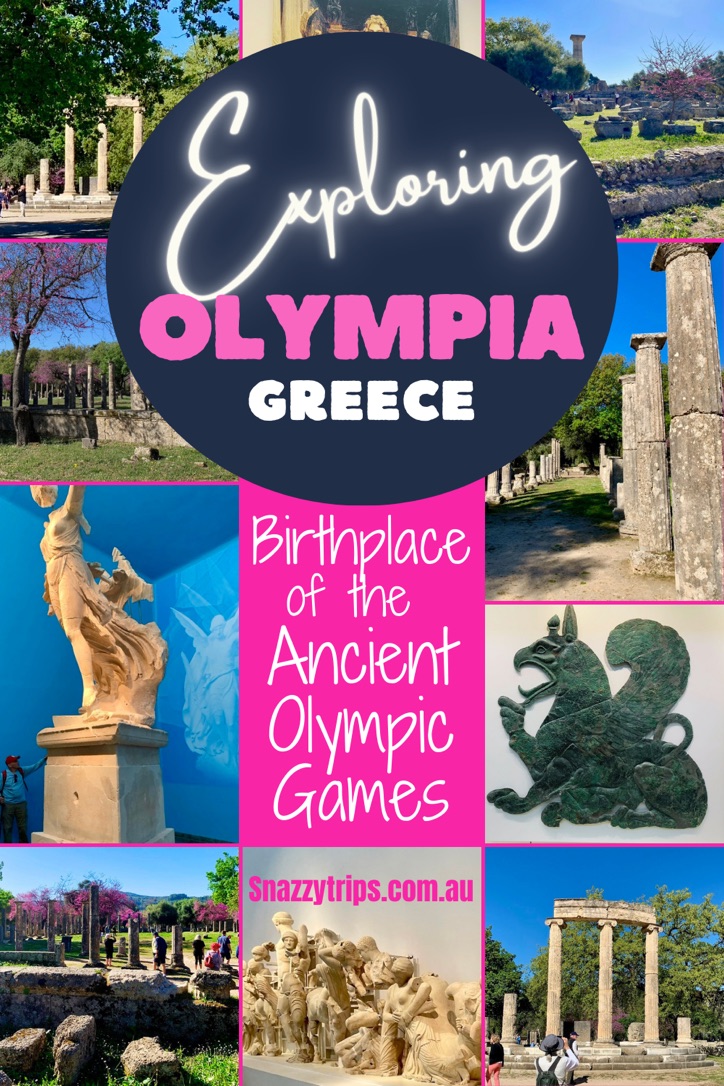
Archaia Olympia, Greece
Olympia was the birthplace of the Olympic Games in 776 Before Common Era, in Southern Greece on the Peloponnese Peninsula. The actual site where the Games were held is known as Archaia Olympia, located in hilly terrain, close to the Port of Katakolo.
Ancient Olympia was always a sacred site, a rural sanctuary for religious ceremonies, where various Greek Gods were worshipped. Later it became a place for the pursuit of sporting glory, a calling from the Gods, if you will, that’s why it was chosen.
Youthful, healthy, fit men of Greece aspired to the dream of competing at the Olympic Games at Olympia. The desire to represent their home town and the opportunity of being the best was an honourable endeavour for many trying to achieve more out of their ordinary lives. The Games became a key element of ancient Greek culture to identify with, and it was a highlight on the social calendar, much loved by everyone.
The Ancient Olympics were held here every 4 years, known as an Olympiad, a term reckoned in Greece as an official measurement of time.
During Roman Times
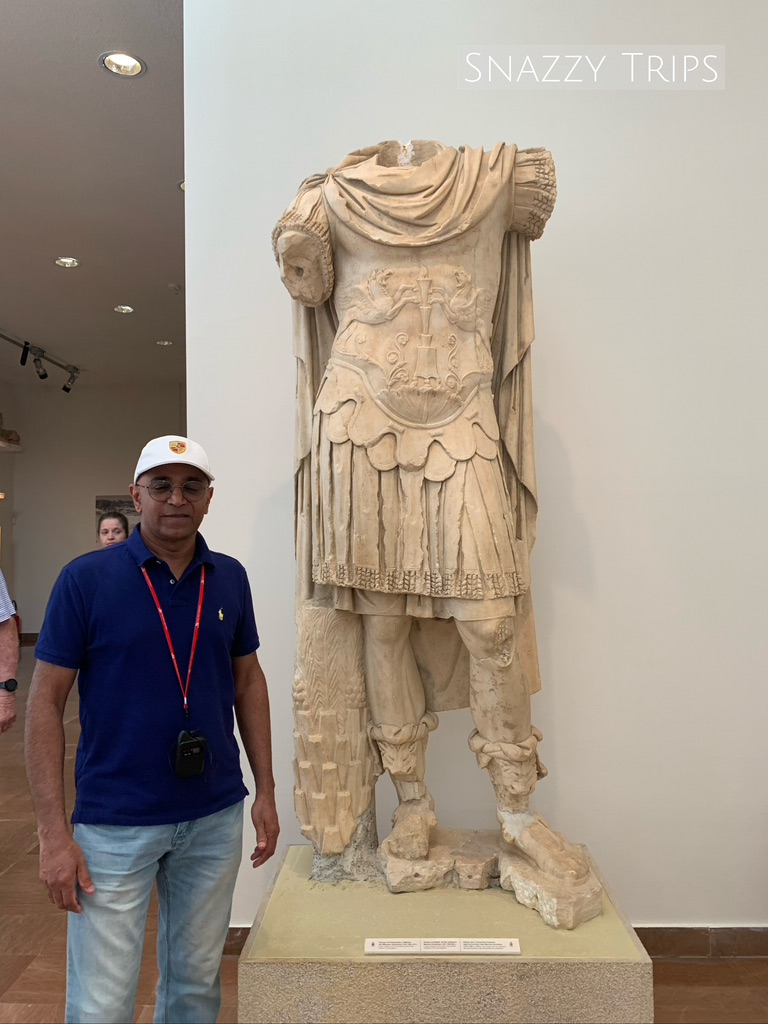
Even after the Romans conquered Greece in 146 BCE, the tradition of the games continued, as they too, embraced the sporting phenomena. Roman Emperors even had statues erected within the sacred site.
For many centuries the games went on, until 393 CE when the Byzantine Empire banned the Games for being Pagan and going against the rising new religion of Christianity.
Afterwards, the site was left abandoned as religious sentiments changed. Over the centuries structures became damaged by many natural disasters, such as earthquakes and tsunamis, and destroyed partly by Christians and barbarians, and looted for valuable items.
The remains then slowly disappeared over time, buried under the earth and forgotten, as with many other ancient sites around the world, like Pompeii in Italy.
The Site Today
Today, the Archaeological Site of Olympia is a famous landmark of Greece steeped in Greek Mythology and religion and the history of the Olympic Games.
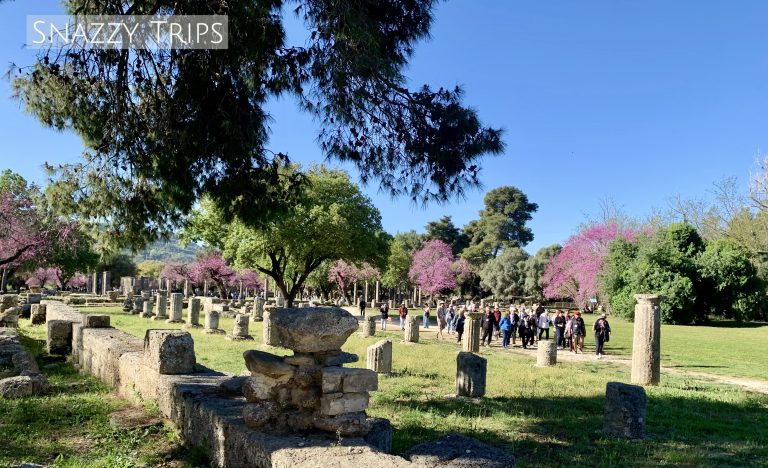
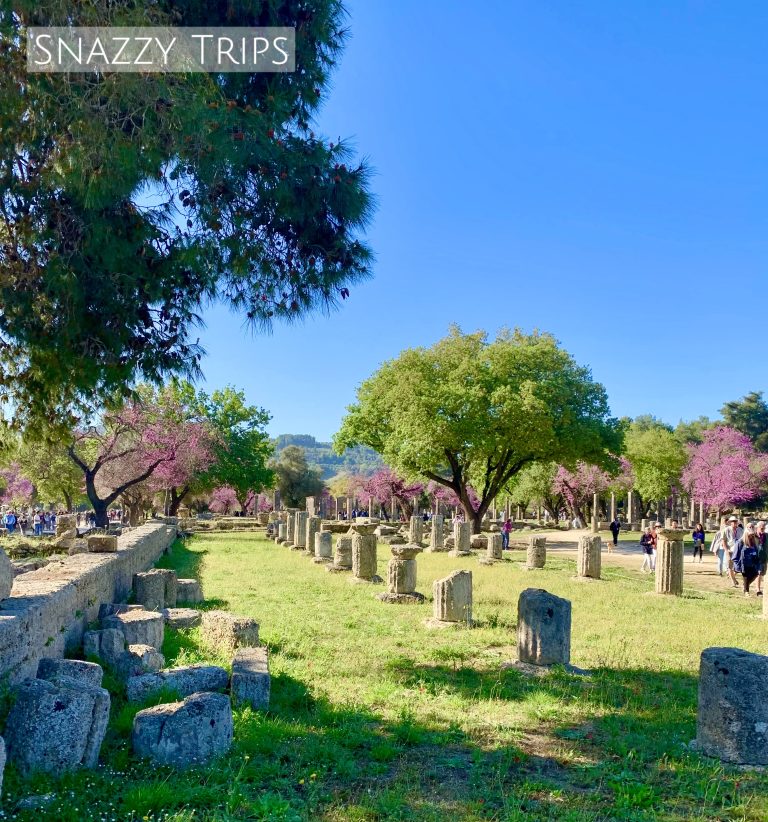
Approximately 70 acres in size, the site showcases many ruins discovered over the last two hundred years.
Digging first began in 1829 by French archaeologists, then continued on a large scale by German archaeologists in later years.
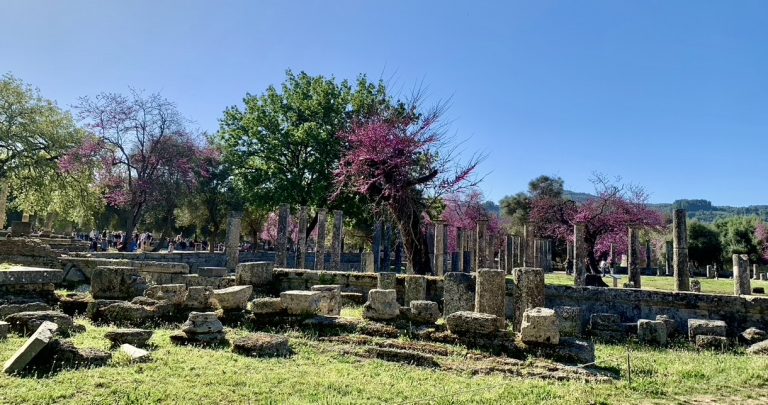
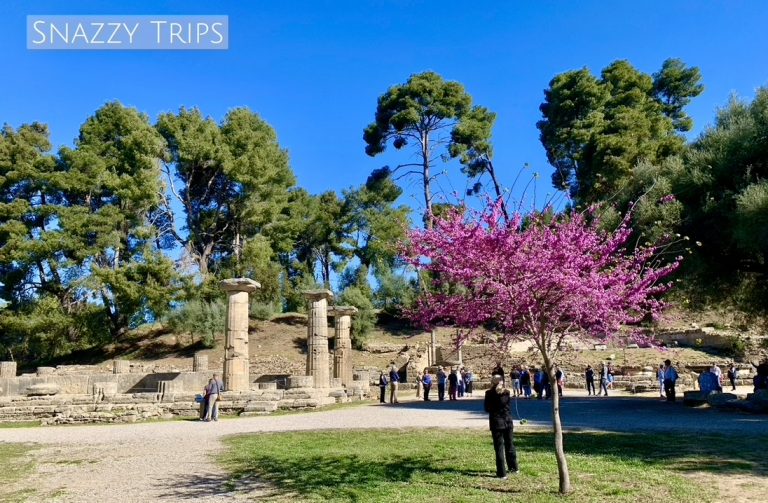
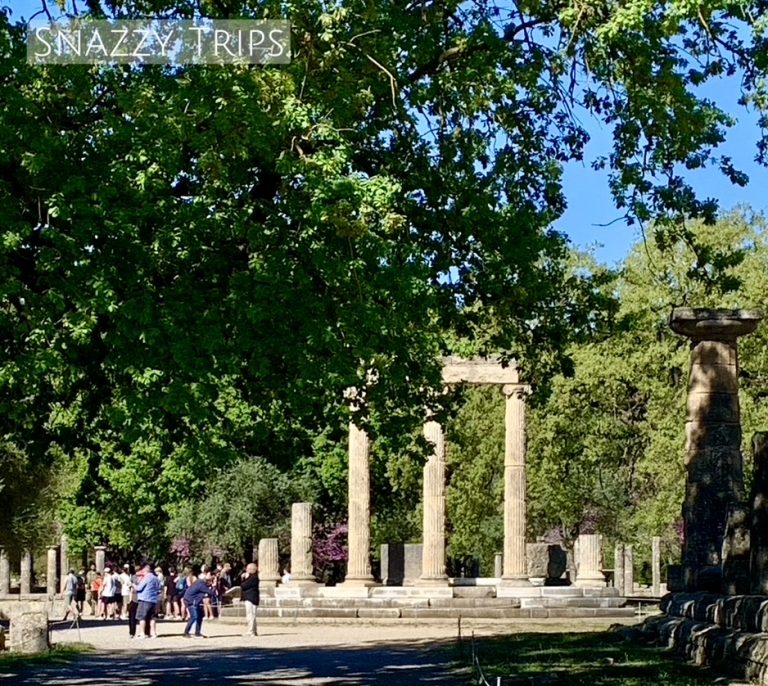
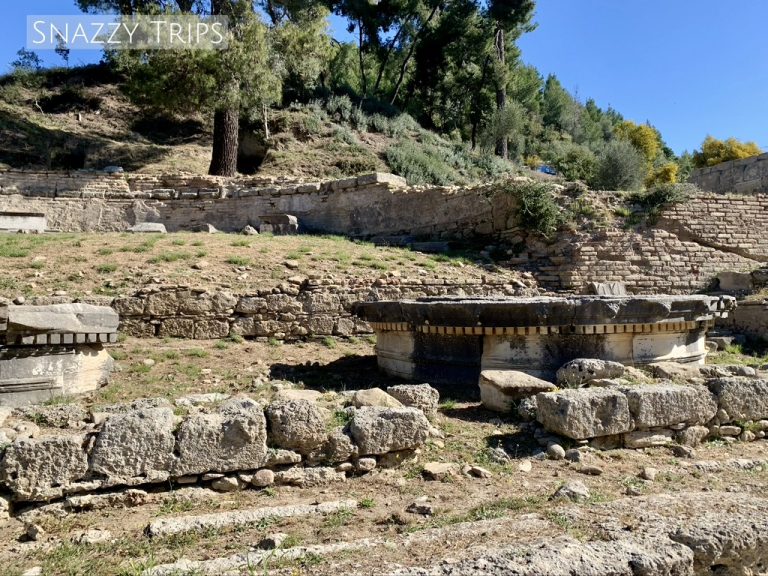
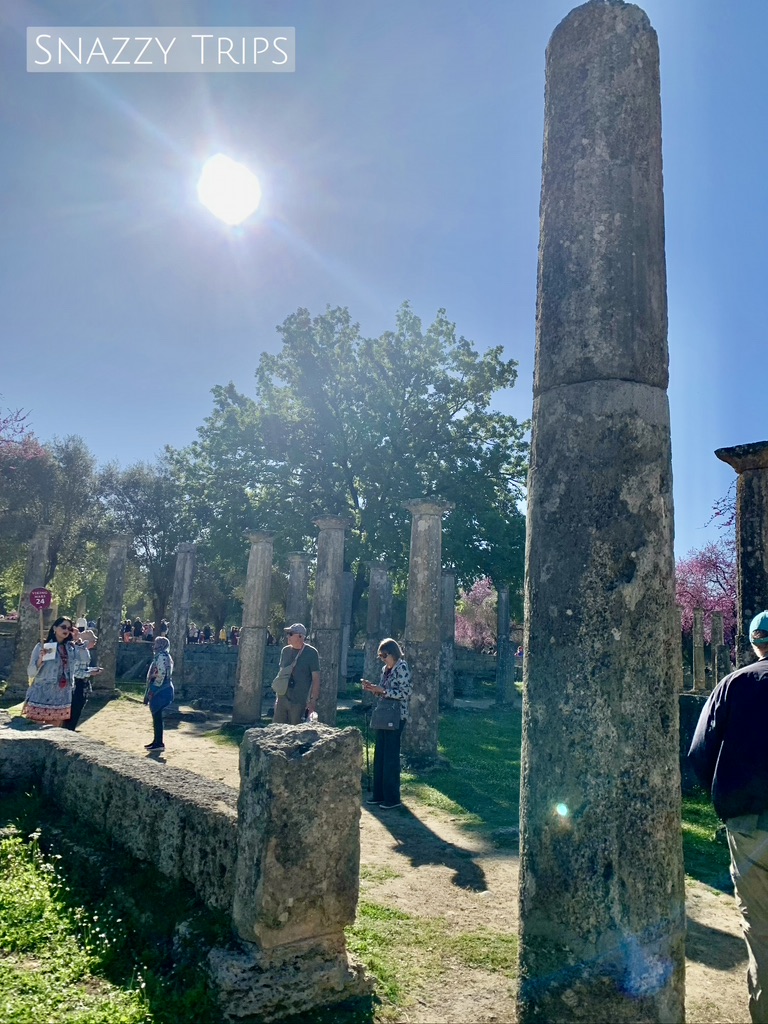
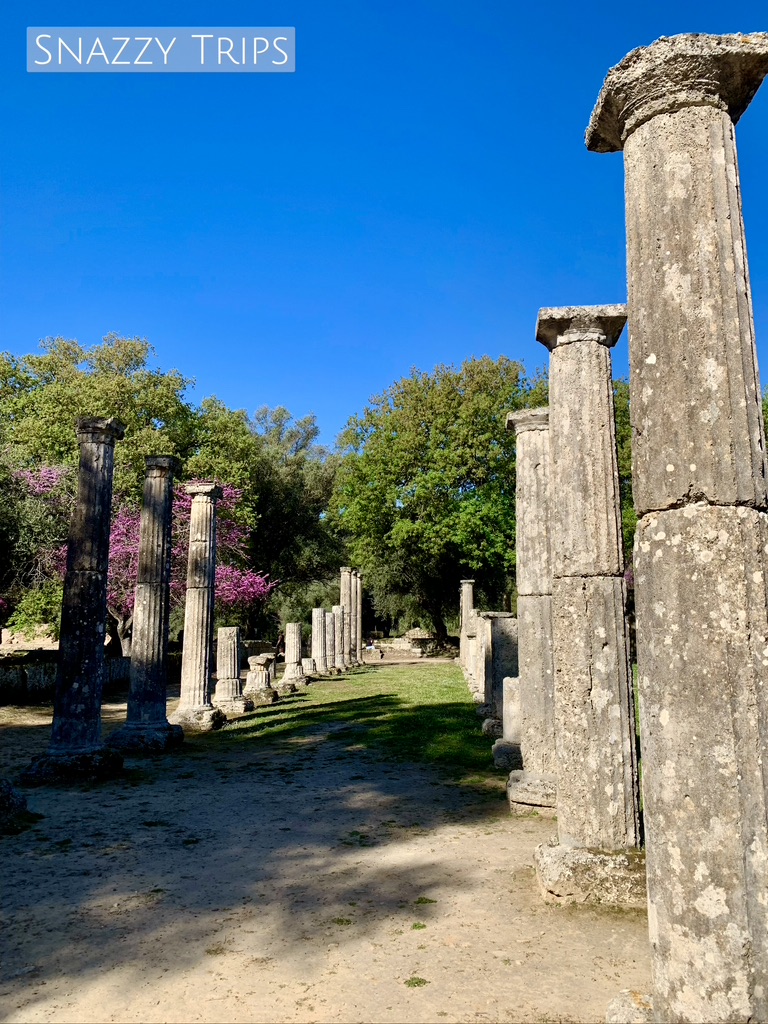
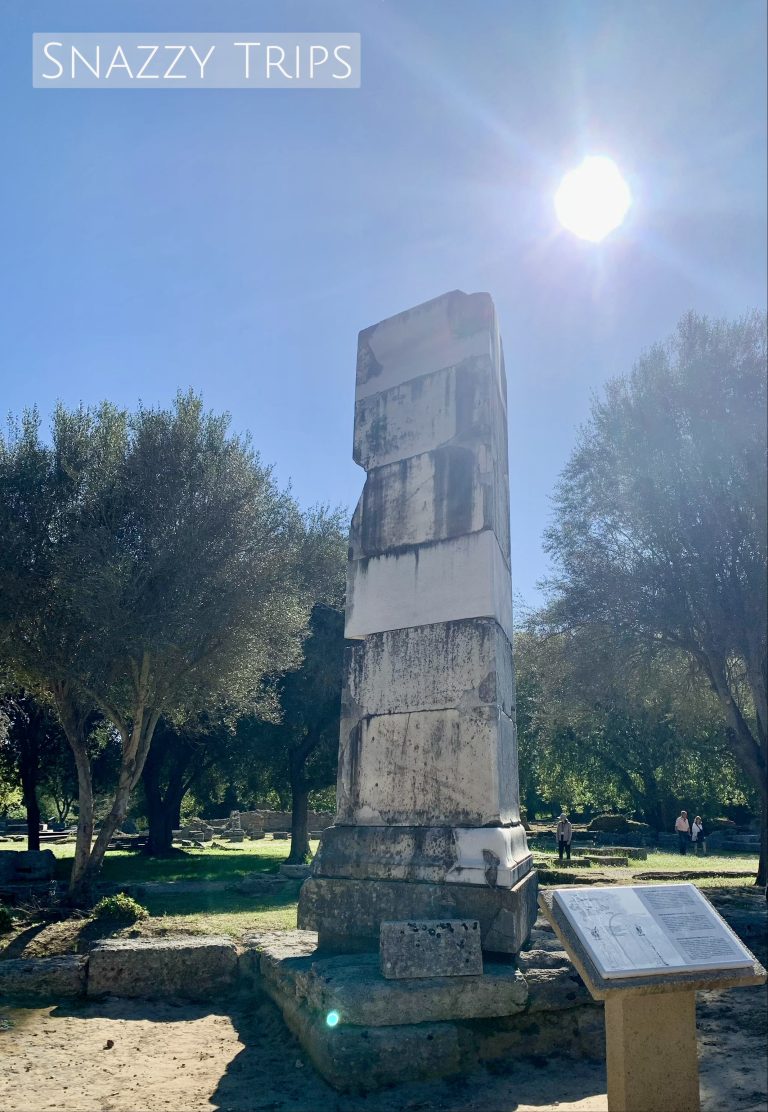
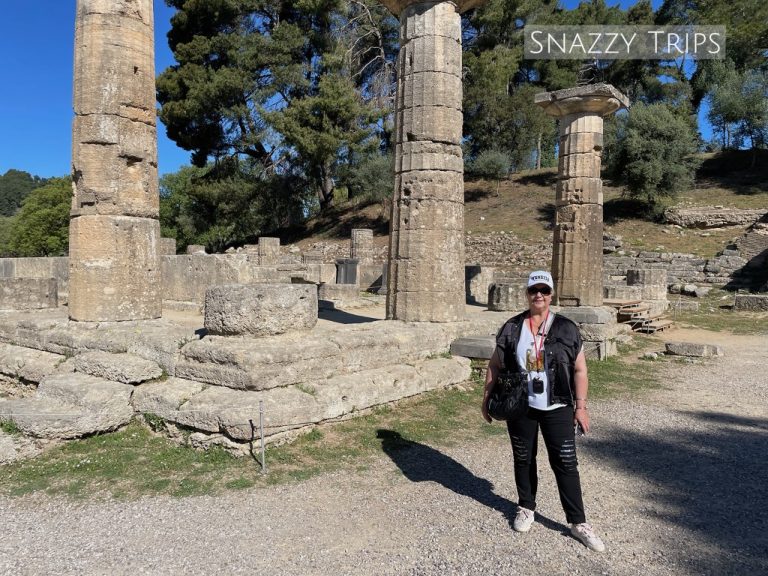
We can see remains of a lot of the original buildings, with columns, plinths and boulders scattered everywhere. There are monuments which have been partly reconstructed to give us an inkling of their original grandeur. From the large number of temples, monuments, altars and other structures that were here we gain a sense of the cultural importance of the site.
It’s quite a moving experience wandering around the iconic ruins and imagining the days of the Ancient Olympics in their heyday.
Now it’s a hot tourist destination for sports people, history lovers, architecture enthusiasts and archaeology aficionados, with hundreds of thousands visiting the birthplace of the Olympic Games each year.
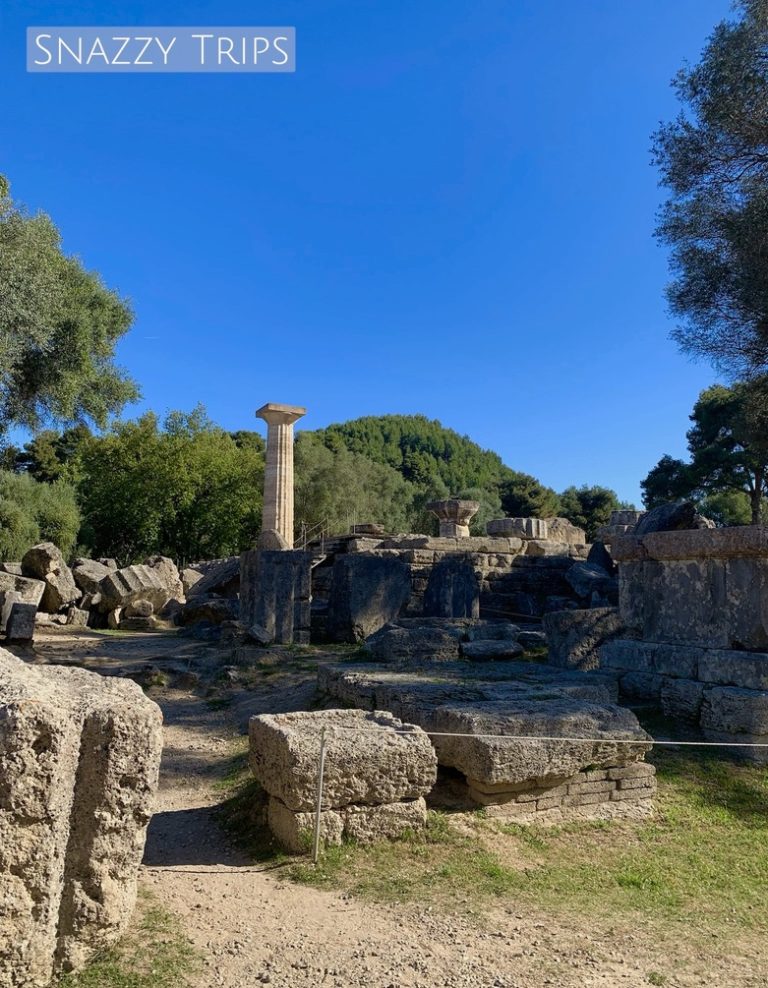
Excavations are still ongoing and research of the site continues. In March 2021, archaeologists discovered a 2,500 year-old bronze bull idol near the Temple of Zeus.
Greek Mythology And The Ancient Olympics
The area was known as Valley of the Gods. According to Greek Mythology there were 12 Olympian Gods who lived on Mount Olympus and the Gods had competed in the games, against each other. Zeus and Herakles were wrestlers, Apollo and Hermes were runners, Ares a boxer.
Zeus was the leader of the all the Greek gods and was known for wielding thunderbolts, hence he was the God of Thunder, amongst other things, such as, Power, Honour, Law. He was protector and father of all the Gods and humans. He was married to his sister Hera.
The games were held in his honour, and a temple was built in his name, the largest and most important building here. The Temple of Zeus was the largest Doric temple in Greece, built about 460 BCE.
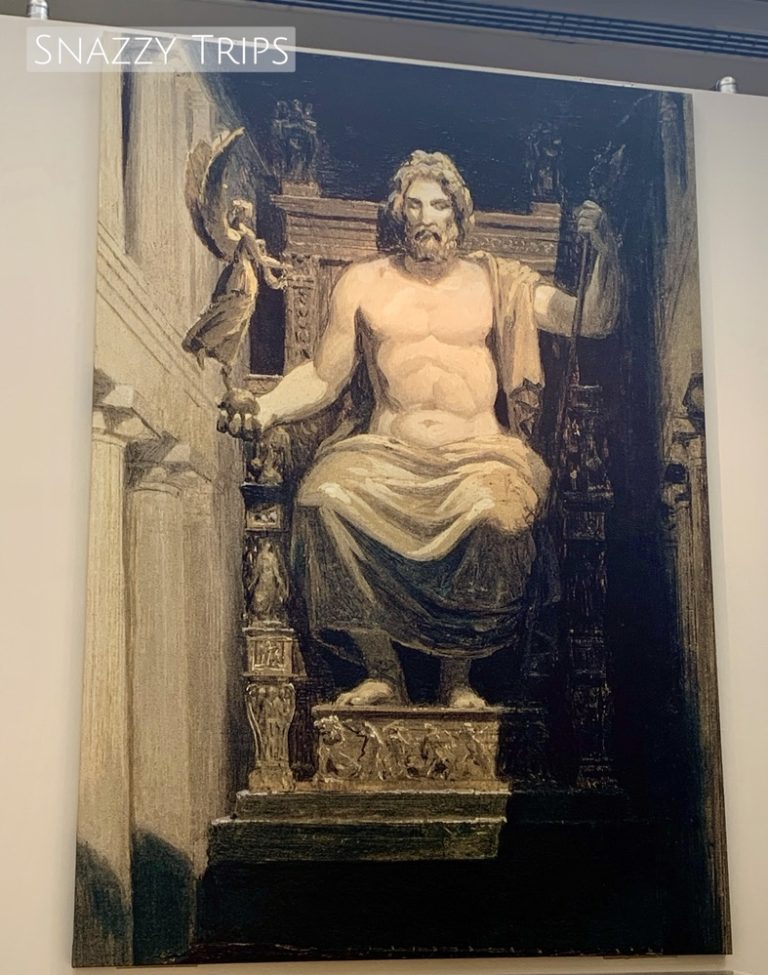
Inside the Temple of Zeus was an enormous statue of him sitting on a throne, 40 ft high, made of ivory and gold, which no longer exists. The Statue of Zeus is one of the 7 Wonders of the Ancient World.
The Olympic athletes would take an oath to obey the rules of the games in front of the statue of Zeus and offer gifts. Furthermore, a sacrifice of 100 oxen was made to Zeus during the festival of the games.
The Ancient Olympics were as much a religious festival as a sporting competition, lasting for several days. Competitors would pay their respects to the Greek Gods, seek guidance from them and bestow gifts upon their favourite deities.
Ancient Olympic Events
The Ancient Games only featured a few events, most of which continue to be held in modern day Olympics. However, there were no team events, only individual competitions.
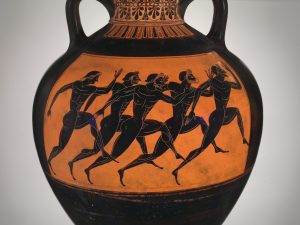
Athletics was the main attraction and the events were: running, a type of long jump using weights, discus throwing, javelin throwing, and pentathlon, which included boxing. There was also wrestling and a hugely popular ‘no rules’ type of brutal martial arts called Pankration, where they fought till they couldn’t go on.
Of course, chariot races, including four horses and two horses, and horse racing were also part of the competition. However, no saddles or stirrups had been invented yet. These equestrian races were conducted in the Hippodrome, but no remains have been found of this structure yet. Horse races were extremely dangerous, and serious accidents would have been a result of locking axels, shunting, flipping over and crashing.
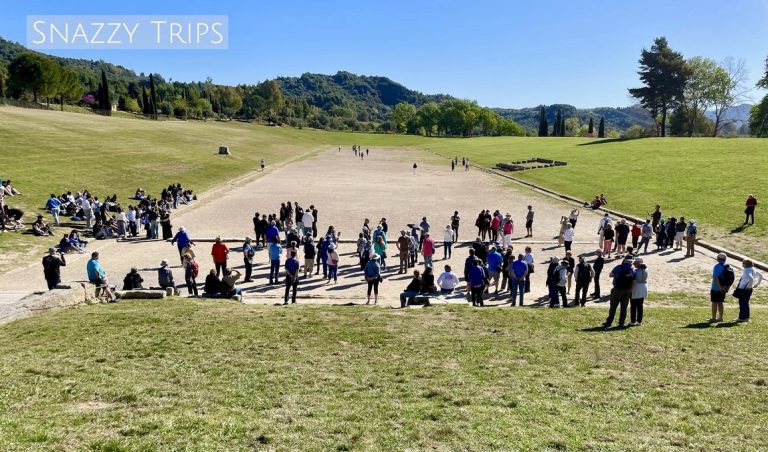
The most prestigious event was the 190 metre sprint, which was the length of the ancient stadium at Olympia (seen below).
Medals weren’t handed out to the winners. Instead, they were bestowed a gift, such as an olive wreath, a valuable object, or money.
On the final day of the Games, the closing ceremony was held and a banquet for everyone.
Who attended the Ancient Olympic Games?
Male Athletes
All Greek male citizens, men and boys, who were born free, were called to join the grand event, from all Greek colonies around the Mediterranean. They came from places in modern day Spain, Italy, Egypt and Turkey, travelling for days by land or sea, for the honour and prestige of competing in the event.
They would arrive a few weeks early and stay in hostels or tents onsite, practice and prepare before participating in their chosen events.
Some athletes had trainers, others were on their own.
Spectators
There were tens of thousands of spectators attending who came not only for the sport. They would also partake in religious rituals, social and business interaction. It was an occasion to eat, drink and revel in the festivities. It became very important to the Greek people over time, giving them a sense of cultural identity, particularly for those who didn’t actually live on the Greek mainland.
Others
Others who attended were artists, poets, musicians, philosophers, politicians who would come to display their wares and spread their word to the mass of people.
Photos of Archaeological Site of Olympia
Purpose Of The Ancient Olympics
The ancient Olympics helped unite the people of the Greek world, to encourage peace across the regions and cease fighting, at least for the duration of the games. A ceasefire from battles was put in place thus allowing safe passage across the lands for people to travel to the Games. They gathered together in harmony, temporarily at least, until the games finished.
The Games gave citizens something to look forward to and a sense of pride to be involved, whether competing or watching, particularly for those from faraway territories of the Hellenic world.
The ancient Games were also held to encourage young men to be ready for battle, to defend their land. A military, in the formal sense, didn’t exist.
As the Games grew in popularity over the years, Greek colonies became more populated, particularly if they were fortunate to have a local Olympic hero living there. Thus the Games actually helped grow the Greek empire.
Greeks believed a fit body meant a more virtuous person – ‘healthy body, healthy mind’. Athletes were considered to be akin to the Gods. Some athletes were worshipped and had statues made of them.
Various athletes became quite rich from their winnings in the Games and other competitions.
The Naked Olympics
Men competed in the events completely naked at the Ancient Olympics. Greeks valued strong powerful men and the ancient games showcased the nude male physique and displayed its strengths. They took pride in their bodies and weren’t ashamed to parade around for all to appreciate.
By baring the bodies, their movements wouldn’t be restricted during competition. Perhaps they believed they could run faster and throw further without cumbersome garments.
Historians think it may also have been a sort of initiation into manhood for young boys, to bare all and show their masculinity. Another school of thought was so people could ensure no females were in the running!
Who Couldn't Attend The Ancient Olympics?
Women were excluded from participating in the Games as a whole and were punished if they even went to watch the event. Sport was strictly for men only.
Non-Greek speaking people were barred from competing in the Games. Foreigners weren’t allowed.
Slaves and barbarians couldn’t take part either, nor could criminals.
However, there was a loophole that allowed female chariot owners to attend. For example a Spartan princess owned a chariot which competed, and actually won. She was able to claim the win as the owner.
There is some confusion as to whether some women were ever given permission to be a spectator on certain occasions. Scholars are divided on this matter.
There were stories of women going so far as dressing as men to gain entry to watch their loved ones compete.
However, once the Romans occupied Greece, women and girls were allowed to take part in the games and festivities, as too were non-Greek speaking people.
The Other Side Of The Ancient Olympic
Unfortunately there were many unsavoury aspects about the Games.
It was always held in oppressive Summer heat, with little rain at that time of year, unsanitary conditions prevailed in the athletes village, and unclean water, until in the later years when the Romans built an aqueduct bringing fresh water to the site.
The games enticed crowds of people to the games, many of whom drank excessively and behaved unruly. Prostitution was common, as was profiteering by peddlers.
Good sportsmanship was optional and the rules weren’t always adhered to. Some contestants resorted to cheating and taking potions to better perform. Breaking bones of competitors, like their fingers, was a way to gain advantage. There were participants who were prepared to do whatever it took to achieve glory.
The Greek audience was quite bloodthirsty, tolerating a high level of violence in boxing, wrestling and pankration. No boxing gloves of any sort were used, the only move prohibited was eye gauging.There were contestants who even died from injuries sustained.
Coming second or third were undesirable outcomes for athletes, as there was no recognition given to any placing other than winning. Times and distances achieved by the athletes also seemed to be irrelevant.
Buildings and Monuments of Olympia
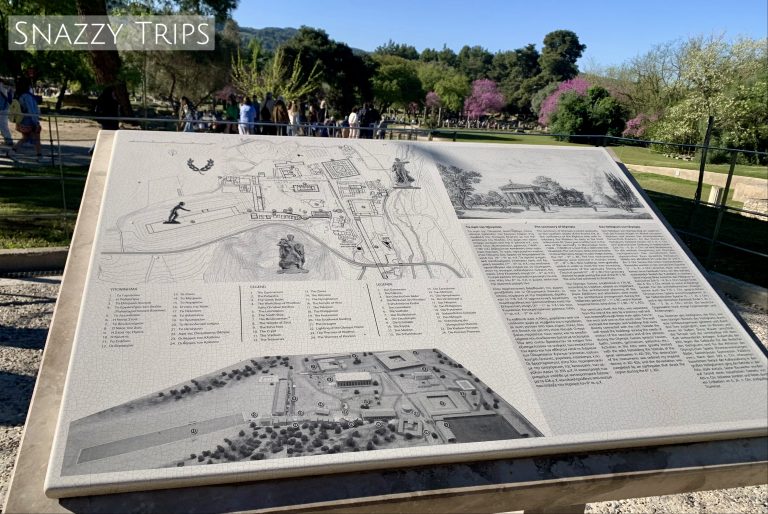
Olympia had many architectural buildings including temples, altars, treasuries, and majestic monuments. The site now includes ruins of:
- Temple and Statue of the God Zeus, the biggest and most sacred monument.
- Temple of the God Hera, sister/wife of Zeus, the oldest monument.
- Prytaneum, administrative centre.
- Gymnasion, for training.
- Palaestra, for practicing.
- Hippodrome, for chariot racing.
- Stadium, for athletics.
- Temple of Nymphaeum, for water supply from aqueduct.
- The Philippeion, a circular building.
- Pheidias workshop, where statues were made.
- Roman Emperor Nero’s house.
- Leonidaion, hostel for competitors.
- Thermal baths.
- Treasuries, stored valuables from participating Greek states.
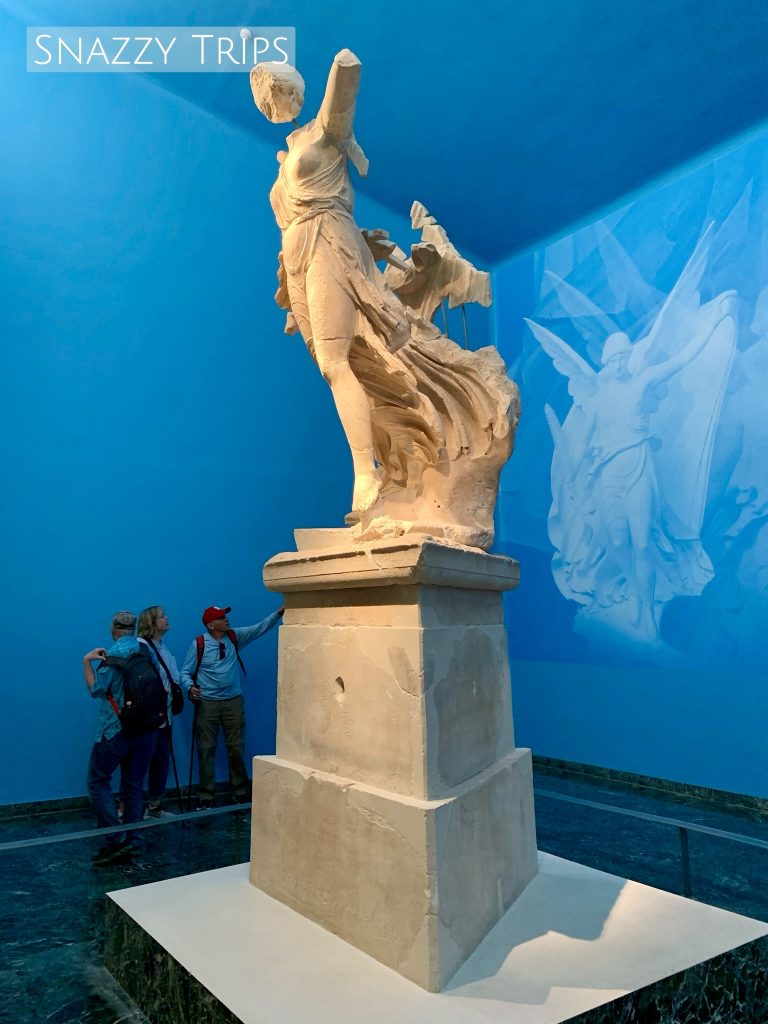
- Statue of Nike.
The Flame
There was no Olympic torch back then. But the flame of the torch for the Modern Games is always lit here in a ceremony before each Olympics and transported to the site of the upcoming games. An old technique of lighting the torch through the sun’s rays is implemented.
However, during the Ancient Olympics there was a hearth lit with a perpetual fire lasting throughout the games in the Prytaneum building.
Archaeological Museum of Olympia
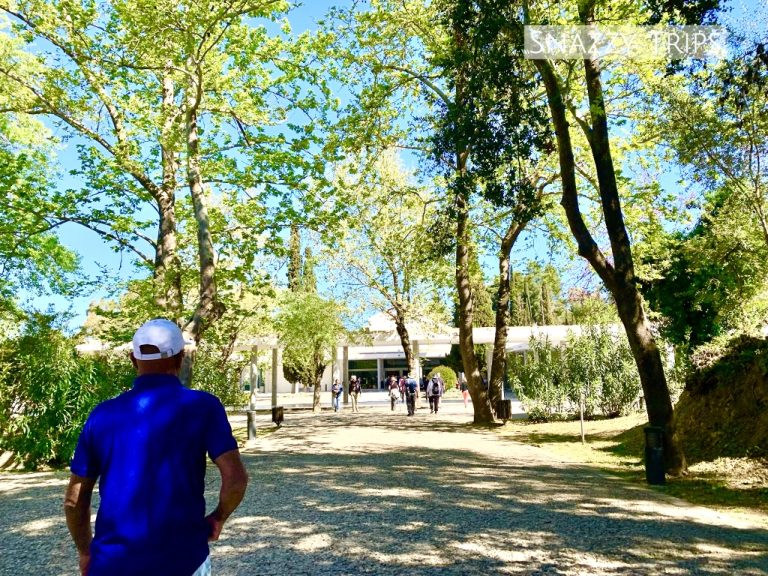
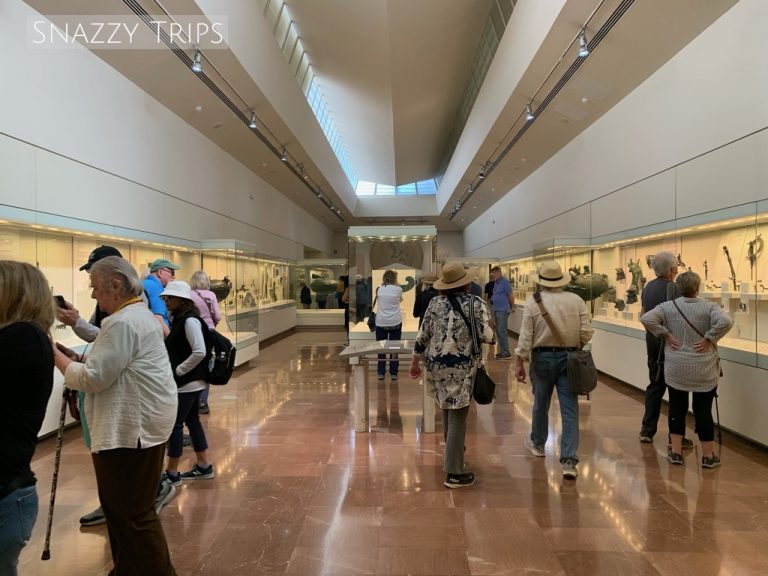
Directly opposite the main entrance of the archaeological site you will see a path leading to the Archaeological Museum. A small but very interesting museum exhibiting treasures discovered during excavations of the Ancient Olympic site.
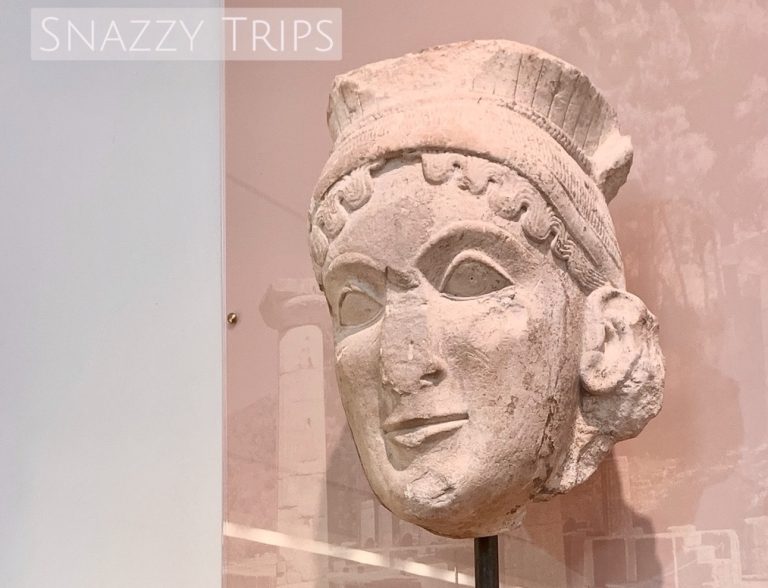
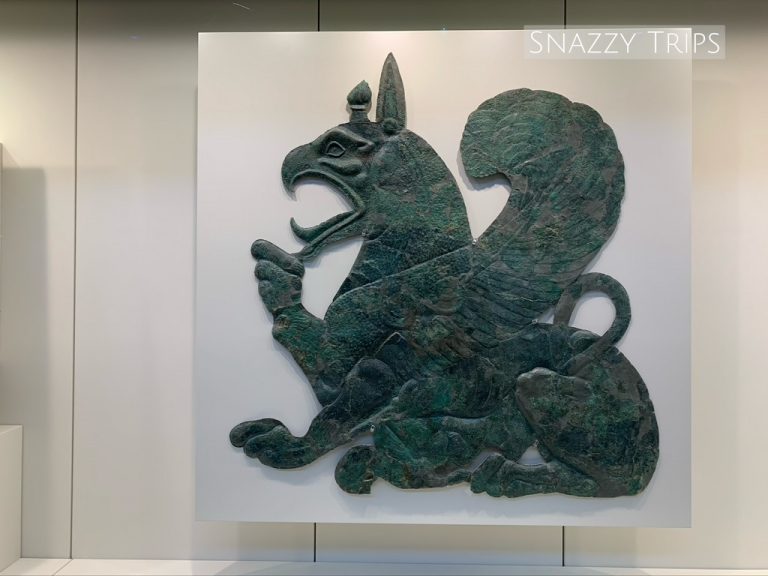
Quite a vast collection of antiquities are on display, including a replica of the statue of Zeus and remains of other statues of Gods.
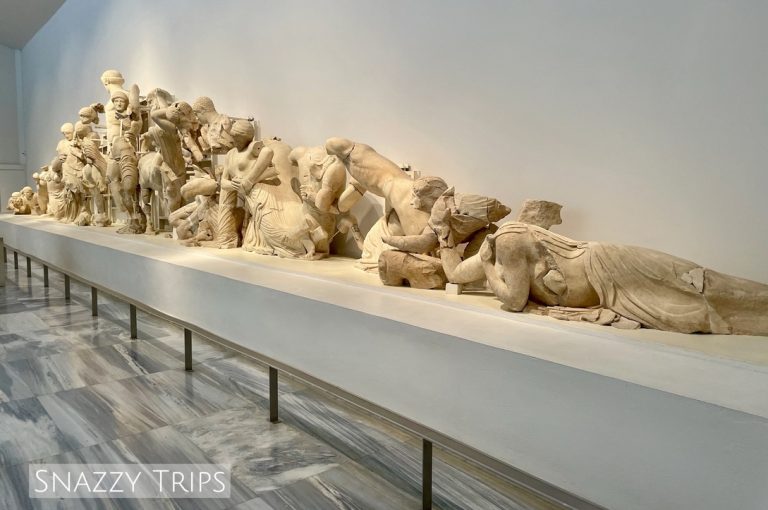
An impressive array of marble, bronze, and clay artefacts are housed, such as friezes, cauldrons, vases and more. A highlight is the decorative pediment of the Temple of Zeus, almost completely intact (see below).
Don’t miss the museum when you’re here, well worth the visit to give you a full appreciation of the historical site.
The Stadium of Olympia
The stadium of Olympia is nothing like the Colosseum in Rome. It is now as it was back then basically an open field with a rectangular clay track in the middle, with stone start and finish lines at either end.
The main sporting facility for the most prestigious sporting event in the ancient world was quite small and underwhelming. It was all open, there were no walls to the stadium, no shade at all, no steps and no seats, other than for the judges. Spectators would sit or stand on the sloping banks, often in dirt and the hot Summer sun, to watch most of the Olympic events here.
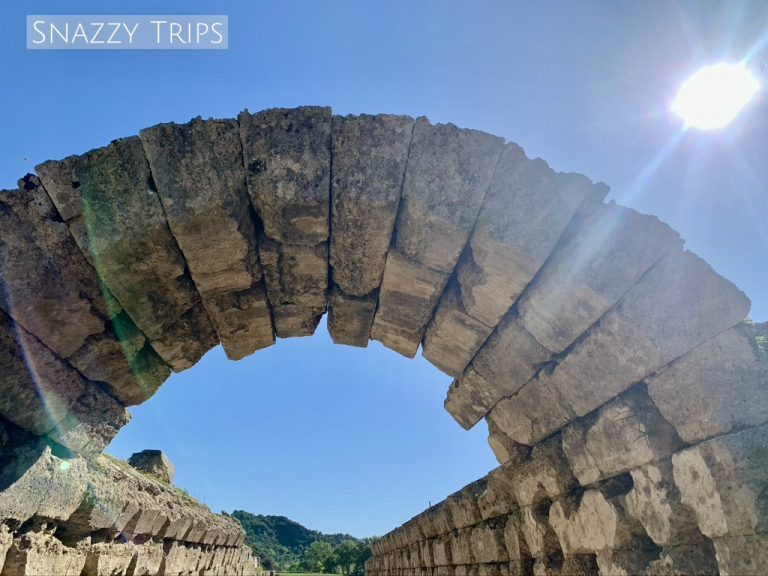
Considering Olympia was very prosperous and the Olympic site was extensively adorned with fabulous temples and monuments made of marble, ivory, bronze and gold, one would expect the location of the main spectacle to be a little more grand. But, apparently there wasn’t even a Greek column, a podium or statue! Just an archway leading into the competition area.
Other Facts About Archaia Olympia
- The whole sanctuary is a UNESCO World Heritage Site.
- The very first Olympic Games had only one event – the 190m running race.
- The Eleans were the people who ran the games.
- The competitors used to oil their bodies before competing.
- The third day of the games would always coincide with a full moon and the whole day was for worship.
- The only woman able to watch the games was the Priestess of the Temple of Demeter.
- The marathon wasn’t an event yet.
- Leonidas of Rhodes (164 –152 BCE) is considered the greatest sprinter in history.
- The Ancient Olympics lasted 12 centuries.
- In the 2004 Athens Olympic Games, the shotput event was held here for both men and women.
Town Of Olympia
The town of Olympia is a beautiful part of the Greek countryside where you will find a small village that caters to the tourists. Small hotels, cafes and shops are all within walking distance from the archaeological site.
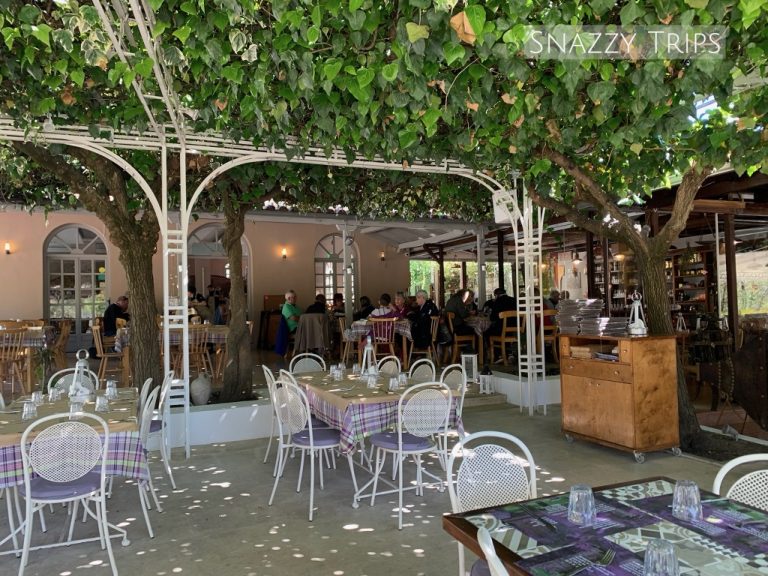
We stopped for refreshments at a gorgeous place called Ambrosia Cafe Restaurant (see above).
There is an opportunity for hiking and swimming in the lakes in the area, and an International Festival of the Arts of Ancient Olympia is held in the Summer.
Olympia is approximately three and a half hours drive from Athens.
Trains and buses operate from Athens also.
I arrived from Katakolo Cruise Port and it was a 34 km drive to Olympia.
Please share on your socials
Other Posts
-
12 Best Prague Tours And Experiences
DAY TRIPS, FEASTS AND EXCURSIONS Prague is one of the most beautiful cities in Europe, with a gorgeous fairytale old town, an abundance of medieval monuments... -
Fun Facts About Amsterdam
25 WEIRD AND WONDERFUL THINGS I'VE DISCOVERED A popular travel destination with UNESCO listed sites and a vibrant culture, the wonderful city of Amsterdam, capital of... -
Day Trip To Alkmaar From Amsterdam
IS IT WORTH SEEING? Yes, absolutely, a day trip to Alkmaar from Amsterdam is worth it, an ideal excursion, or to enjoy a short break for... -
Best Things To See In Wertheim Am Main
Visitors guide of the best things to see in Wertheim am Main, a charming medieval German town, with beautiful half-timbered houses and a well-preserved Old... -
Classical Concert At Liechtenstein Garden Palace
AN EXQUISITE EVENING IN VIENNA During my 3 day visit to Vienna, the capital of Austria, I had the opportunity to attend a magnificent cultural event,...


13 Comments
What are the best ways to learn about the history of the original Olympic Games while visiting Olympia?
It’s a good idea to take a tour with a local guide knowledgable in the history of the location.
I would love to visit and see all the ancient historical sites and ruins.
Loved the post, very in-depth! I love learning about the history behind a place, and how appropriate to learn about this place considering the recent Olympic Events in Paris! It’s too bad women were not able to watch. I also thought it quite funny that the men oiled their bodies – could you imagine throwing a discuss with olive oil on your hands? lol!
Wow – how cool is this! And so timely with Paris coming up so soon – I love that the quintessential purpose of promoting peace has remained till this day.
I love my ancient Greek sites, and this serves as a great reminder to visit Greece after a long hiatus!
This is so cool! I would love to go there! Thanks for the tips
Wow! What a fascinating place!
Olympia had not been on my list to visit, but looks quite interesting. I like the idea of the olympics archeological museum.
Wow! So much information. I have not made it here yet, but this looks cool and your photos are great. Thanks.
Wow, quite informational article, definitely a must-visit in Greece!
I would love to visit this place! Thank you for all the information 🙂
I didn’t know that the Ancient Olympics lasted 12 centuries, that’s so cool. I am a huge fan of the Games and would love to visit this site one day. Thanks for the history lesson!