Kiyomizu-dera Temple is a must-see attraction when visiting Kyoto, the cultural heart of Japan. As one of the most famous Buddhist Temples in the city and a UNESCO World Heritage Site, 5 million people come to the temple each year.
A magnificent cultural landmark of Japan and a very popular destination in Kyoto, the Kiyomizu-dera Temple is a sacred place located amongst the forest, half way up Mt Otowa, where people come to worship the deity Kannon and admire the magnificent scenic views.
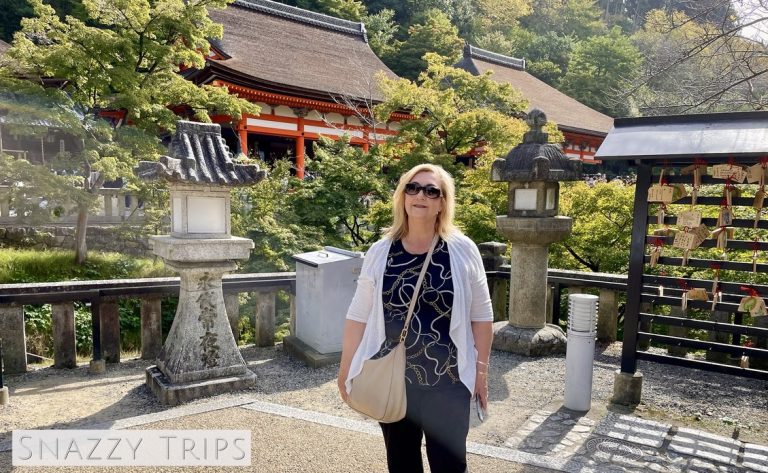
I visited on a beautiful Autumn day in October and it was quite busy with tourists exploring the various buildings that belong to the temple, praying and making wishes. It wasn’t a tranquil place like you would expect when visiting a holy temple, it was more of a fun, festival atmosphere.
Visiting Kiyomizu-dera Temple is a wonderful and memorable experience I recommend for anyone interested in Japanese culture, history, architecture, scenic walks and spiritual guidance.
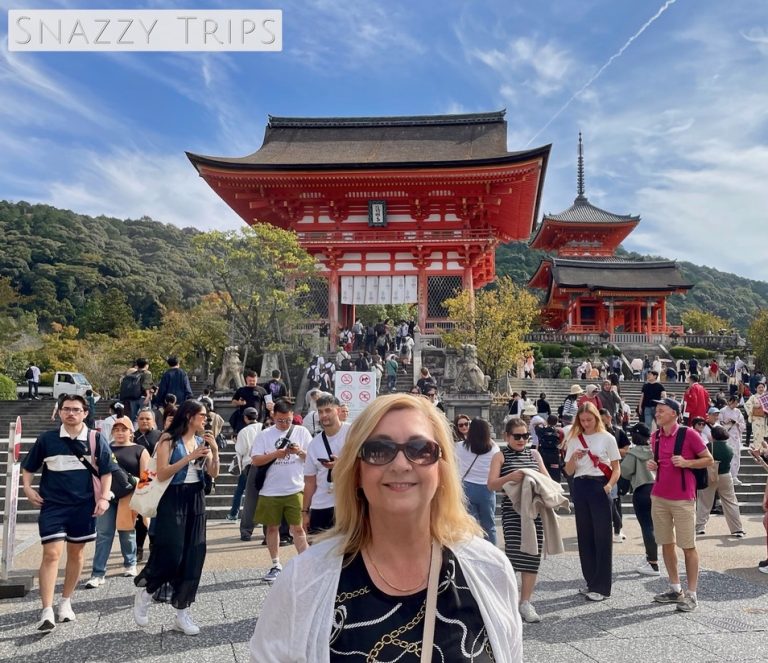
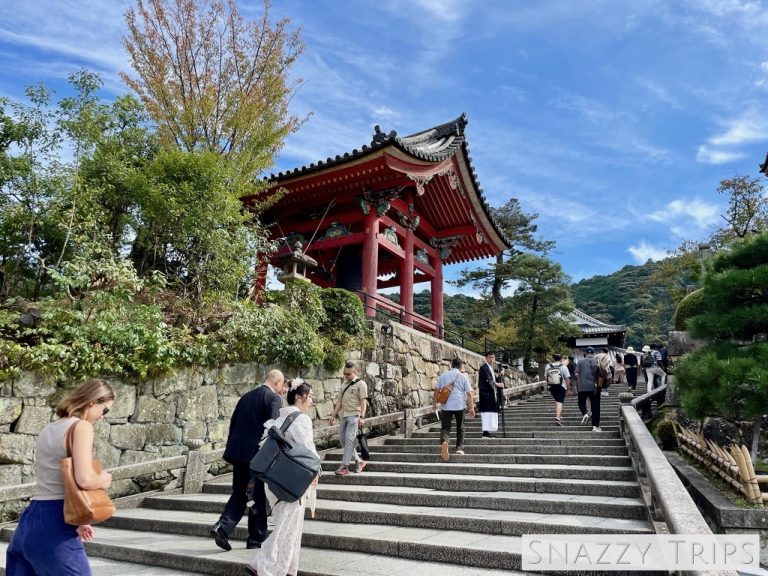
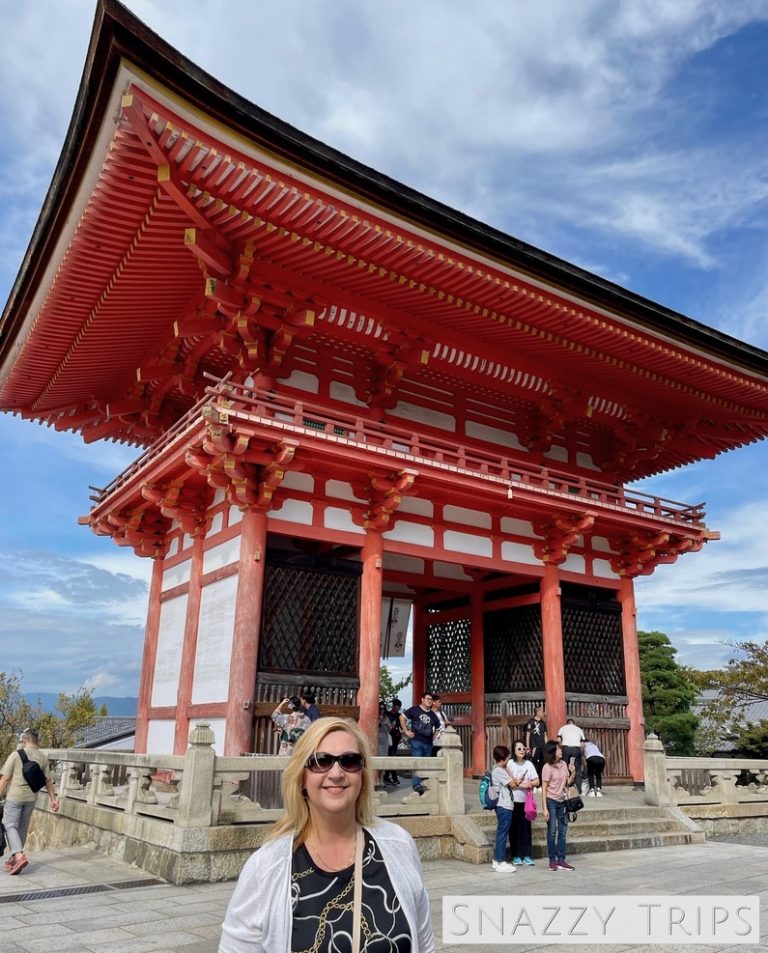
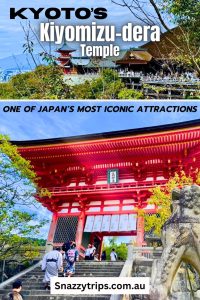
Main gate - Nio Mon
History of Kiyomizu-dera
Founded in the year 780, the temple is known as the ‘Pure Water Temple’, named for the natural springs originally found here by a monk.
One of the historic monuments of Kyoto and rich spiritual places that spans centuries, Kiyomizu-dera Temple is named for the Buddhist deity of Mercy called Kannon and has been a pilgrimage site for over 1,000 years.
It is a prime example of Japanese Buddhist architecture, constructed using wood, with various pagodas, shrines, and halls.
Over the years, the temple has suffered many fires and has been rebuilt. Today most of the structures originate from the 1600’s and are well maintained. The bright vermillion red is used for pagodas and gates, true to traditional aesthetics of Japanese culture.
What To See And Do
The temple precinct includes a number of buildings, 30 in fact, of smaller temples, pagodas, halls and shrines, spread out over 130,000 square metres.
Various dragon statues of divine properties, symbolising wisdom, strength and protection are located throughout the grounds.
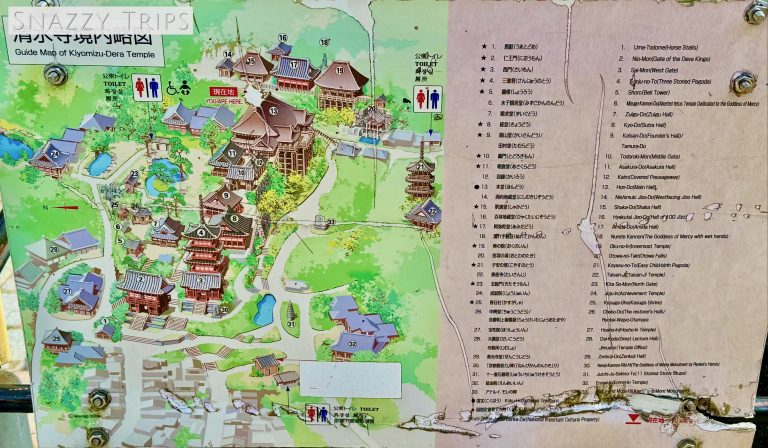
Kiyomizu-dera Temple site map
Main Hall and Balcony
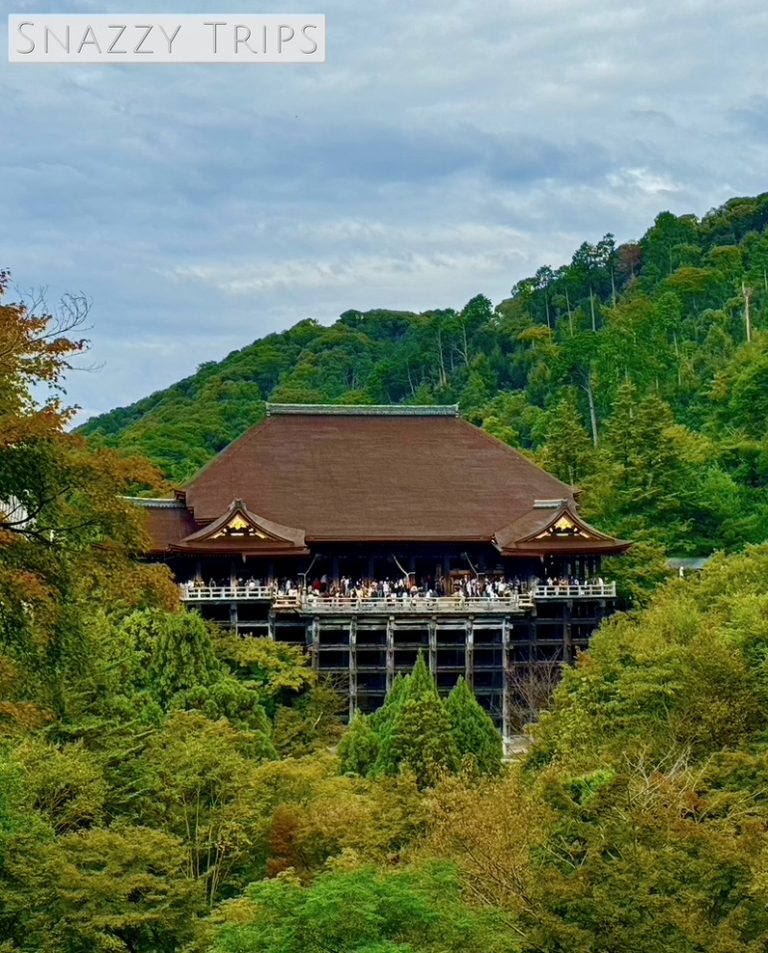
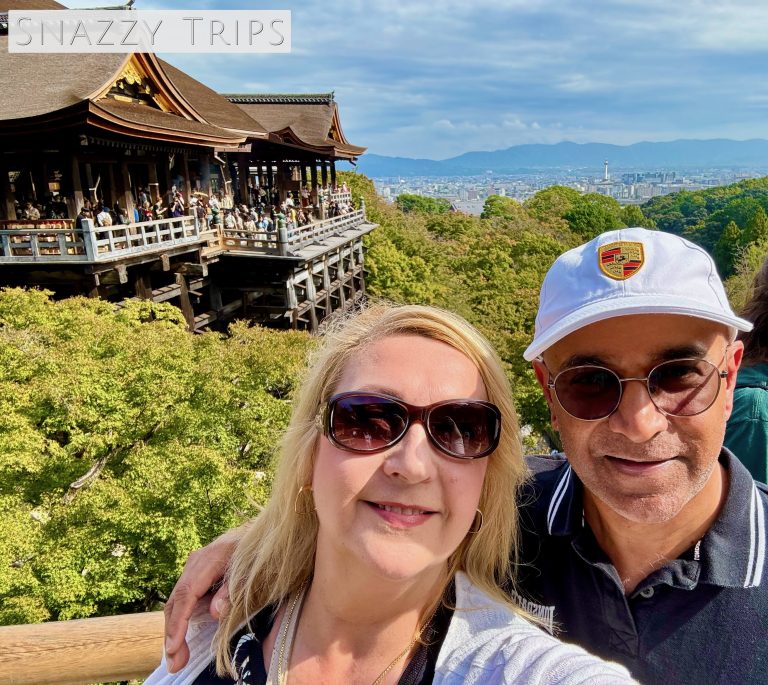
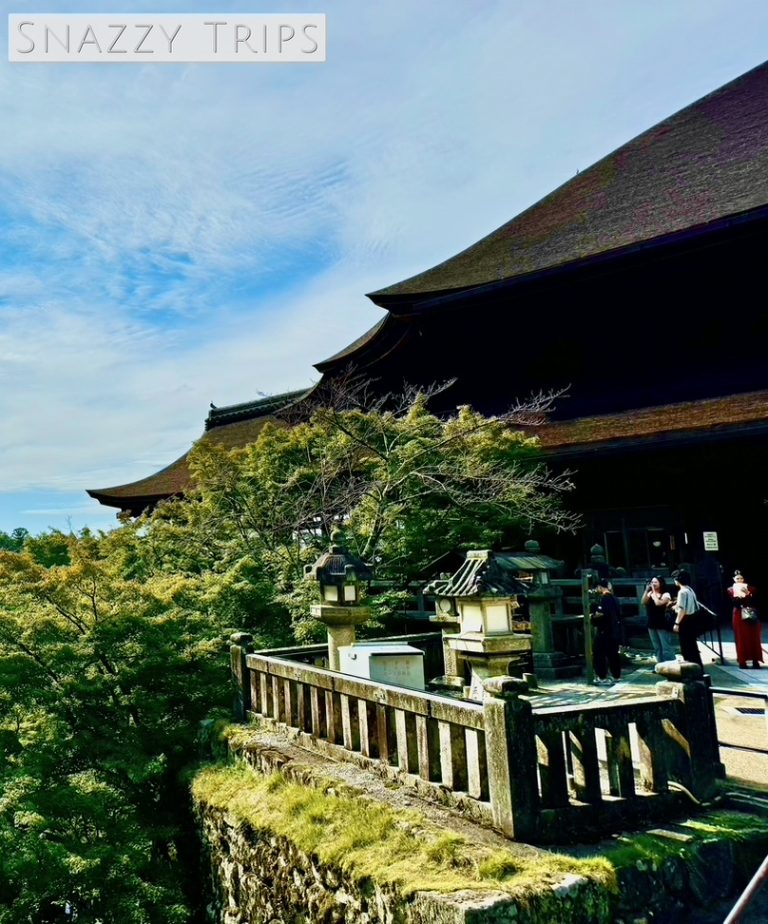
The highlight of the whole temple is the enormous wooden balcony/stage of the main hall (Hondo), jutting out 13 metres high over the mountain-side, offering stunning views of the landscape. It was constructed without nails, only interlocking timber joints, an ancient Japanese construction method.
The image of the balcony hanging amongst the trees is probably one of the most iconic views of Japan. From the main balcony you can view the mountainside full of Cherry trees and Maple trees which adorn the landscape in various colours throughout the seasons. Spring time boasts a sea of pretty cherry blossoms and the Autumn foliage is a vision of red.
Large balconies are quite a common feature of temples and shrines, to accommodate large groups of pilgrims, rituals and performances.
The inner sanctum of the Hondo is usually closed to the public. It houses an 11-faced statue of the deity Kannon, with a thousand arms, the symbol of worship, symbolising mercy. Special tours are sometimes available for the inner
Hondo Hall, Balcony and Pagoda
Hondo hall
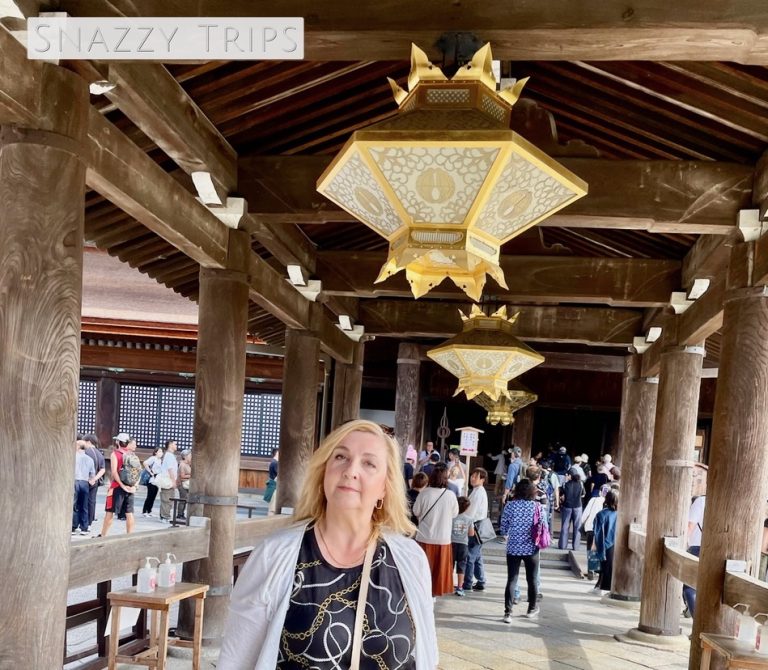
Walkway to main hall
Hondo balcony
Other Highlights In The Temple Precinct
Nio-mon Gate and Sai-mon Gate – Main entrances to sacred areas, both for meditation whilst gazing at the view.
Jishu Shrine – at the rear of the main shrine, people pray to find love, at the two large stones.
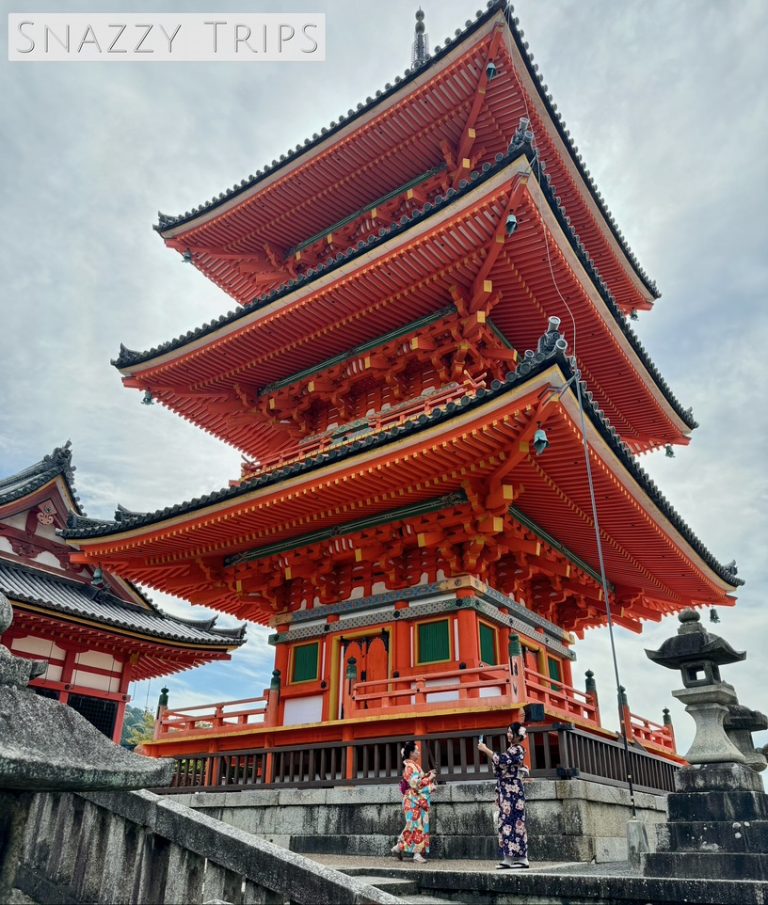
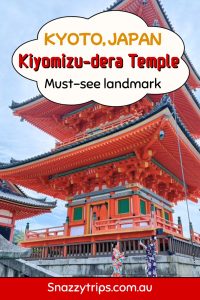
3-Storey Pagoda – one of the tallest in Japan at 31 metres high, a bright vermillion red colour and beautifully decorated, it is a highlight of the temple.
Koyasu Pagoda – a smaller pagoda.
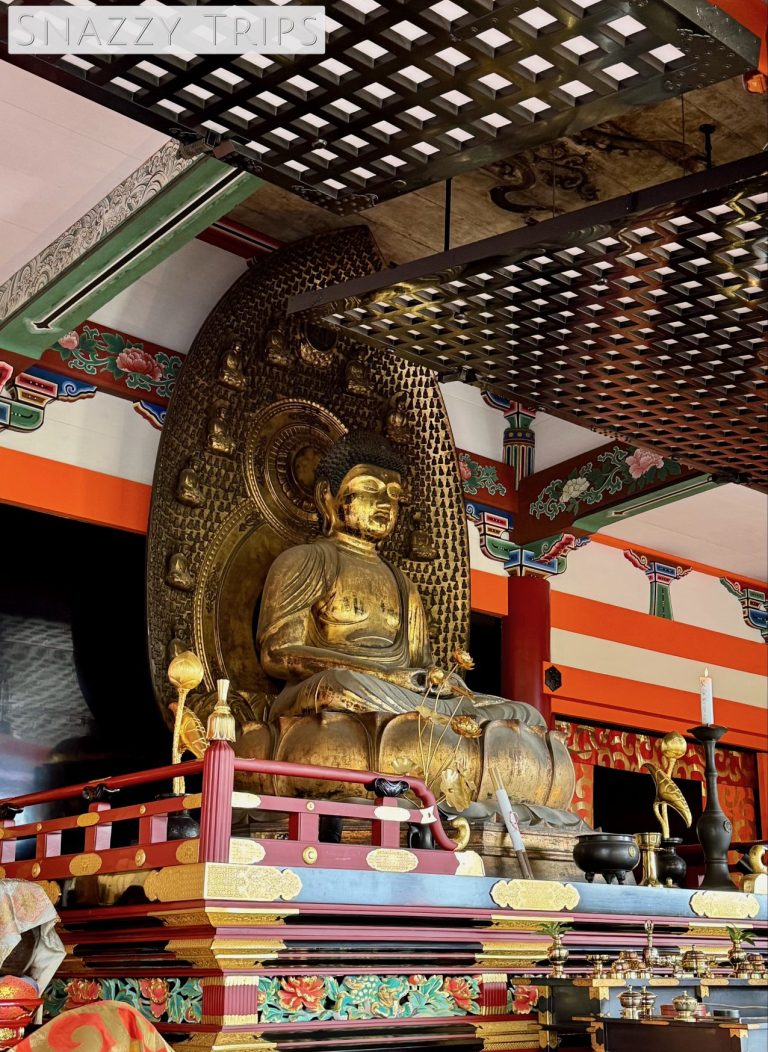
Amida Hall – houses a large golden Buddha.
Okunoin Hall – a small version of the main hall with other Buddha statues.
Bell Tower – originally used to call the monks, nowadays rung on New Year’s Eve.
Zuigu-do Hall – dedicated to Buddha’s mother, inside is a dark tunnel you can walk through, symbolising a mother’s womb.
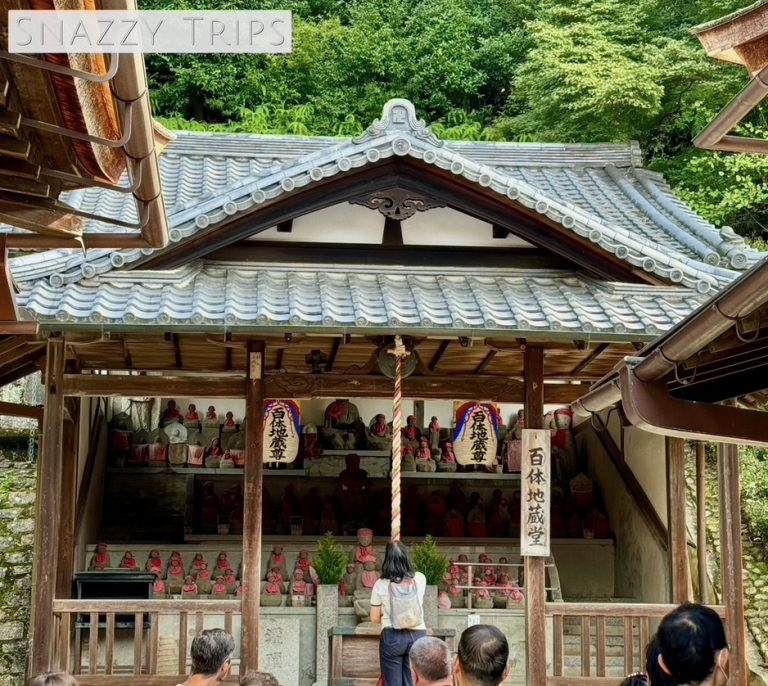
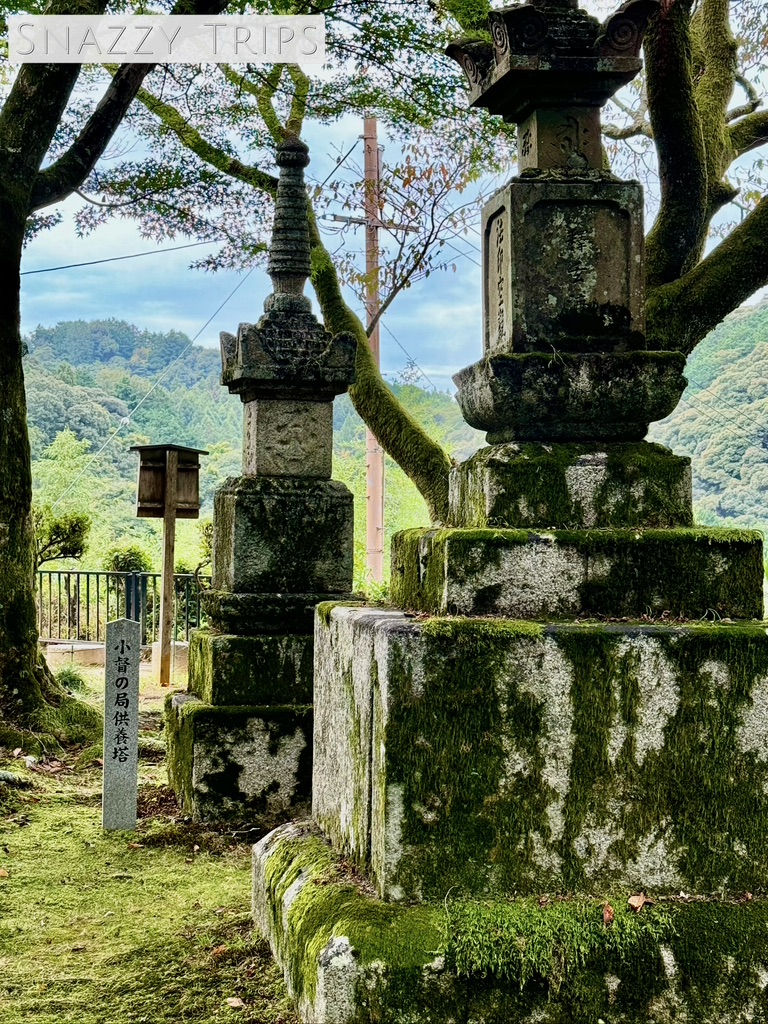
Statuettes of Jizō – in a small shrine, there is a collection of childlike carvings with red bibs and orange hats representing children who have died.
Otawa Waterfall – where people line up to drink from the 3 streams of water which are thought to have therapeutic properties, each one with different qualities – beauty, intelligence, and long life.
Seikan-ji Temple – a hidden gem, this small temple is located further up the mountainside, about 20 minute walk behind Kiyomizu-dera, a very peaceful spot and with views.
Bell Tower
Koyasunoto Pagoda
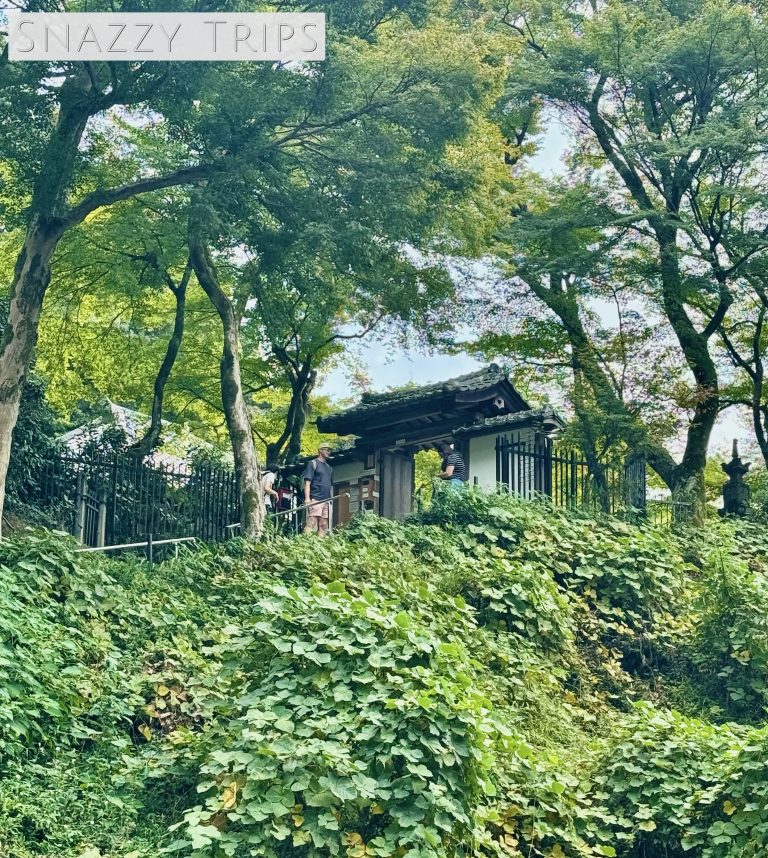
Temple Gate
Golden Buddha in Amida Hall
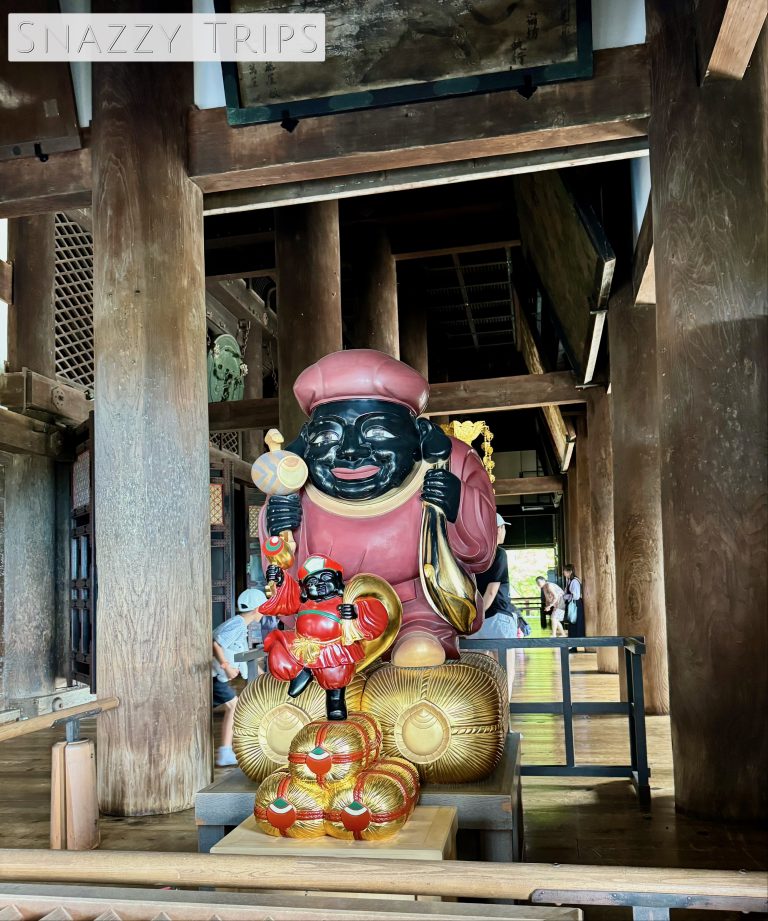
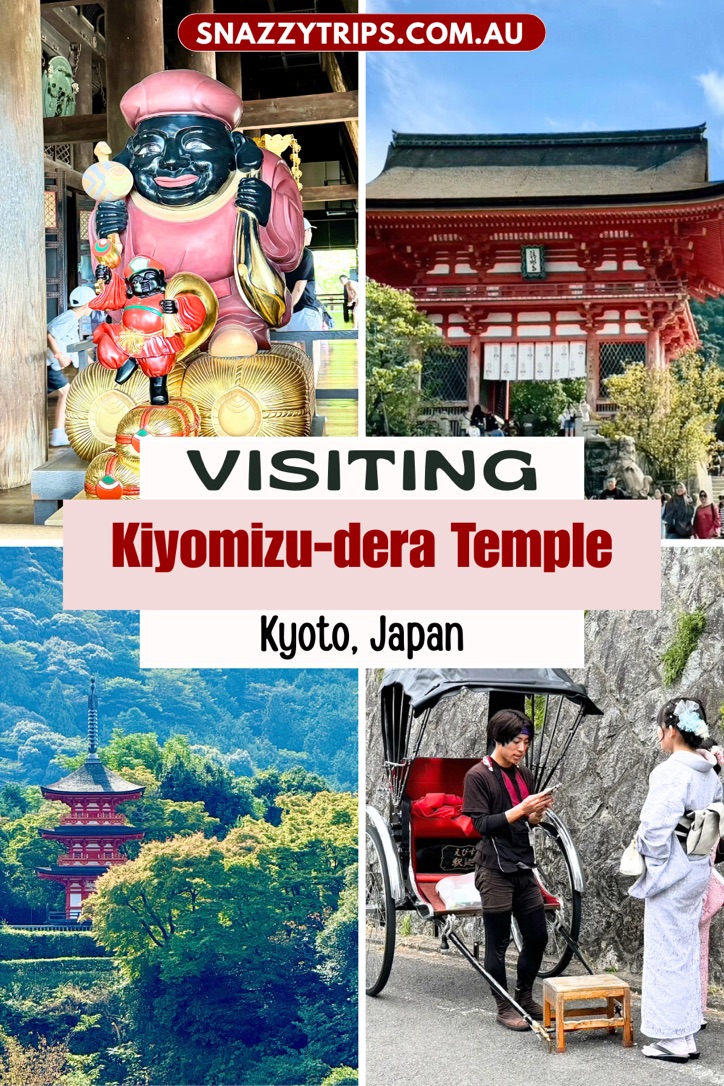
Daikokuten, God of Wealth
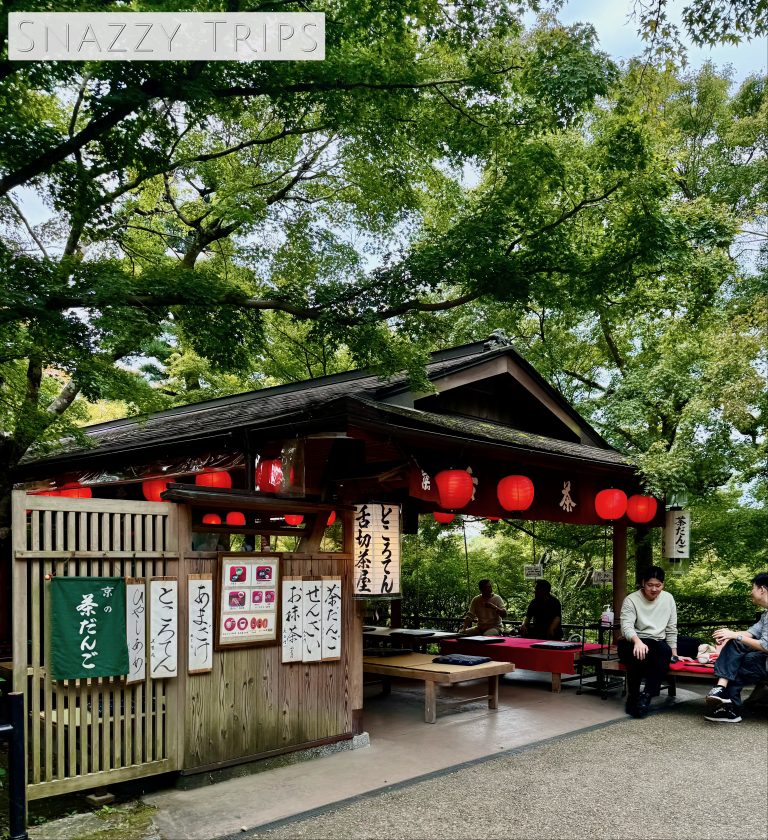
Restaurant at the temple
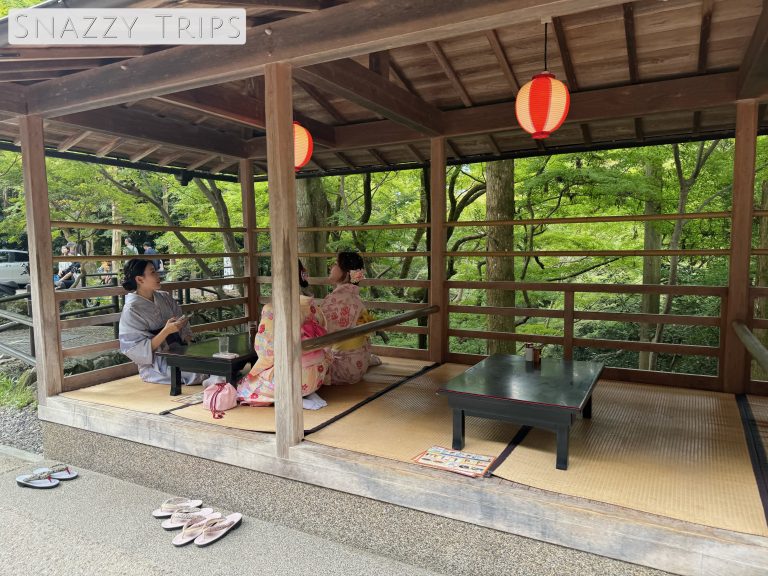
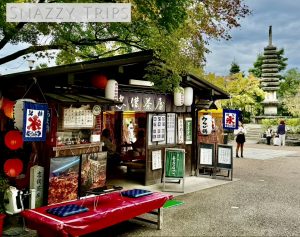
Tea House at the Temple
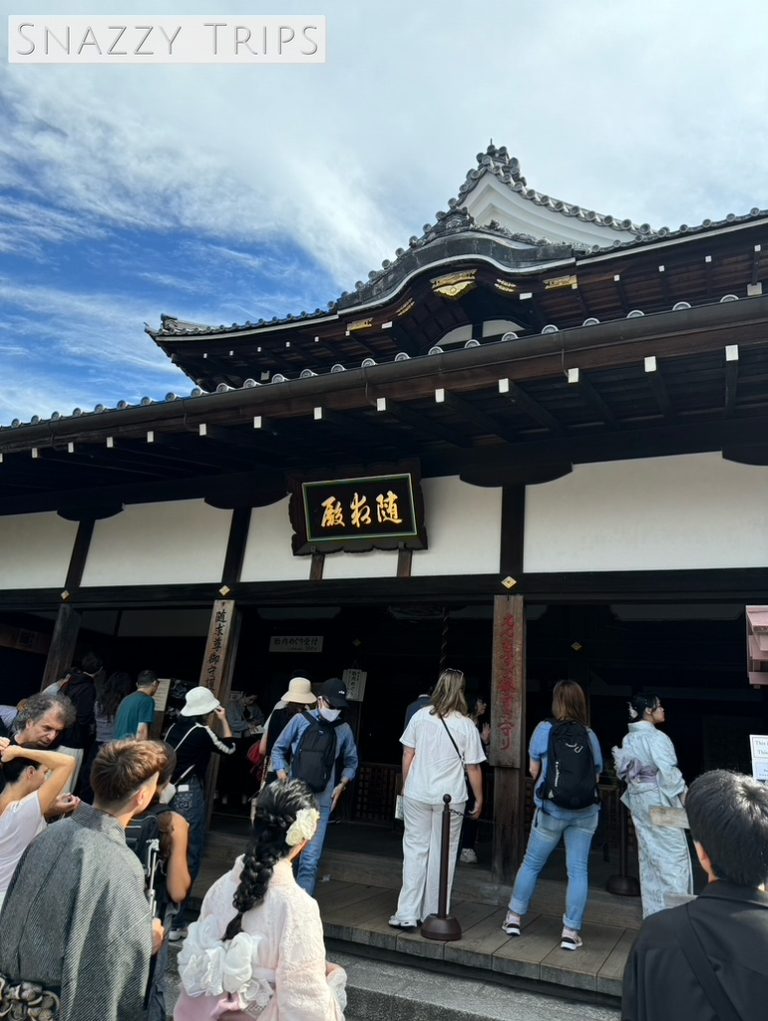
Zuigu-do Hall
Statuettes of Jizō
Small Pagoda, Koyasu
Otawa waterfall
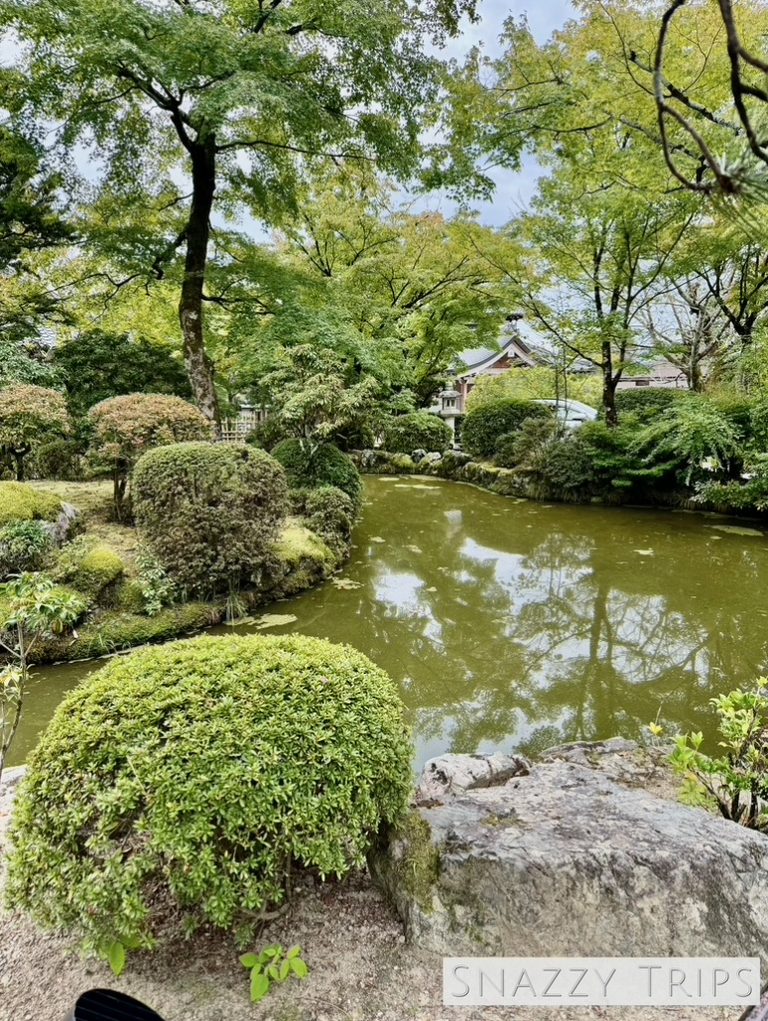
Hojo Pond
Seikan-ji Temple
Seikan-ji Temple
Best Way To Get There
The closest airport to Kyoto is Osaka International Airport.
From Osaka, take the bullet train (Shinkansen) from Shin-Osaka Station to Kyoto Station, then take a bus, taxi or walk to the temple.
From Tokyo, take the bullet train (Shinkansen) from Tokyo station to Kyoto Station, then take a bus, taxi or walk to the temple.
The journey to the temple commences at the streets below and you must walk up the steep stone-paved path on the hill, past numerous shops and teahouses to get to the Temple. This will take approximately 15 minutes.
Snazzy Tips For Visiting Kiyomizu-dera
Opens 6am everyday, but closes at different times throughout the seasons.
Expect crowds all year round.
Visit early morning, if possible.
Evening visits with illuminations are available Spring, Summer & Autumn.
Allow about 2 hours to walk around and explore the precinct fully.
Purchase a Kansai Pass through Klook for attractions in the region.
Refer to the temple’s website for more information.
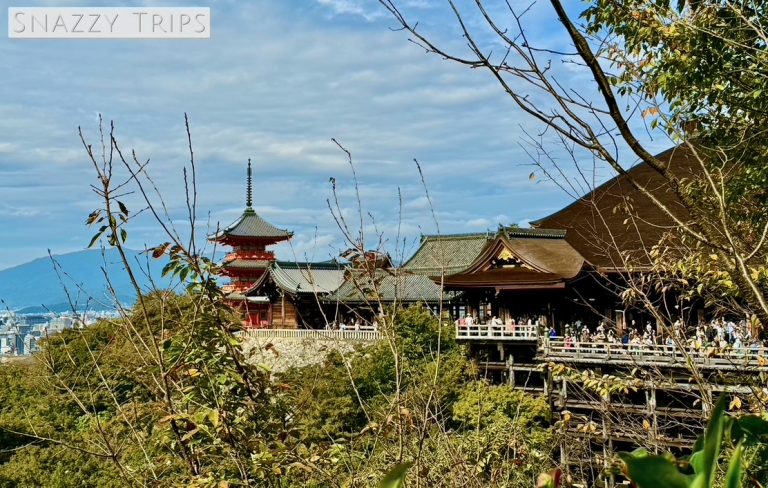
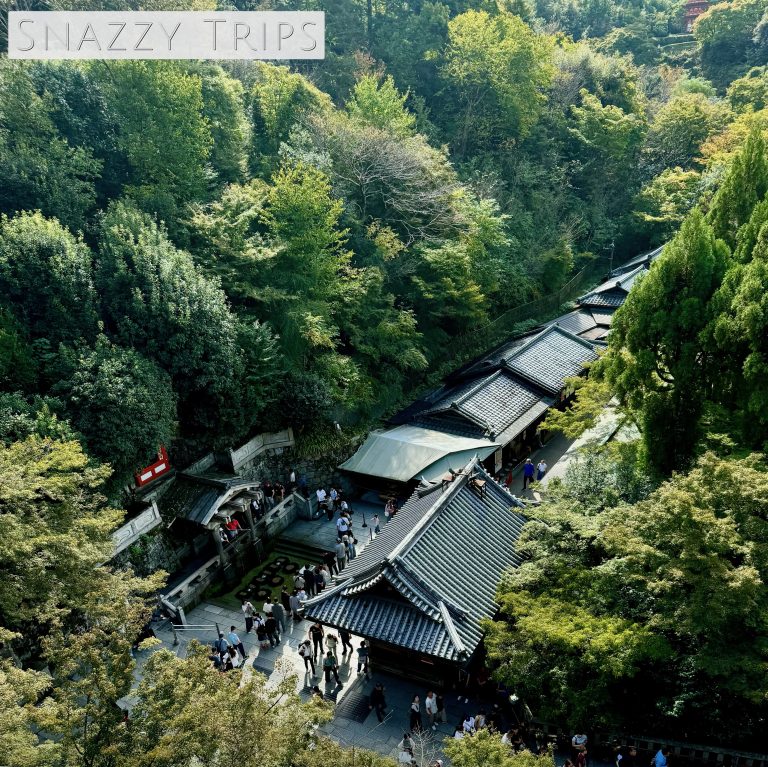
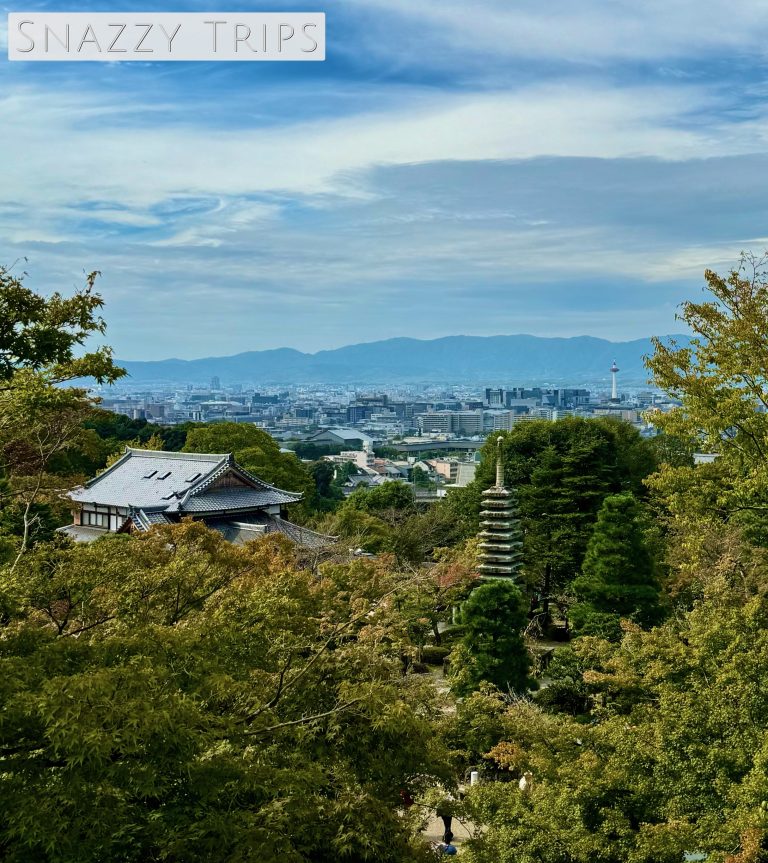
View of Kyoto from the Temple
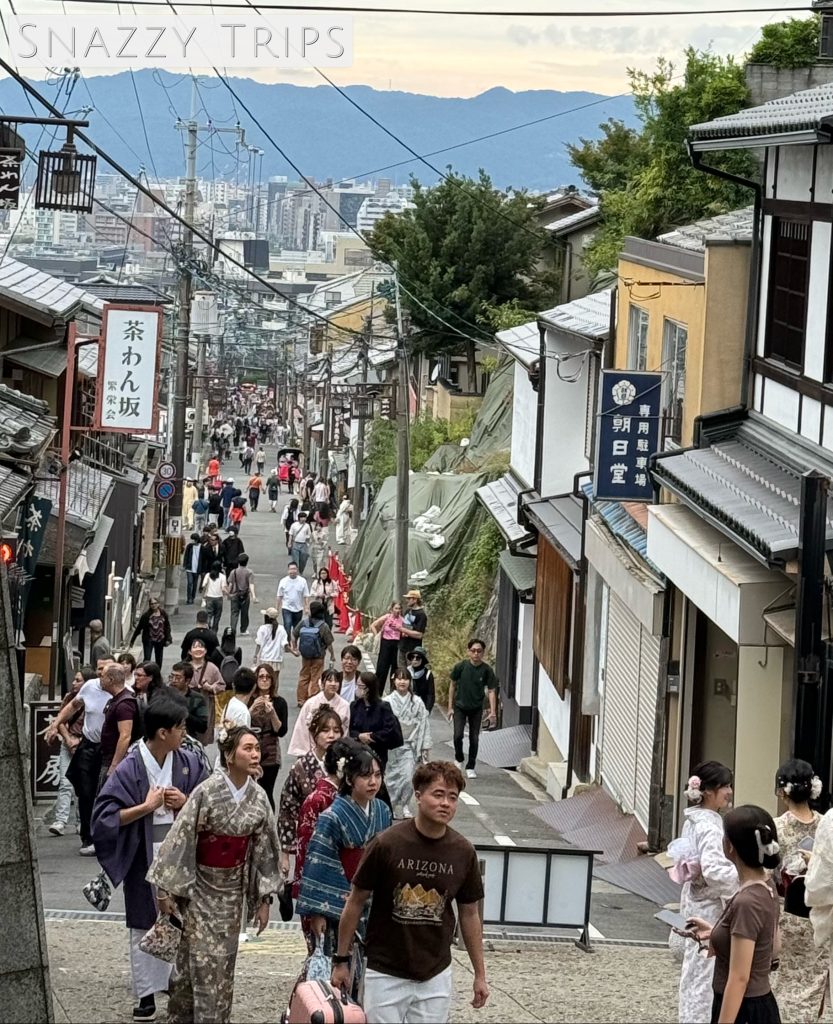
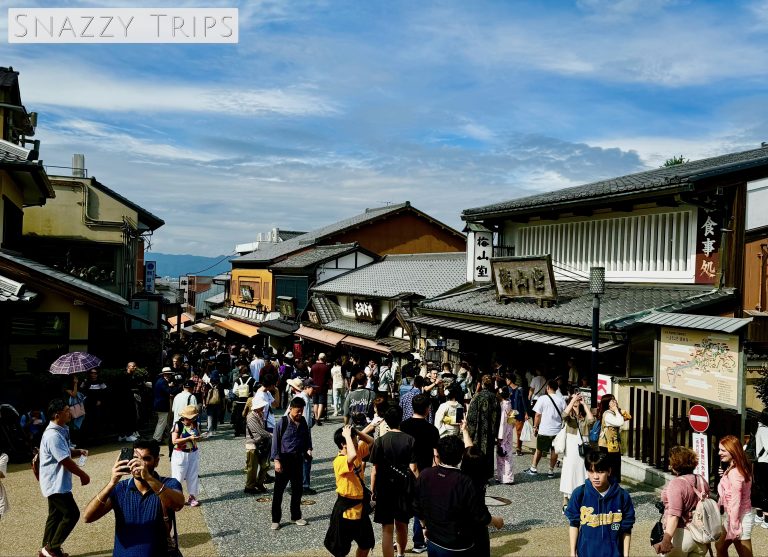
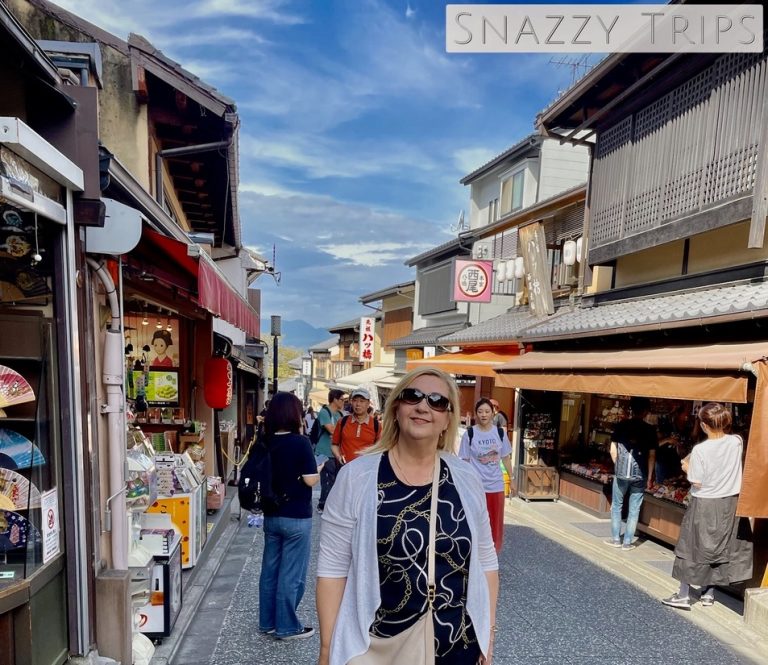
Streets Leading Up To Kiyomizu-dera Temple
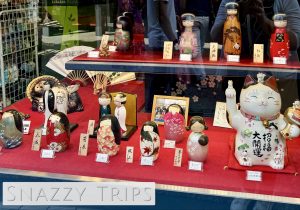
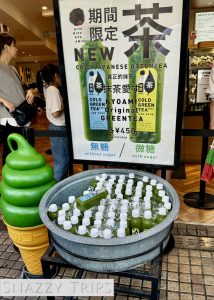
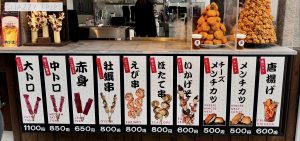
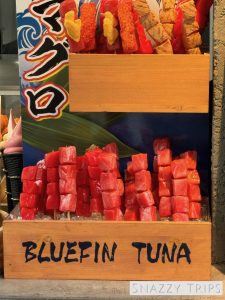
The main streets leading up to Kiyomizu-dera Temple are called Ninenzaka St and Sannenzaka St. Here, a plethora of shops sell various food and local treats, souvenirs of Kyoto, talismans and paper fortunes.
These bustling pedestrian roads are a fun part of visiting the temple, full of locals and tourists, making their way up and down the temple site.
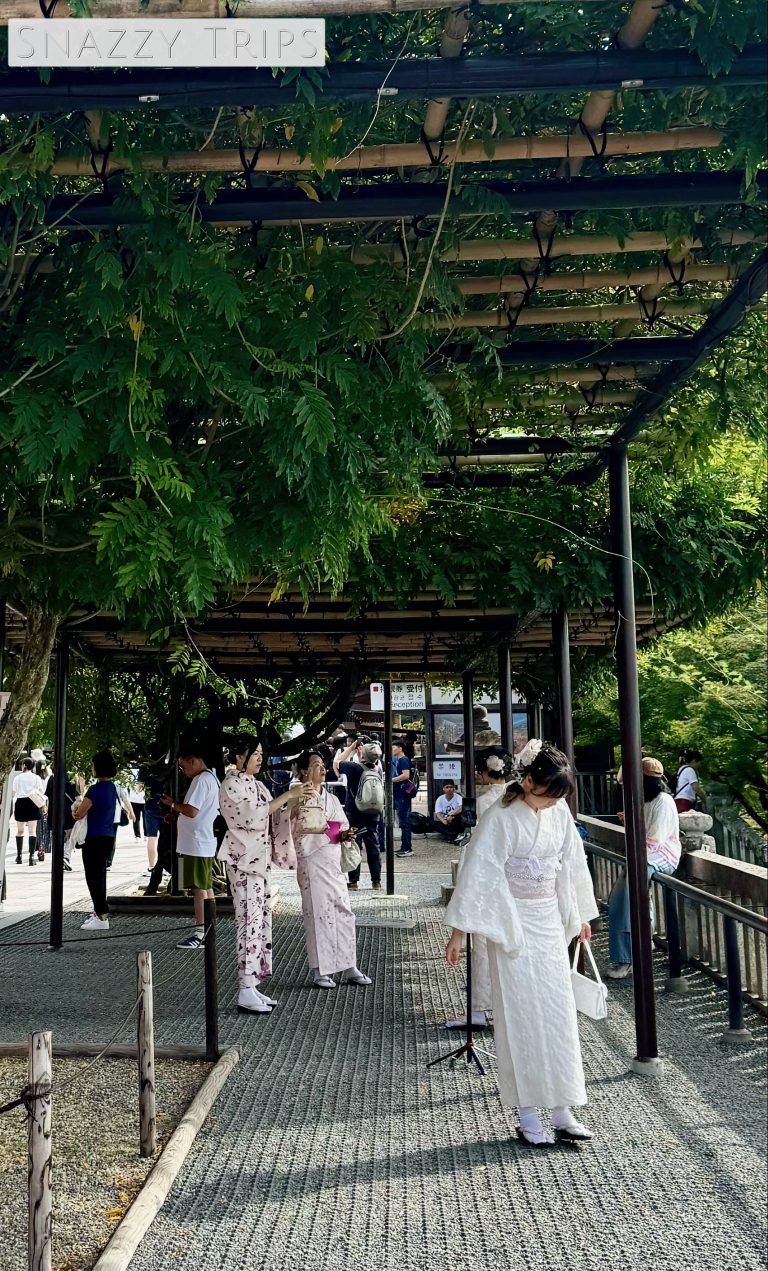
Kimono hire is available here also from various shops, where they will dress you in authentic Japanese attire.
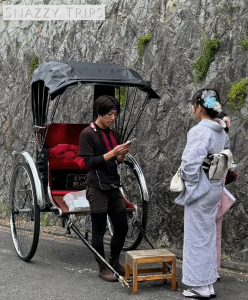
Rickshaw rides are a popular way to get around and see the sites, to and from the temple.
Final Words
This timeless temple is absolutely enchanting and a must-see landmark of Kyoto.
I enjoyed learning the cultural aspects of Kiyomizu-dera, admiring the architecture of the different structures here, and taking in the wonderful views.
During my visit I sampled a light lunch at the Takinoya Restaurant located in the Temple precinct. Then, did a little browsing at the shops on the streets below.
Ciao Amici, I have a passion for travelling and love visiting new places. I've been to four continents and over 25 countries, and can't wait to see where in the world I go to next. Follow me on Snazzy Trips travel blog.
One of Kyoto’s most iconic temples! I visited many years ago before Japan became very popular, and then again around cherry blossom season this year. It was very busy, but we visited early (it opens 6am) and we loved it. This is a great post, thank you for sharing!
Kyoto looks like a dream destination in Japan. I’d love to visit the Temple Precinct and appreciate your tips on how to get there and timings, etc. Can’t wait to visit one day!
I was just in Kyoto a few months ago and made the climb up to Kiyomizu-dera. I admit I just followed the crowds and did no research on the temple itself. Thanks for filling me in.
Kyoto has been on my bucket list for years, so this post really grabbed my attention. Kiyomizu-dera looks absolutely breathtaking, especially with those mountain views and historic wooden structures. I had no idea the main hall was built without nails—so impressive! I’d love to visit in autumn, too—it sounds like such a special time to experience the temple’s vibrant atmosphere.







7 Comments
Such a beautiful temple in the picturesque scenery, great to have the pretty waterfalls nearby…
One of Kyoto’s most iconic temples! I visited many years ago before Japan became very popular, and then again around cherry blossom season this year. It was very busy, but we visited early (it opens 6am) and we loved it. This is a great post, thank you for sharing!
Kyoto looks like a dream destination in Japan. I’d love to visit the Temple Precinct and appreciate your tips on how to get there and timings, etc. Can’t wait to visit one day!
I was just in Kyoto a few months ago and made the climb up to Kiyomizu-dera. I admit I just followed the crowds and did no research on the temple itself. Thanks for filling me in.
This looks absolutely beautiful!
Kyoto has been on my bucket list for years, so this post really grabbed my attention. Kiyomizu-dera looks absolutely breathtaking, especially with those mountain views and historic wooden structures. I had no idea the main hall was built without nails—so impressive! I’d love to visit in autumn, too—it sounds like such a special time to experience the temple’s vibrant atmosphere.
This looks like an interesting and gorgeous place to visit. Great photos!