
ITALY'S NATIONAL SYMBOL
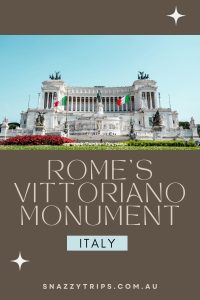
When visiting Rome you will most certainly pass by the imposing landmark of the Vittoriano Monument as you make your way around the city. The sheer size and grandeur renders it unmissable, but there are also other reasons why you shouldn’t miss this spectacular site.
I’ve visited Rome, the capital city of Italy, several times and am absolutely fascinated by all the ancient sites. I never get tired of seeing the Colosseum, Trevi Fountain, Spanish Steps and of course, the glorious Vatican.Â
On my latest trip to Rome I decided to visit one of the city’s more modern sites, the unmissable Vittoriano Monument, a national symbol of the first King of the new united Italy, Victor Emmanuel II (Vittorio Emanuele II), a ginormous white complex on Capitoline Hill. It sits on 4.3 acres of land in the middle if Rome.
It doesn’t get as much attention from tourists as the aforementioned iconic Roman landmarks, certainly not from a lack of trying.
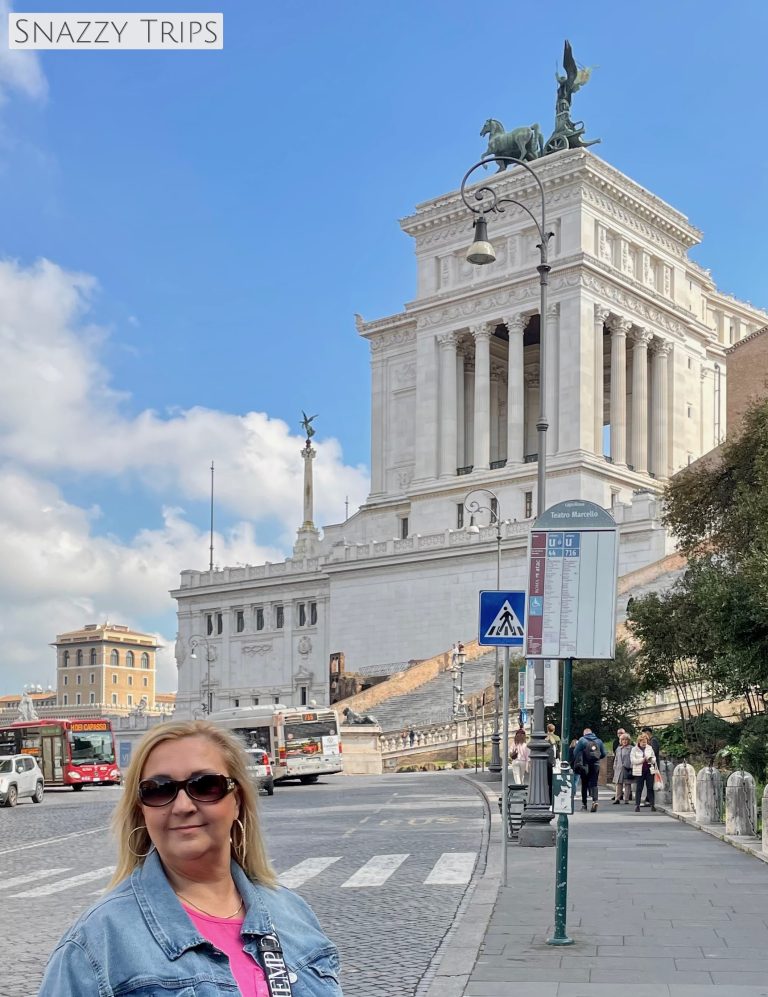
I decided to go and take a closer inspection of the biggest building in Rome which stands out on the skyline, visible from most parts of the city.
An Impressive Building
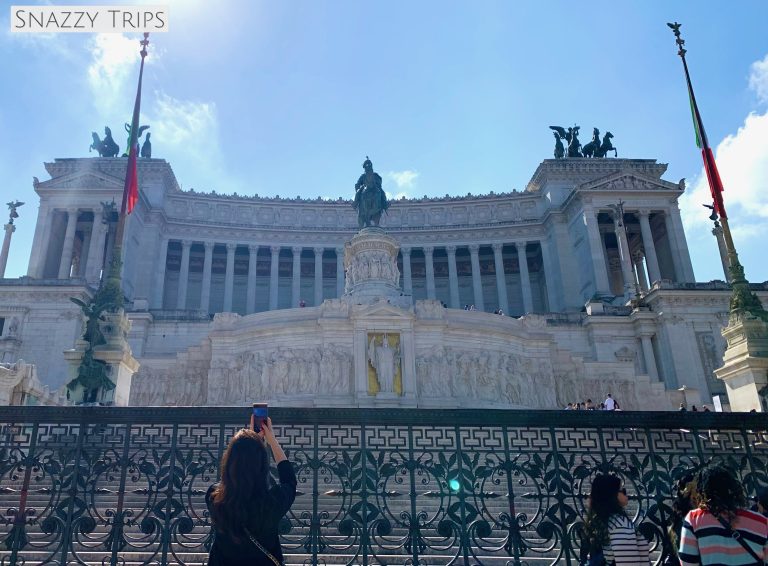
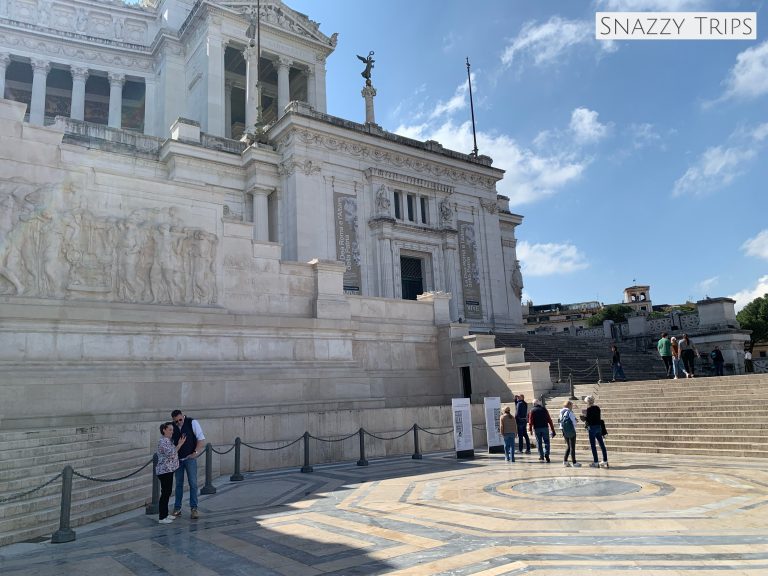
Upon seeing the Vittoriano Monument up close in all its glory, overlooking central Rome in Piazza Venezia, you have to admit it is an impressive structure.
The stark white marble and enormous size makes it quite an imposing and very striking monument.
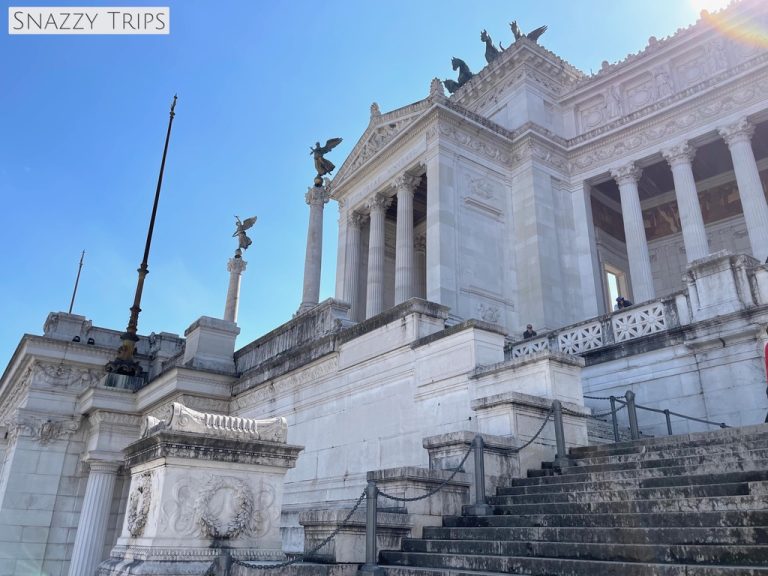
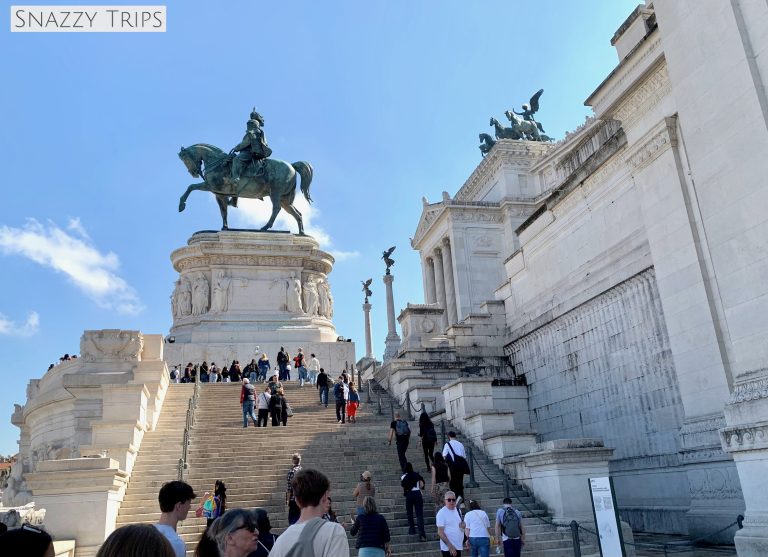
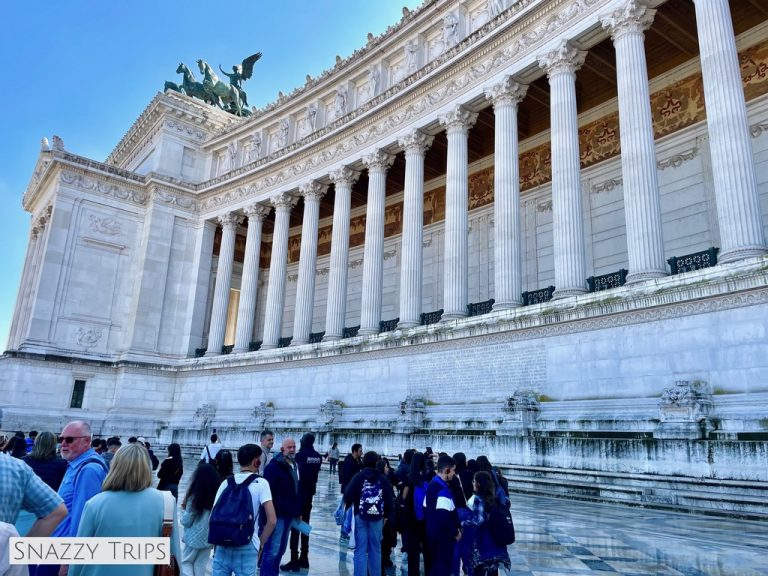
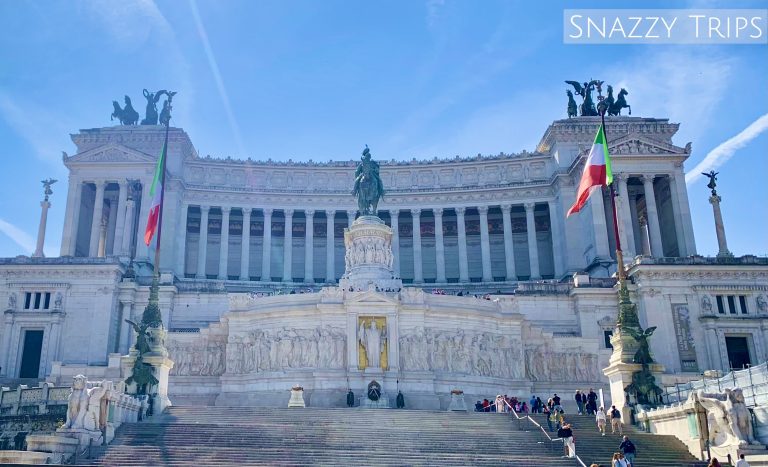
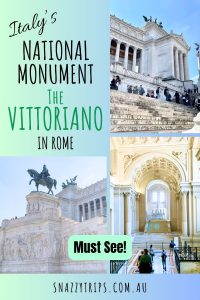
Walking up the wide grand staircase with fountains either side, and the curved colonnade of columns, gives regal vibes, like walking up to a palace.
Why Was It Built?
The Vittoriano Monument was built to celebrate national unity and Italian identity as a newly formed country, a cultural icon the people could rally around and take pride in. Furthermore, it is dedicated to Italy’s first King, Vittorio Emanuele II of Casa Savoia (House of Savoy) who united Italy in 1861.
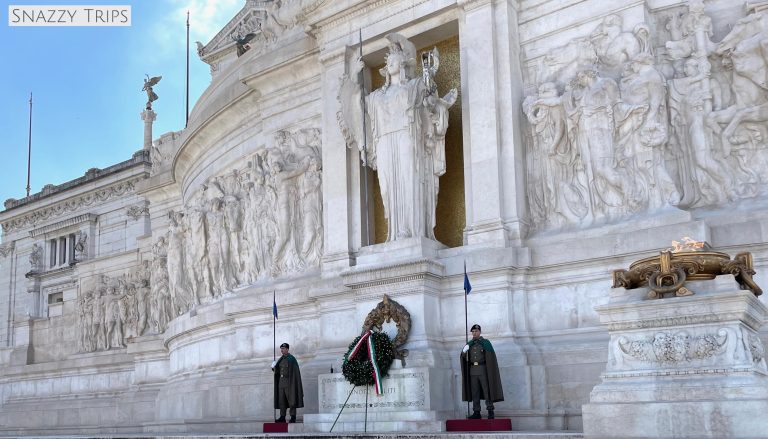
Also honoured here are WW1 soldiers, with an eternal flame burning and soldiers’ guard.
Interesting fact: The king is not buried here in the monument of his name, but at the Pantheon.
Architectural Features
Style
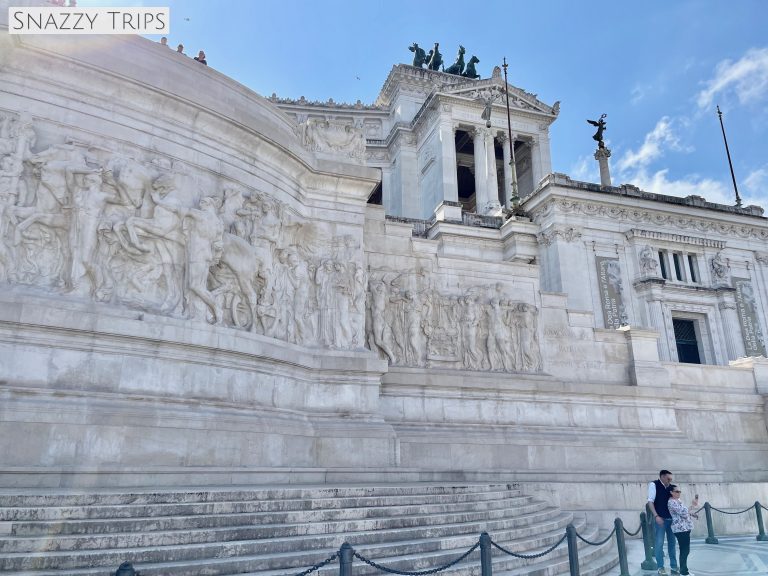
The Vittoriano complex is built in the Neoclassical architectural style, incorporating elements commemorating Ancient Rome, with some beautiful artistic features. The wonderful artistry of the monument is thanks to many Italian sculptors, painters, mosaicists of the late 19th and early 20th century.
Equestrian Statue
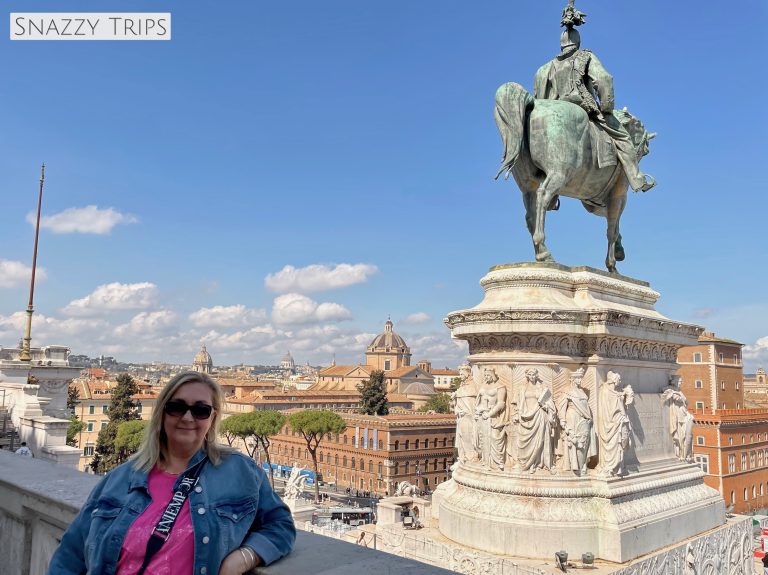
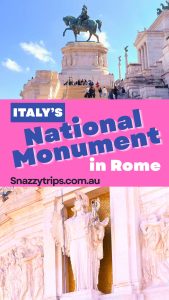
In front and centre of the landmark stands a massive bronze equestrian statue of the King of Italy, whom the monument honours, Vittorio Emanuele II, which towers to a whopping height of 12 metres.
Dea Roma Statue
Below the King’s horse statue is the Goddess Roma (Dea Roma), the divine personification of Rome, under which the Tomb of the Unknown Soldier stands, constantly guarded by an eternal flame and two soldiers.Â
Propylaeum & Quadrigae
A propylaeum sits on either side of the structure, each topped with equestrian statues. The goddess of Victory riding a quadriga, on the left, and the goddess of Unity riding her quadriga, on the right, the guiding values of the Risorgimento (resurgence).
Colonnade
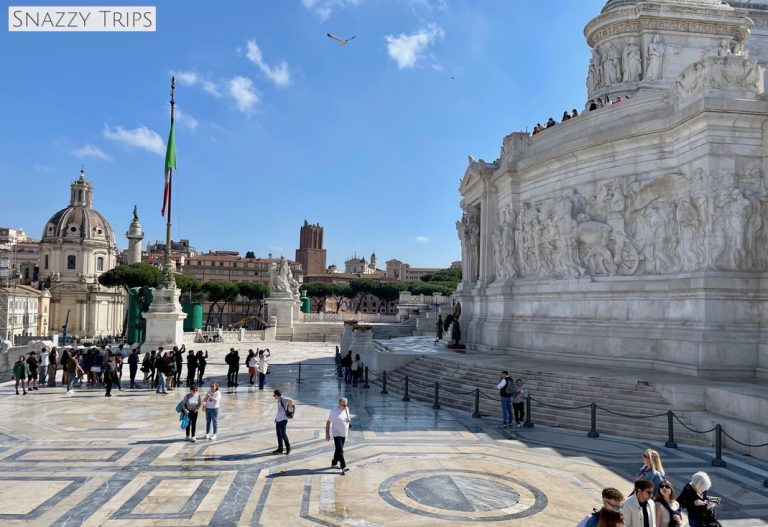
Then there is the grand colonnade of 16 columns and portico in a curved formation behind the King’s statue. Above each of the columns is a female figure representing each of the 16 regions of Italy.
Fountains
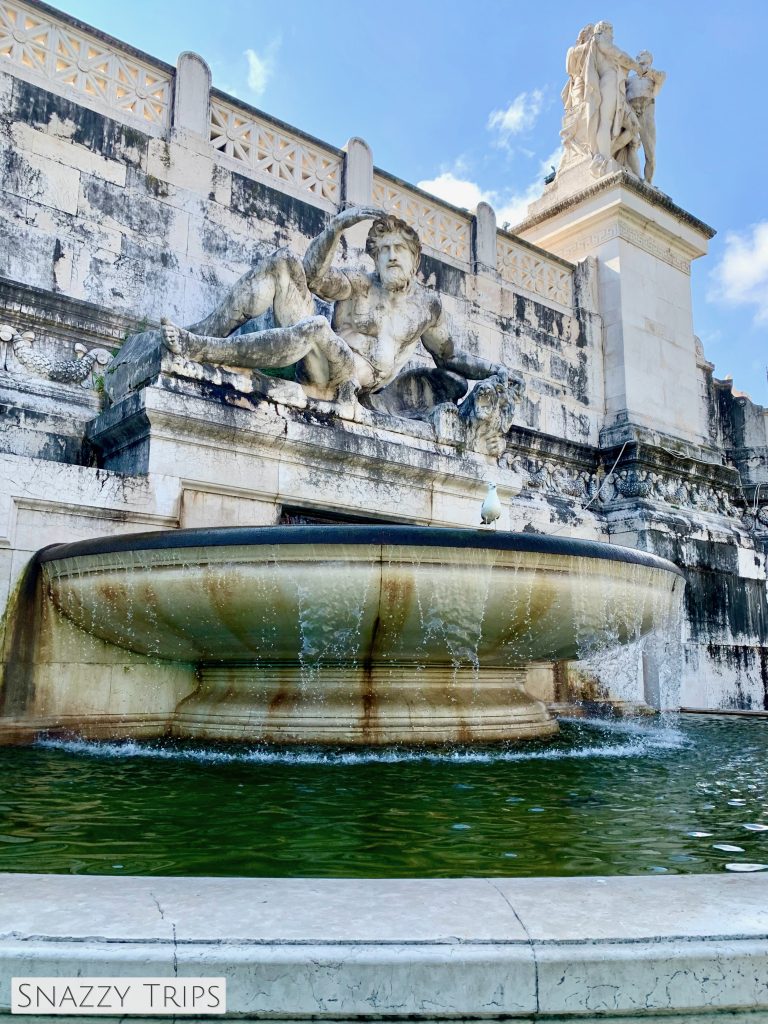
Two fountains representing the Adriatic Sea and the Tyrrhenian Sea are situated on either side.
Popular Opinion
Popular opinion of the Roman people has not always been positive, some saying it is an eyesore, too ostentatious, glaringly white, and an unnecessary monument.
Plus, some were concerned about the demolition of historic sites to build the structure, which has always been a contentious issue with historians, archaeologists and art critics.
The Vittoriano Monument is also known as Altar of the Fatherland, the Centre of Rome, the Forum of the Republic. But in less flattering terms it has been called the wedding cake and the typewriter.
History of Vittoriano Monument
Several years after the passing of Italy’s 1st King, construction began on the Vittoriano Monument in 1885 and was completed in 1935, taking decades to build, overseen by various architects.
It was, and still is, the most expensive monument built in Italy which cost around 30 million lire at the time, funded by the Italian Government and public donations.
Unfortunately, some of the ancient sites here on Capitoline Hill were demolished to make way for the new edifice and some were moved to other locations.
Terraces
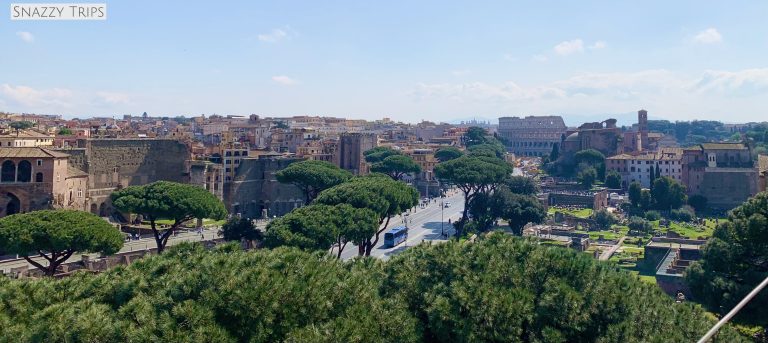
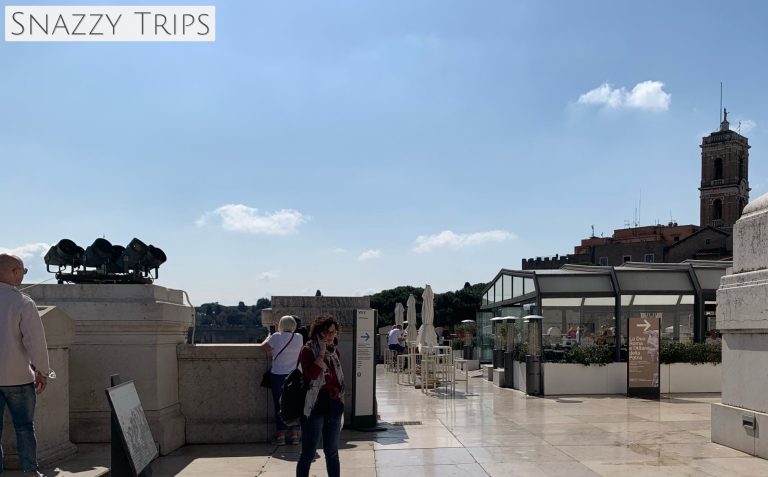
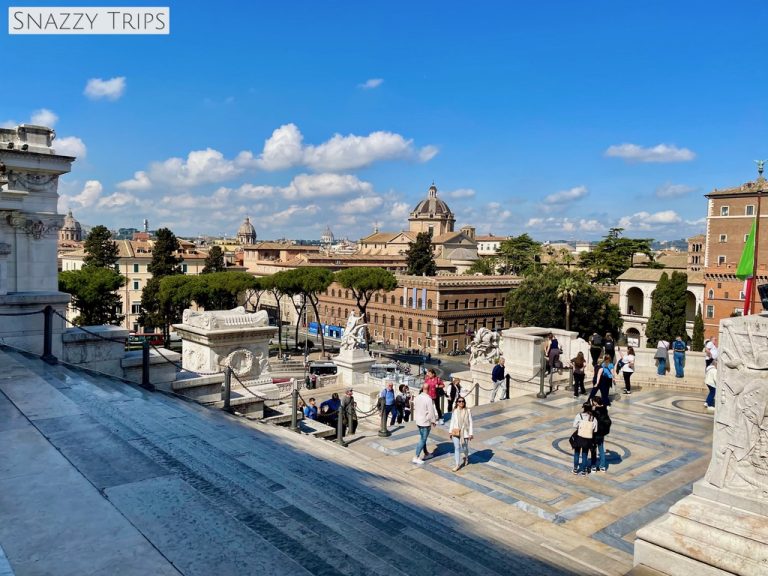
The view from the main terrace called Terrazza Italia is spectacular, offering vision of many iconic sites of Rome, which is pretty hard to beat. You could spend quite some time up here spotting famous landmarks. This main terrace is free to access and is a popular observation spot for tourists.
A cafe on the main terrace is the ideal place where you can grab a coffee, sit and admire the scenery.
There are even better, uninterrupted views up the glass elevator to the rooftop’s Panorama Terrace where you can admire the whole of Rome – the Colosseum, Pantheon, St Peter’s Basilica and more. And you get a closer look at the bronze chariots. A ticket is required to go up the lift. Alternatively, walk up the 196 steps.
Inside The Building
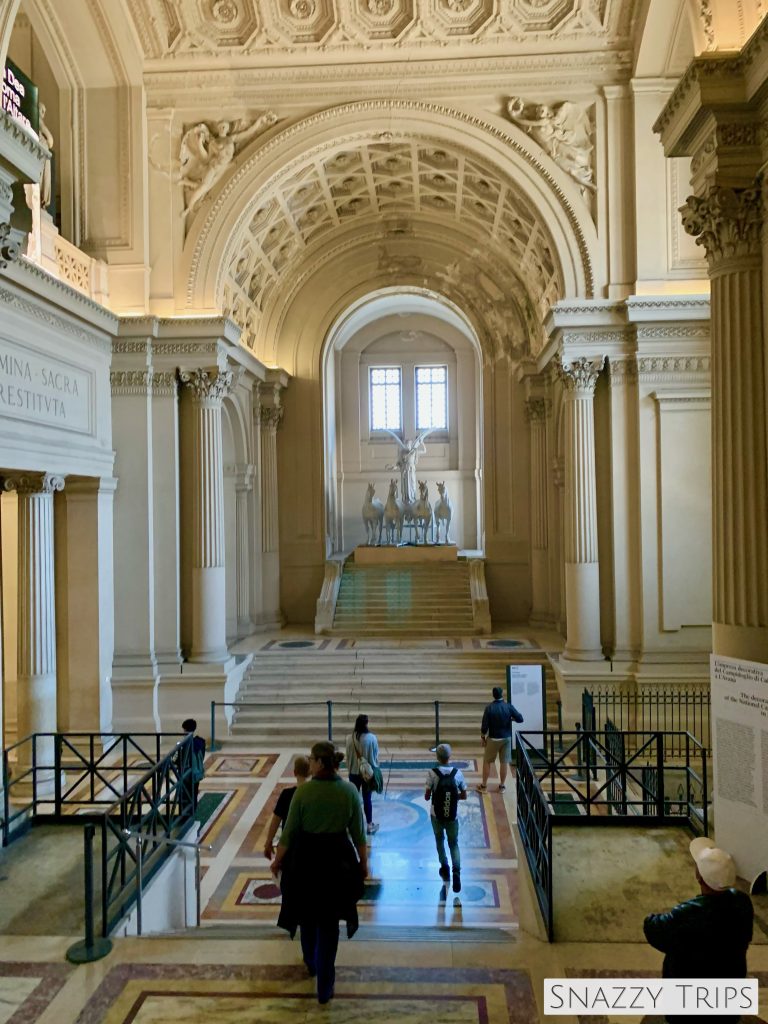
Inside, the Vittoriano is very palatial, with high coffered ceilings and marble floors. There are two magnificent atriums with vaulted ceilings and arches. The portico houses a ceiling of sciences, with sculptures representing different disciplines.
An array of sculptures and artwork adorn the various interior rooms.
The Vittoriano is a beautiful building throughout, reminiscent of the Renaissance era, and certainly a worthy national monument.
Various state functions are held here regularly, as well as special exhibitions.
Central Museum
The Central Museum of the Risorgimento is dedicated to the history of Italian Unification, from the18th century up to the First World War.
Artefacts, weapons, helmets, uniforms, flags and documents explaining how Italy became a nation and the struggles it went through are displayed throughout various rooms in the museum.Â
You can even see a gun carriage and stretcher used, and a historic WWI torpedo boat here in the museum.
Finally
After taking the time to visit and to learn more about the Vittoriano Monument, I have become a fan. I was very impressed by its architecture, sculptures, and thoughtful artwork.
Of course, the fabulous views of the city from the terraces are outstanding and make it well worth the visit.
Obviously I’m not the only one that has endeared themselves to this monument, as there are now about 2 million people coming to see it each year.
The Vittoriano Monument is the most important monument of the modern era and is a must-visit when in Rome.
General Info For Visiting The Vittoriano
- LOCATION: Piazza Venezia, walking distance from the Colosseum
- OPEN: Almost everyday
- TIME: From 9.30am
- COST: Free to enter, Ticket required for terraces and museum.
- HOURS: Allow 1-2
- EVENTS: Exhibitions and celebrations are regularly held here.
- WEBSITE: Vittoriano
Pin Vittoriano Monument on Pinterest
Related
RECENT SNAZZY TRIPS
-
12 Best Prague Tours And Experiences
DAY TRIPS, FEASTS AND EXCURSIONS Prague is one of the most... -
Fun Facts About Amsterdam
25 WEIRD AND WONDERFUL THINGS I'VE DISCOVERED A popular travel destination... -
Day Trip To Alkmaar From Amsterdam
IS IT WORTH SEEING? Yes, absolutely, a day trip to Alkmaar...


One Comment
The Vittoriano is one of those landmarks that’s impossible to ignore when walking around Rome. I remember being surprised by just how massive it is compared to the surrounding buildings. Thanks for sharing the history behind this impressive symbol of modern Italy!