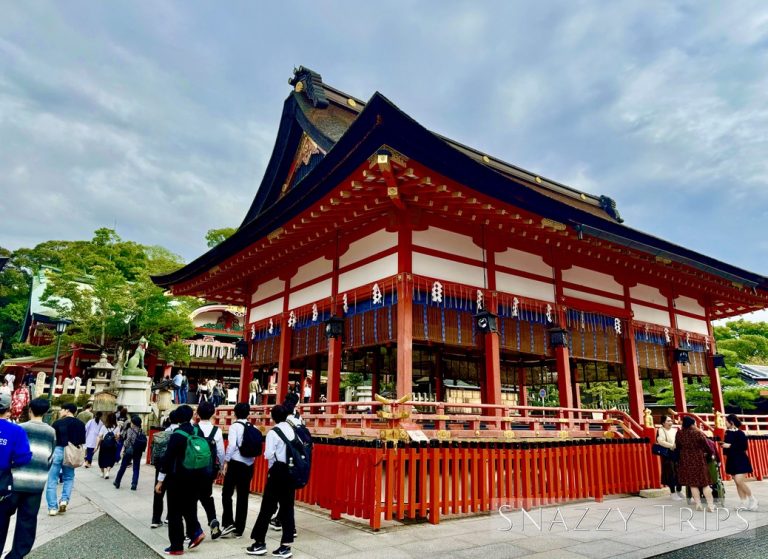
Fushimi Inari Shrine is an important Shinto shrine dedicated to Inari, the Shinto deity of rice and cultivation and is an iconic Kyoto landmark. Located on Mount Inari, there are actually thousands of smaller shrines here which make up the complex in the mountainous terrain in South Kyoto.
If you’re coming to Japan and want to experience the most beautiful shrine in the country, make sure to visit Kyoto’s famous Fushimi Inari. It’s not to be missed, in my opinion, and it was a highlight of my trip to the country. This Shinto shrine is a popular attraction for locals and tourists, with ten million people visiting each year.
The first shrine here was founded in the year 711, before Kyoto became Japan’s capital. The main shrine structure was built in 1499.
Fushimi Inari Taisha serves as the headquarters of some 30,000 Inari Shrines in the country.
Shintoism
Shintoism is an ancient Japanese belief system and a way of life dating from 1,000 BCE. It has co-existed with Buddhism in Japanese culture and most people follow both religions.
There is no god and no scripture in Shintoism, only spirits called Kami, promoting harmony, purity, and respect for nature and people. People worship at shrines or in their homes.
Shinto celebrates many festivals throughout the year to honour seasons and harvests.
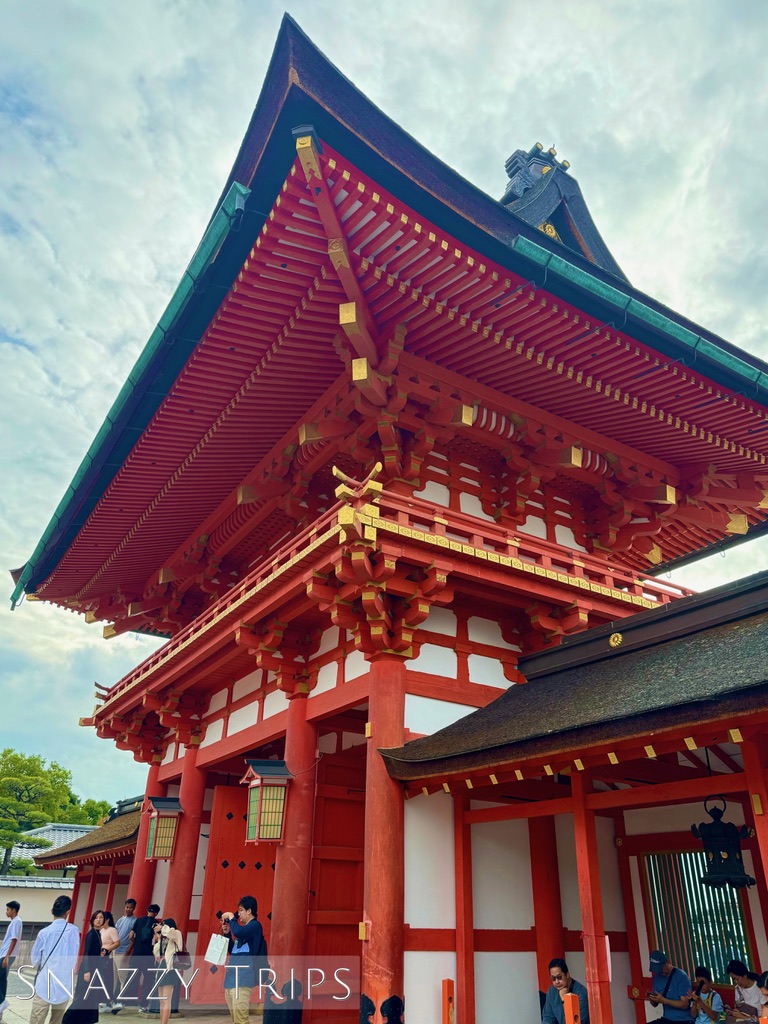
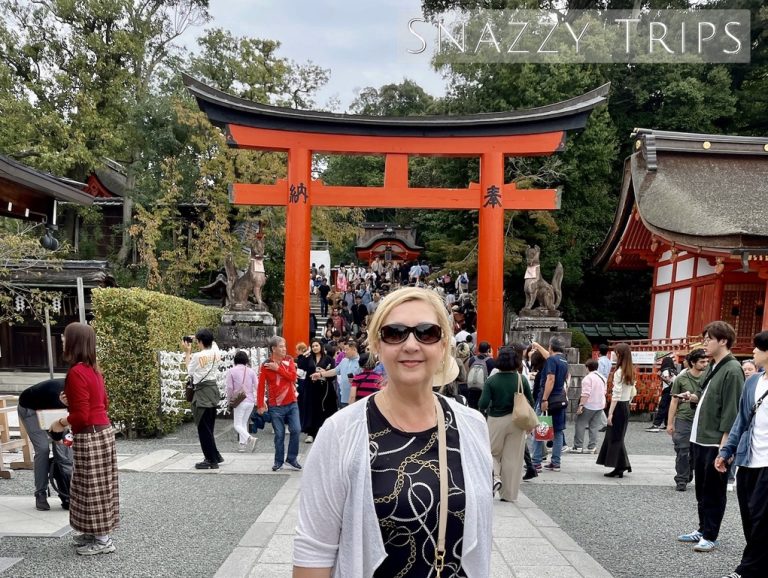
Ro-mon gate
Torii Gates
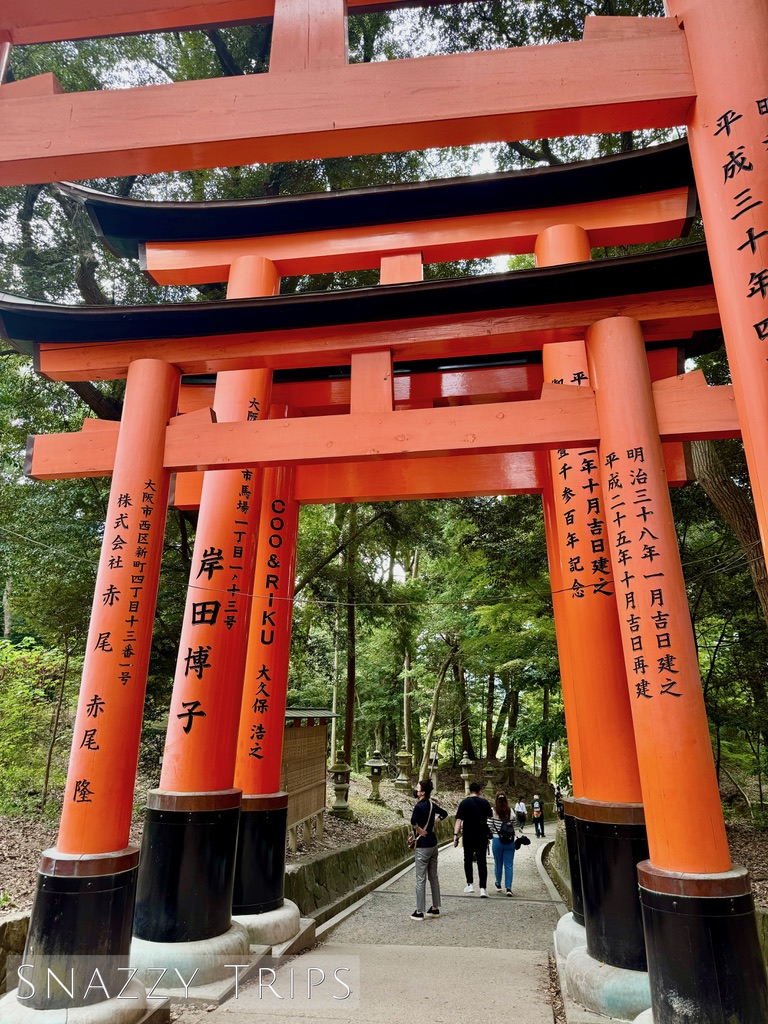
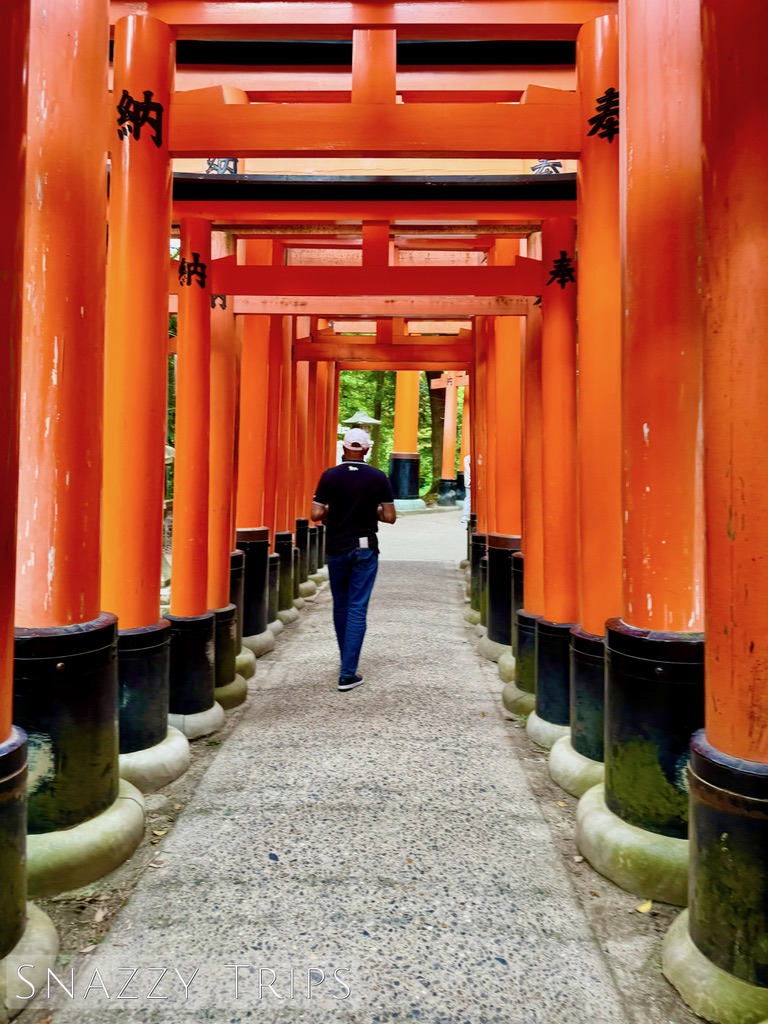
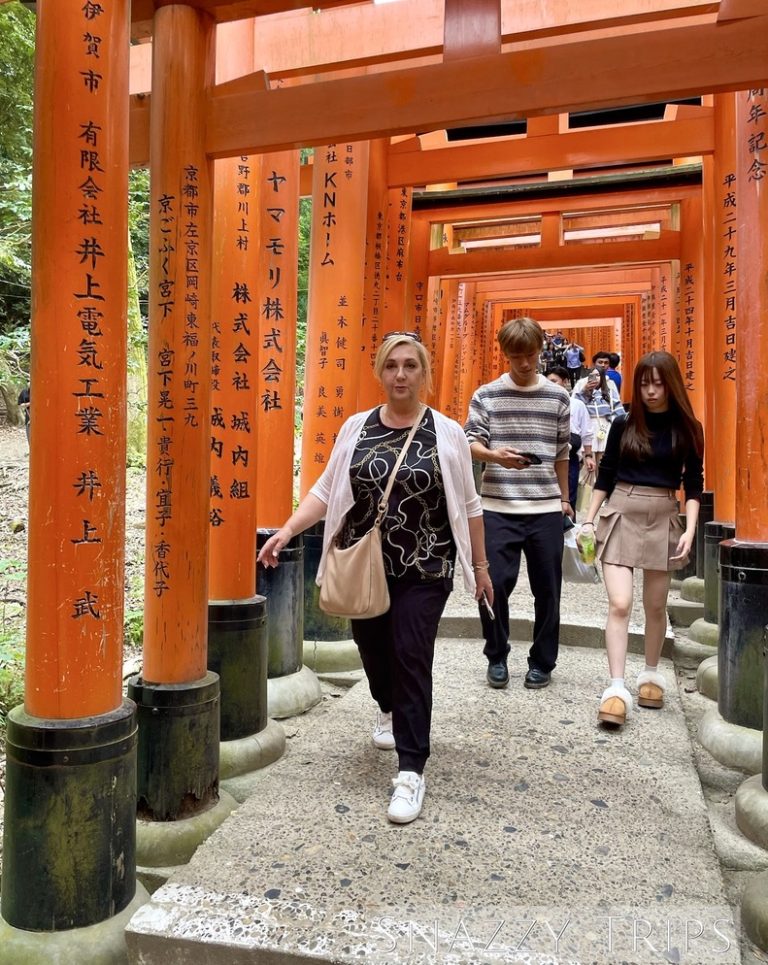
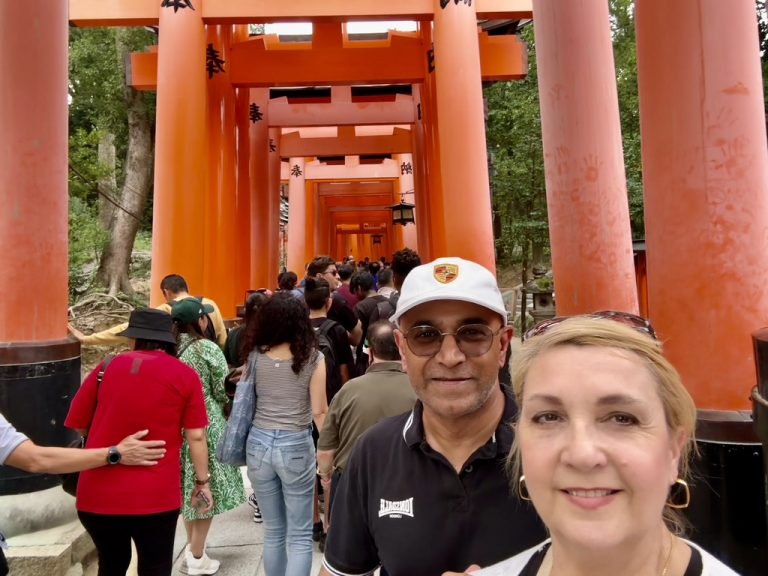
Fushimi Inari’s most outstanding feature is arguably the large vermillion coloured torii gates, lined up to form a tunnel-like passage to walk through. It’s mesmerising to see as there are about 10 thousand torii gates here.
This striking vision is also of great significance, as each torii gate is a symbol marking entrance to the sacred world. Japanese etiquette dictates you would normally stop and bow at a torii gate before passing through, but it is unrealistic to stop at each and every gate here.
Why are there so many torii gates?
A custom of donating torii gates to the shrine began about 400 years ago during the Edo Period of Japan (1603 – 1868). It has continued to this day, hence why there are so many. You will notice that each torii is inscribed with the name of the business or person who donated to the Shrine and symbolises a wish or prayer.
Some individuals donate smaller torii gates, which are stacked further up the walk. The larger gates have cost donors up to a million yen.
Why are torii gates painted a bright colour?
The orange-red colour of vermillion is considered a protective colour to ward off evil forces.
Further, the pigment originally used helped preserve the wood of the torii gates.
Fox Statues
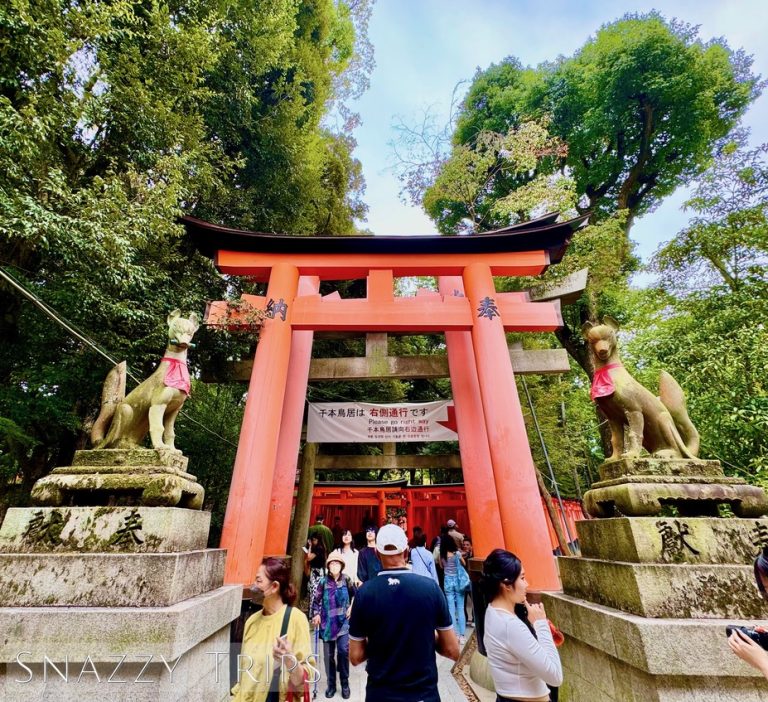
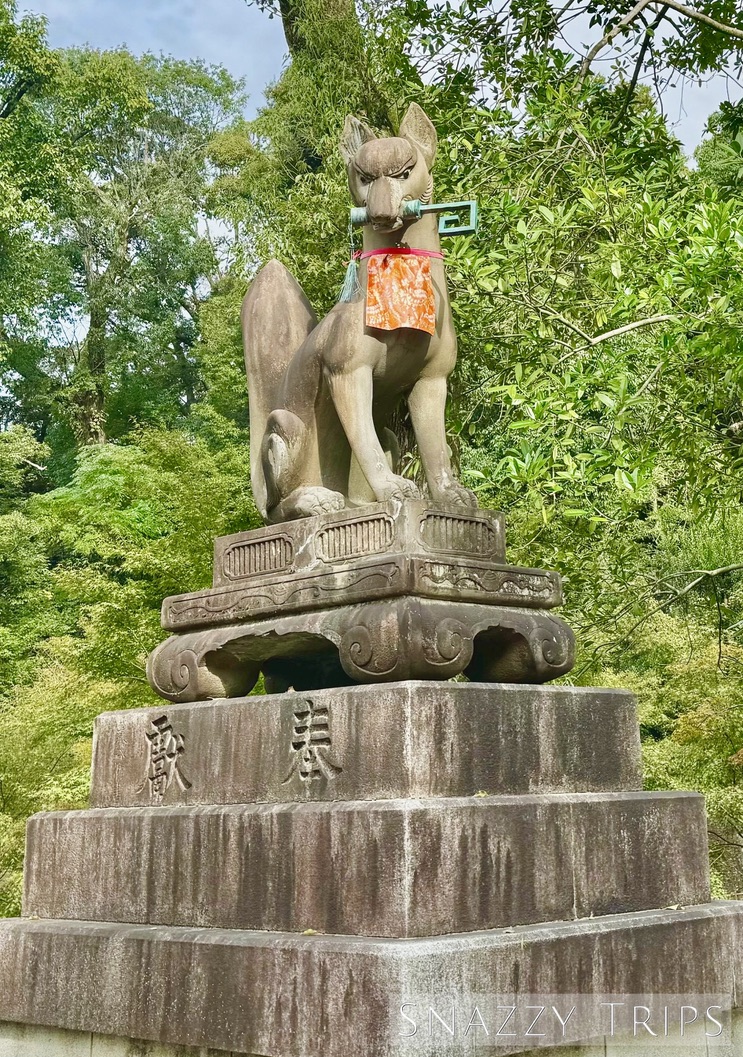
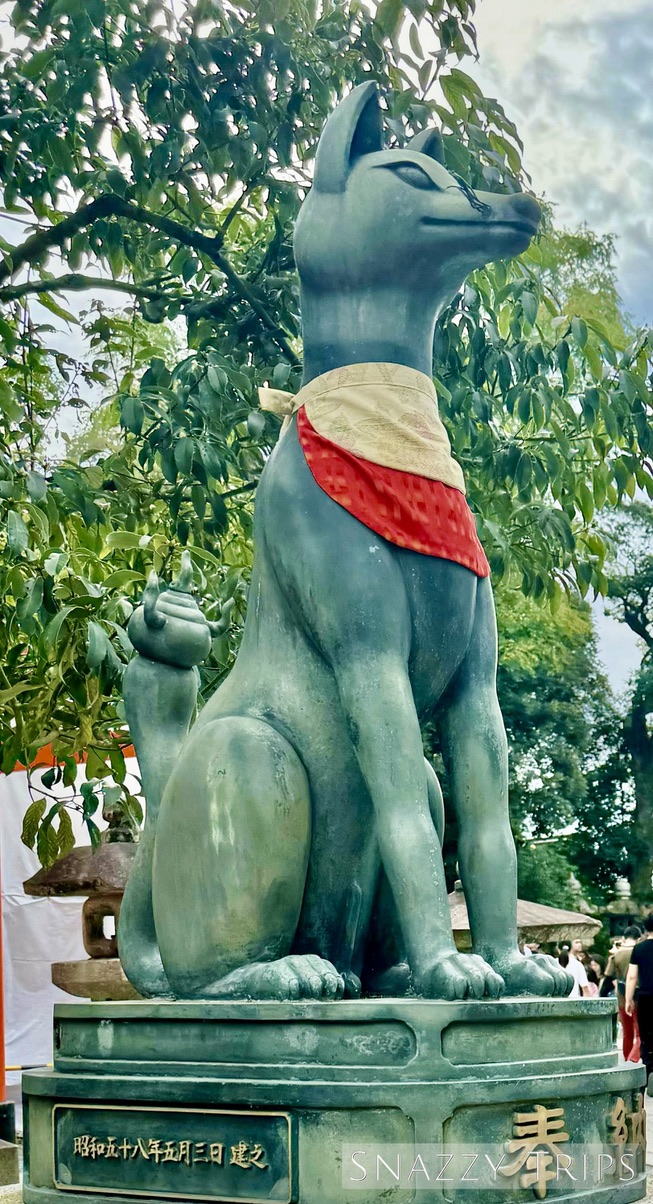
Along the walk you will notice many fox statues. Foxes are considered important to the Shinto God Inari and are his messengers. They are also believed to be responsible for bountiful harvests and prosperity. Some are holding a key in their mouth, representing the key belonging to the rice storehouse in ancient times.
You will see many fox statues at all Shrines.
So be sure to look out for them as you walk the route of Fushimi Inari.
Sembon Torii
Inari fox statue with key in mouth
Inari fox statue
The Walk
The walk through the whole site is a wonderful trek to enjoy the cultural significance of Fushimi Inari in the Japanese wilderness.
You must walk in the one direction and follow the signs of the circuit or you may get lost. You want to make your way back to the main shrine.
Stop along the way to enjoy the views as you climb up the mountain. You’ll see a pond, smaller shrines, and a waterfall. Admire the many torii gates and fox statues, and grab some refreshments at the tea houses along the trail.
Should you walk to the top?
Most people don’t walk all the way to the top as it can take a couple of hours to go up and back. It’s a bit of a hike, of moderate difficulty with lots of stairs to climb, and about 4 km long.
If you choose to walk all the way, you will notice the further you go up the mountain, the less people there are. Without the crowds you can enjoy some peace in this spiritual location.
However, if you think you’ll be rewarded by a spectacular view at the top, you will be disappointed as there is only a small shrine up there and not much else to see. So continue through the torii gates path and make your way down the other side.
Map of Fushimi Inari-Taisha Shrine complex
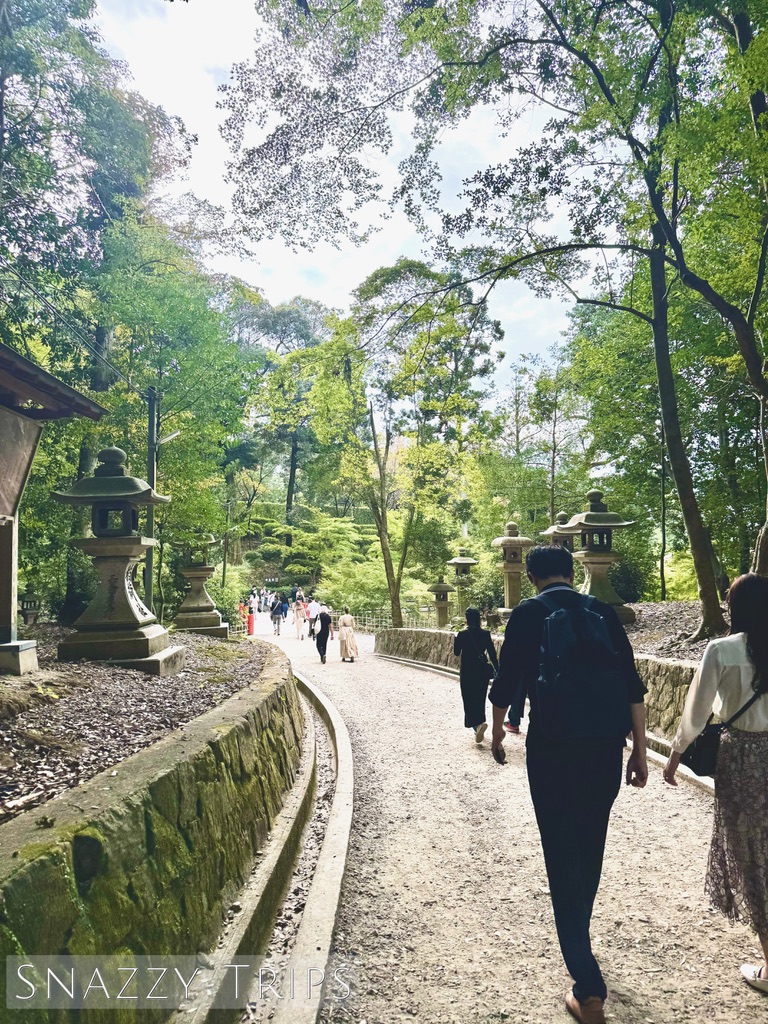
Garden path of Fushimi Inari lined with Japanese lanterns
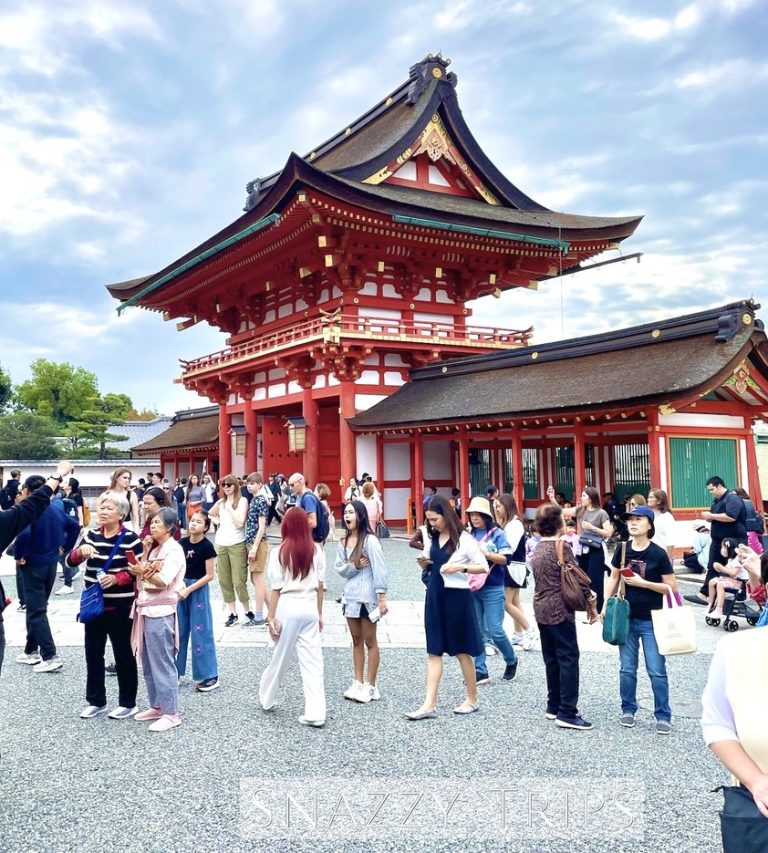
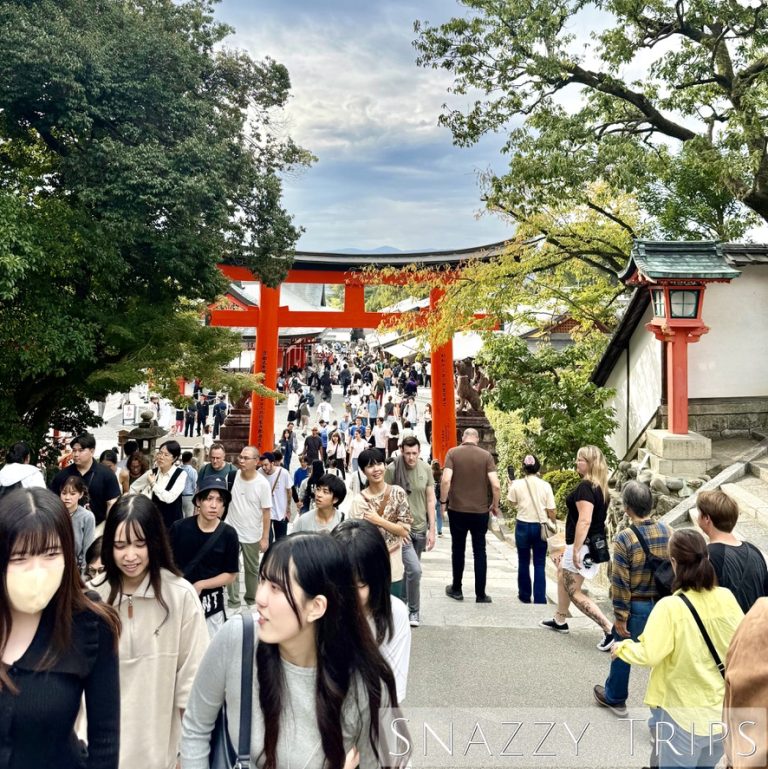
Crowds at Fushimi Inari Shrine
Finally
Fushimi Inari Shrine is open all day, every day of the year, and admission is free.
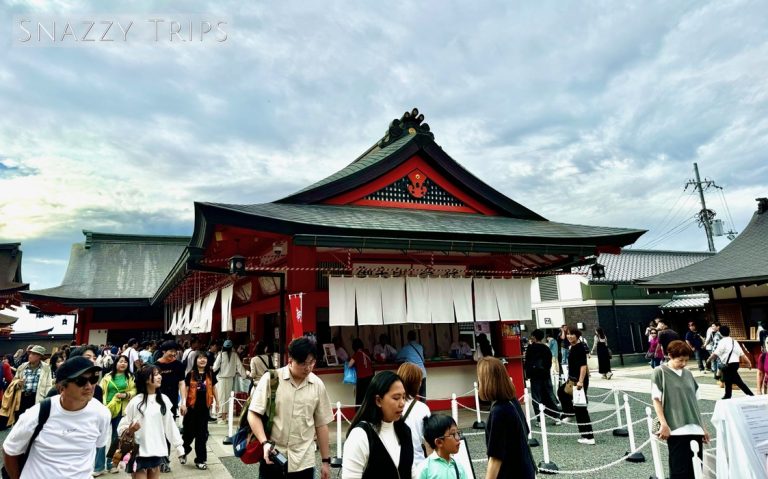
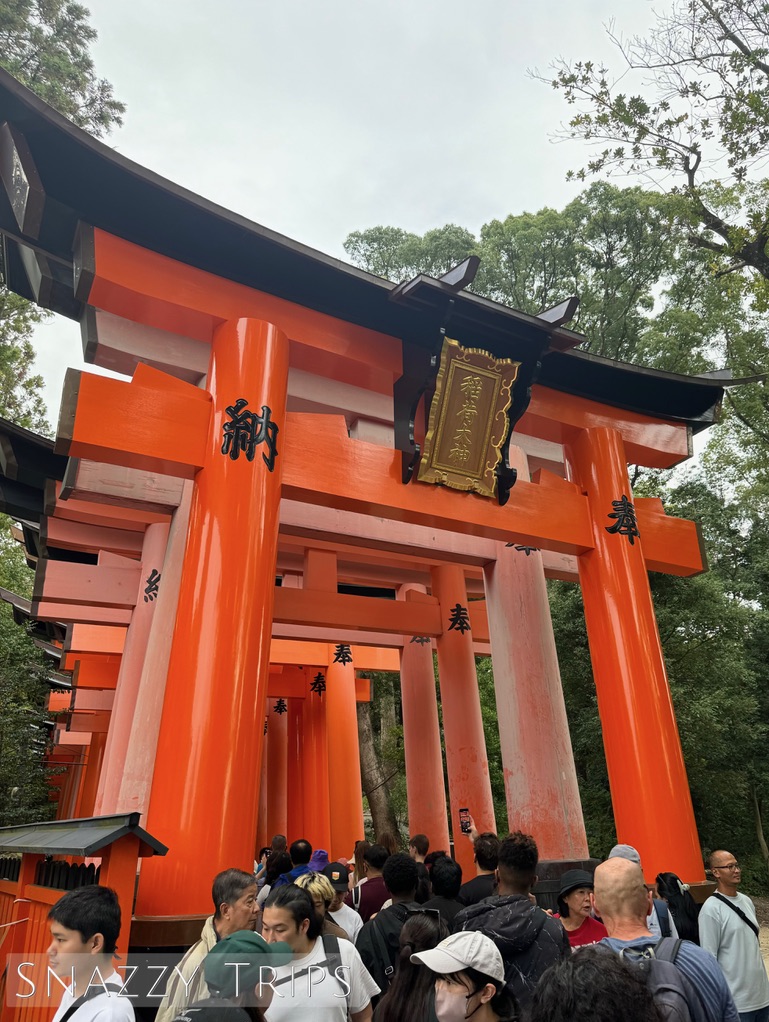
You will most likely find crowds around the main entrance and main shrine, as many people congregate in this area. To avoid the hoards of tourists, go early morning or evening instead.
If you are interested in receiving a fortune or an amulet you can go to the kiosk next to the main shrine where these are offered for a small cost.
On the street leading to the Shrine there are stalls selling treats for you to try and other Japanese food. You will also find souvenirs galore, so you can pick up a memento of your visit.
You may like to visit the Shrine at night for a surreal experience. Lanterns and lamps along the main path illuminate the way and a slightly eerie atmosphere prevails.
I hope you enjoy visiting Kyoto’s beautiful Fushimi Inari-Taisha Shrine.
Ciao Amici, I have a passion for travelling and love visiting new places. I've been to four continents and over 25 countries, and can't wait to see where in the world I go to next. Follow me on Snazzy Trips travel blog.
That is such an interesting post. Such diversities in the cultures across the world’s only make me realize how beautifully we all are still knitted together.
I would love to visit Kyoto and its shrines. I love your pics. It also fascinated me to learn that foxes are messengers of the gods. I loved the symbolized that if they held a key in their mouth, it meant a bountiful harvest of rice in the storehouse in ancient times.














7 Comments
That is such an interesting post. Such diversities in the cultures across the world’s only make me realize how beautifully we all are still knitted together.
I would love to visit Kyoto and its shrines. I love your pics. It also fascinated me to learn that foxes are messengers of the gods. I loved the symbolized that if they held a key in their mouth, it meant a bountiful harvest of rice in the storehouse in ancient times.
The shrine is stunning. Great post! Thanks for sharing!
The shrine looks just beautiful. How early do you need to arrive typically to avoid the crowds?
The Shrine is open 24 hours. I would suggest going early morning to avoid tour groups.
That is indeed a beautiful shrine. Are there also guided tours to the shrine?
A trip to Japan is still on my bucket list! I’m definitely saving this post for the future!